
Key Findings for Execs Navigating Career Changes
Executives who demonstrate repeatable, system-driven value creation are landing top roles at companies like Meta, Tesla, and Microsoft, not those with isolated achievements.
A clear and consistent personal brand functions as career leverage, attracting opportunities before conversations even begin.
Treating strategic positioning as a weekly discipline, rather than an annual reflection, helps executives stay market-relevant and outperform stagnant peers.
Executive careers are no longer linear.
Today's leaders transition across industries, redefine their value mid-career, and get hired based on brand, adaptability, and real-time performance, not tenure.
That's according to the 2023 LinkedIn Global Talent Trends Report, which shows the most sought-after executives are those who master strategic positioning, personal brand, and cross-functional value delivery.
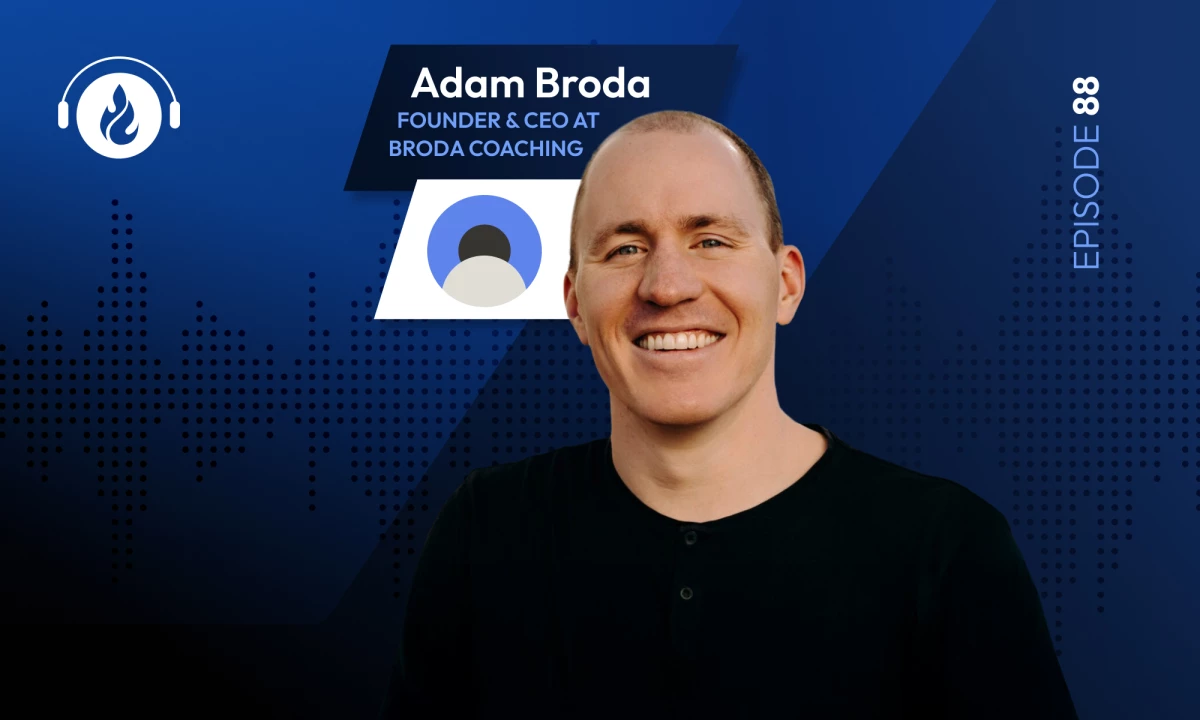
In episode 88 of the DesignRush Podcast, Adam Broda, founder of Broda Coaching and former Amazon operations leader, shares the four tactics helping hundreds of senior leaders land roles at firms like Meta, Tesla, and Microsoft.
His message to execs is direct: If you're not building leverage, you're losing it. Plus, his real-world advice on landing executive roles and top global companies.
Want to get expert insights on becoming an indispensable leader? Listen to the full episode now on Spotify, Apple, or YouTube.
Episode Chapter Summary
- 05:01 — Self-Awareness & Spotting High-Value Clients
- 10:01 — Risk-Taking in Executive Roles
- 14:01 — Becoming Indispensable to Companies
- 22:01 — Tesla & SpaceX Talent Strategy
- 28:01 — Why Execs Shouldn't Go It Alone
4 Career Tactics Top Execs Use to Stay In-Demand
The rules of advancement have changed. These four moves help senior leaders gain leverage, land roles at top firms, and stay indispensable in a volatile market.
1. Repeatable Value Is the New Baseline
In today's market, high-impact roles don’t go to the most decorated candidate. Instead, they go to the one who can demonstrate repeatable performance under any banner.
Hiring teams want more than a string of one-off wins. They want operators who build value systems that scale.
"It's one thing to have this string of accomplishments. It's another to have accomplishments that are driven by repeatable systems.
Companies want to hire executives that have systems and methods that deliver value every time."
Executives who can tie outcomes to systems — not circumstance — are the ones positioned as assets, not risks. Value creation must be structured, explainable, and transferable.
2. Brand Drives Demand Before the First Meeting
At the executive level, perception is a precondition to opportunity.
Adam makes it clear: Your brand is already shaping conversations — whether you’re in the room or not.
"Before you show up, the brand is what's driving the conversation. The brand is what's creating this perception of higher value."
He emphasizes that branding starts long before LinkedIn — it's rooted in action.
"It's what you say, it's what you physically do. It's the actions you take, it's how you treat people. That's your brand.
How you want to package that up and present that, is a different conversation."
Done right, brand is more than a presence — it's a power lever.
You're building a safety net for yourself. You're building career insurance, you're building exit paths and options, and those are good things.
You can leverage those to negotiate, you can leverage those to move faster. And I don't know who wouldn't want that in the career space."
Executives who show up with a clear, consistent narrative don’t need to chase roles — they attract them.
3. Strategy Isn’t a Deck — It’s a Weekly Discipline
In Adam’s framework, strategic positioning isn’t episodic — it’s operational. It requires cadence, review, and refinement. Just like any revenue-driving function.
"Strategic positioning happens all the time. It's not something that happens once a year. It's not something that happens every five years. I think strategic positioning is happening on a weekly basis."
Leaders who evolve in real time — not on reflection — stay ahead. Those who treat positioning as a fixed story risk becoming irrelevant.
"The best companies, the best leaders, have mechanisms to make sure that the strategy is constantly being audited and evaluated so that they are staying ahead of competitors or trends or certain analytics."
4. Elite Performance Is Always Supported
There’s a myth in executive circles that leadership means going it alone. Adam’s closing message dismantles that completely: the best leaders are never unsupported — they’re well-resourced.
"Don't go it alone, that would be my biggest tip for 2025. If there's something you want to get better at, if there's something you want to work on, if you want to meet more people, if you want to build a brand, if you want to become more strategic, if you want to get better at presentations."
Broda’s final tip? Stop flying solo. The best execs don’t just lead — they invest in feedback loops, external coaching, and strategic input. That’s the real performance edge.
"Get some help, ask people for help, go get a coach, learn from someone who's done it before, that's the hack. Don't try to do it by yourself."

Who Is Adam Broda
Adam Broda is the founder and CEO of Broda Coaching, a global career strategy firm helping senior professionals land executive roles at top-tier companies. A former aerospace engineer and Amazon operations leader, Adam has guided over 300 clients into leadership positions at Meta, Tesla, Microsoft, and more. His method combines operational discipline, brand strategy, and market-facing positioning — designed for executives who don’t just want a job, but leverage.
Final Thought: Leadership Without Leverage Is Risk
Adam Broda’s approach doesn’t romanticize leadership. It operationalizes it.
In an era of short tenures, shifting priorities, and heightened scrutiny, executives who succeed are the ones who create and communicate value — consistently, clearly, and proactively.
"You create the opportunities for yourself, whether inside the company or outside the company, in my opinion, it's creating value consistently."
Listen to the full interview with Adam Broda on Spotify, Apple, or YouTube.