
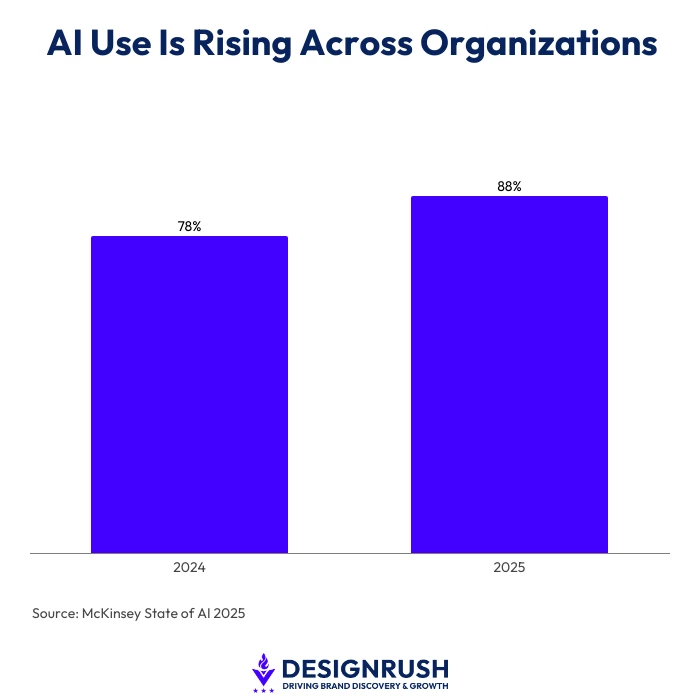
As many as 88% of respondents say their organizations now use AI in at least one business function, up from 78% a year earlier, according to McKinsey’s 2025 State of AI survey.
But only 7% say it has been scaled across the whole organization.
Commerce is one place where companies are already using it.
Across B2B, B2C, and D2C, AI is being used in search, recommendations, pricing, forecasting, and customer service, with businesses using it to make the shopping experience more relevant and take some of the work that their teams still do by hand.
But putting those tools to work gets harder when they have to run on older commerce systems.
Businesses still relying on legacy platforms may need to modernize existing systems while customers expect seamless shopping across channels.
That overlap is familiar to Magneto IT Solutions, a global AI-driven digital commerce and growth marketing partner whose work spans commerce modernization and intelligent commerce.
The company’s CEO and Co-Founder, Ronak Meghani, sees the same challenge in the company's enterprise commerce work.
“Brands are trying to improve several parts of the buying journey at once,” he says.
“Instead, the priority should be the part that can make a measurable difference for the customer or the business.”
Intelligent Commerce Is Changing Customer Experience
On the customer side, intelligent commerce can influence the journey from product discovery through purchase and service.
That comes as Deloitte's 2026 Global Retail Industry Outlook reports that 67% of retail executives expect to have AI-driven personalization capabilities within the next year.
Personalization is only one part of the experience, with AI-powered search helping shoppers find what they’re looking for, recommendations surfacing other relevant options, and intelligent merchandising influencing what they see next.
Dynamic pricing can adjust offers, and conversational commerce gives customers another way to search, ask questions, or get help while shopping.
AI is also moving into the work behind the storefront, where it can help forecast demand, plan inventory, support business decisions, and detect fraud.
“The first question should be what we're actually trying to improve, whether that's helping customers find the right product faster, improving conversion or engagement, planning inventory better, or taking manual work off the team,” Meghani says.
Why Legacy Commerce Platforms Complicate AI Adoption
Once a use case is chosen, it still has to fit into the technology already running the business.
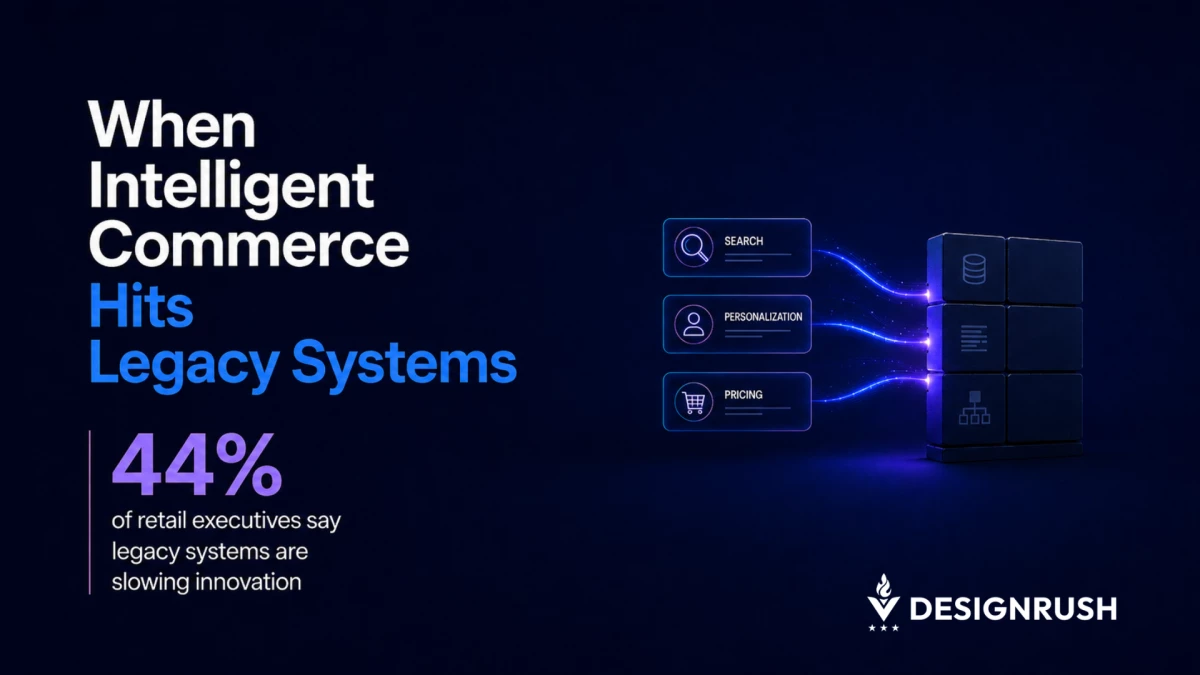
Deloitte also found that 44% of retail executives surveyed said their companies' legacy systems are slowing innovation.
Commerce platforms rarely operate alone and often connect with ERP, CRM, POS, and other technology involved in customer and operational processes.
Introducing new intelligence can therefore require work beyond the storefront.
“Legacy platforms don't disappear because a business wants AI,” Meghani adds.
“You still have to decide what can stay, what needs to connect, and what has to be modernized so the customer gets a consistent experience.”
Demand forecasting may rely on operational information held elsewhere in the business.
Dynamic pricing has to work with existing pricing processes, while personalization and merchandising have to function within the commerce experience customers already use.
Those dependencies become more important when companies are also trying to provide a seamless experience across channels.
A business can improve one part of the buying journey and still create friction elsewhere if the surrounding systems cannot support the same experience.
For companies carrying older technology, modernization may therefore have to happen alongside AI implementation.
“You don't have to replace everything to start, but you do need to know where the limits are,” Meghani says.
“Sometimes the right answer is connecting a new capability to what already works, while in other cases, part of the platform has to change first.”
Enterprise Leaders Should Prioritize Intelligent Commerce
Enterprise leaders can start with the commercial result they want to improve.
Magneto IT Solutions says intelligent commerce investments can target conversions, customer engagement, inventory planning, operational efficiency, faster decision-making, and customer loyalty.
“If the goal is conversion, measure conversion. If the goal is inventory planning, measure whether planning gets better,” Meghani says.
“Then start with the part of the journey where you already know what needs to improve.”
From there, leaders can assess whether the existing commerce environment can support the chosen use case.
“Pick a problem where the result can actually be measured, and prove that the experience or the operation gets better. Then decide where the next investment belongs,” Meghani adds.
So ask yourself this. If an AI use case also requires platform modernization, what commercial result would make both investments worth it?