
B2B buying among enterprises is becoming more digital because more buyers want to do their own research, compare suppliers, access information tied to their accounts, and handle routine purchases without waiting on a sales representative.
That behavior is already showing up in revenue, with McKinsey reporting that 71% of B2B companies now have eCommerce, and among those businesses, roughly one-third of revenue flows through digital channels.
AI is adding another layer, changing how buyers discover products, assess suppliers, and make purchasing decisions.
For business sellers, that makes B2B eCommerce much more than another sales channel. It increasingly connects customers, commerce, sales, operations, and the data behind all of them.
Every client asks us where to start with AI, but almost none of them ask where to start with getting their ERP and CRM to communicate properly.
The AI layer is only as good as the data underneath it, and most enterprises haven't done that unglamorous work yet.
Why B2B Self-Service Is Becoming the New Standard
B2B buyers don't necessarily want to eliminate sales interactions. They want to eliminate unnecessary ones.
Gartner's 2026 Sales Survey found that 67% of B2B buyers prefer a buying experience without a sales representative involved.
That makes sense for the routine parts of a purchase. Buyers shouldn't need to contact sales every time they want to check a price, reorder something they already use, or find an invoice.
A modern B2B self-service portal should allow customers to:
- View account-specific pricing
- Check product availability
- Request and manage quotes
- Place and track orders
- Reorder frequently purchased products
- Access invoices and account information
- Manage users and purchasing permissions
Self-service portals give sales teams more time to focus on complex, strategic opportunities.
This also gives customers more control over routine tasks and lets them handle those needs on their own time and at their own pace.
How AI Is Changing B2B Product and Supplier Discovery
The use of AI in B2B eCommerce is now going beyond chatbots and content generation, with Gartner also finding that 45% of B2B buyers used AI during their most recent purchase.
AI is now affecting product discovery, supplier assessment, recommendations, and procurement.
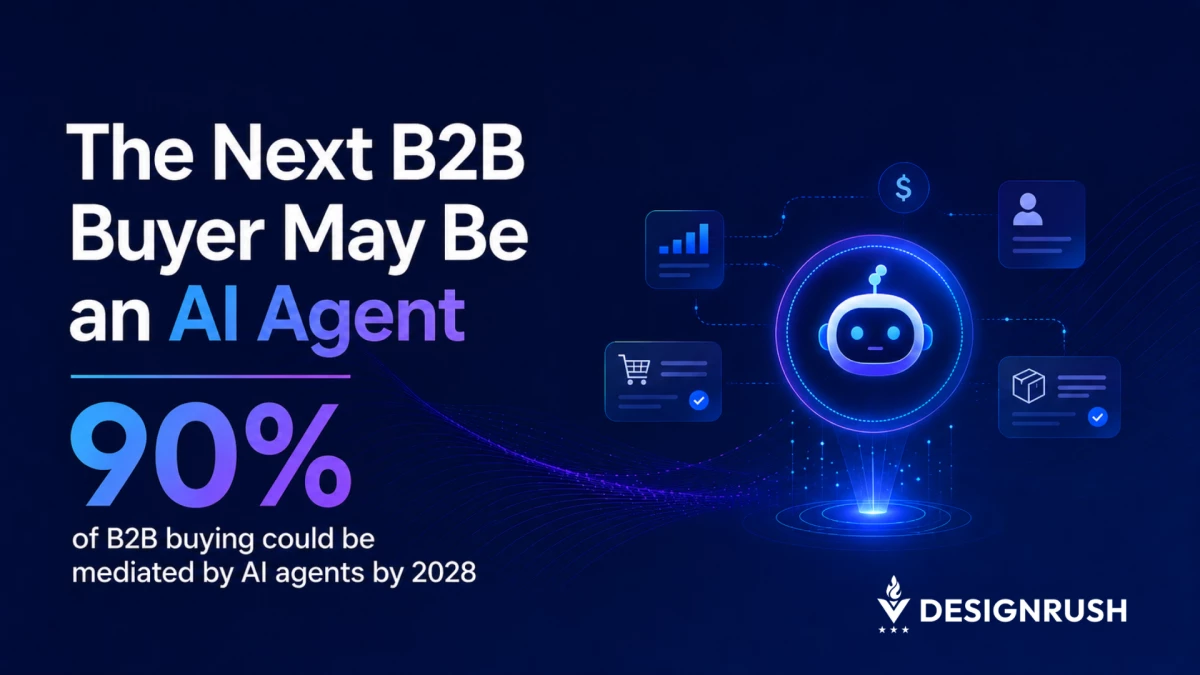
And with Gartner expecting 90% of B2B buying to be mediated by AI agents by 2028, pushing more than $15 trillion in B2B spend through agent exchanges, suppliers increasingly need to make their information understandable to machines as well as people.
To do so, AI systems need reliable information about:
- Products and specifications
- Inventory and stock availability
- Pricing and customer eligibility
- Compatibility
- Delivery options
- Documentation and technical data
That makes structured product information and connected enterprise data increasingly important for the buying experience.
Connected Data Comes Before Intelligent Commerce
An AI-powered B2B commerce experience is only as reliable as the data behind it.
For example, a manufacturer has product specifications in a PIM, pricing in an ERP, customer data in a CRM, and inventory data in a separate system.
Using AI here doesn’t address that fragmentation and can make the existing problems worse.
This is why B2B eCommerce automation hinges on the integration of ERP, CRM, PIM, Commerce, OMS, Inventory, and Customer Data.
When these systems are connected, businesses can automate processes in sales, procurement, customer service, merchandising, and ordering. Without this, automation provides only a new user interface.
How AI Is Making B2B Buying More Contextual
Traditional eCommerce relies heavily on keywords and filters, while AI-powered buying experiences can respond to a buyer’s intent.
Understanding intent can reduce how much buyers have to rely on keyword searches and long lists of filters.
For example, imagine how much easier it would be to buy a component for a car.
Rather than searching for the component, the user would describe the application, the technical specs, compatibility, and delivery details to the buying assistant.
The assistant would then search, compare, check, and suggest the best options to the user.
The same approach can support:
- Product recommendations
- Guided selling
- Product configuration
- Technical assistance
- Reordering
- Quote generation
- Cross-selling
The goal here is to reduce the effort required to make a confident purchasing decision.
How AI Is Changing the Role of B2B Sales
The role of sales is also changing, and AI for B2B sales can automate or support activities such as:
- Account research
- Lead qualification
- Follow-ups
- CRM updates
- Quote preparation
- Opportunity prioritization
- Meeting preparation
Sales teams can then spend more time on activities where human expertise matters most, such as complex negotiations, strategic accounts, technical consultation, and solution design.
McKinsey's 2026 research also highlights seller efficiency and improved customer experiences among the benefits organizations are pursuing through AI.
The future is human expertise supported by AI and connected commerce data.
Why Omnichannel Is Becoming Standard in B2B Commerce
Enterprise buyers rarely follow a single path to purchase.
One buying journey may include online research, product comparisons, quote requests, conversations with sales, and a final purchase through the eCommerce portal.
Case in point, McKinsey found that B2B buyers use an average of 10 channels during the buying journey.
The tough part, however, is connecting those 10 interactions seamlessly.
Customers shouldn't have to repeat their account information, pricing requirements, previous conversations, or order details every time they switch channels.
What Enterprise B2B Sellers Should Prioritize
The latest B2B eCommerce trends point toward five practical priorities:
1. Make self-service genuinely useful
Go beyond product catalogs. Give buyers access to pricing, inventory, quotes, orders, and account information.
2. Connect the systems behind commerce
Integrate ERP, CRM, PIM, OMS, commerce, and customer data to create a reliable information foundation.
3. Prepare product data for AI
Structured specifications, attributes, compatibility information, documentation, and pricing logic will become increasingly important.
4. Automate repetitive processes
Identify high-volume manual workflows across sales, procurement, customer service, and order management.
5. Keep humans where they add value
Complex, high-value, and strategic purchases still benefit from expert guidance.
Why Enterprise B2B Commerce Depends on Connected Systems
The next phase of B2B commerce won't be defined by AI alone.
AI can improve discovery. Self-service can simplify purchasing. Automation can reduce manual work.
But all three depend on the same foundation. Connected data and systems.
The businesses best positioned for the future of enterprise B2B commerce won't necessarily be those adopting the most AI tools, but the ones with the infrastructure to make those tools useful.
The real competitive advantage is moving from disconnected digital channels to an intelligent commerce ecosystem where buyers, sales teams, and business systems work from the same connected foundation.