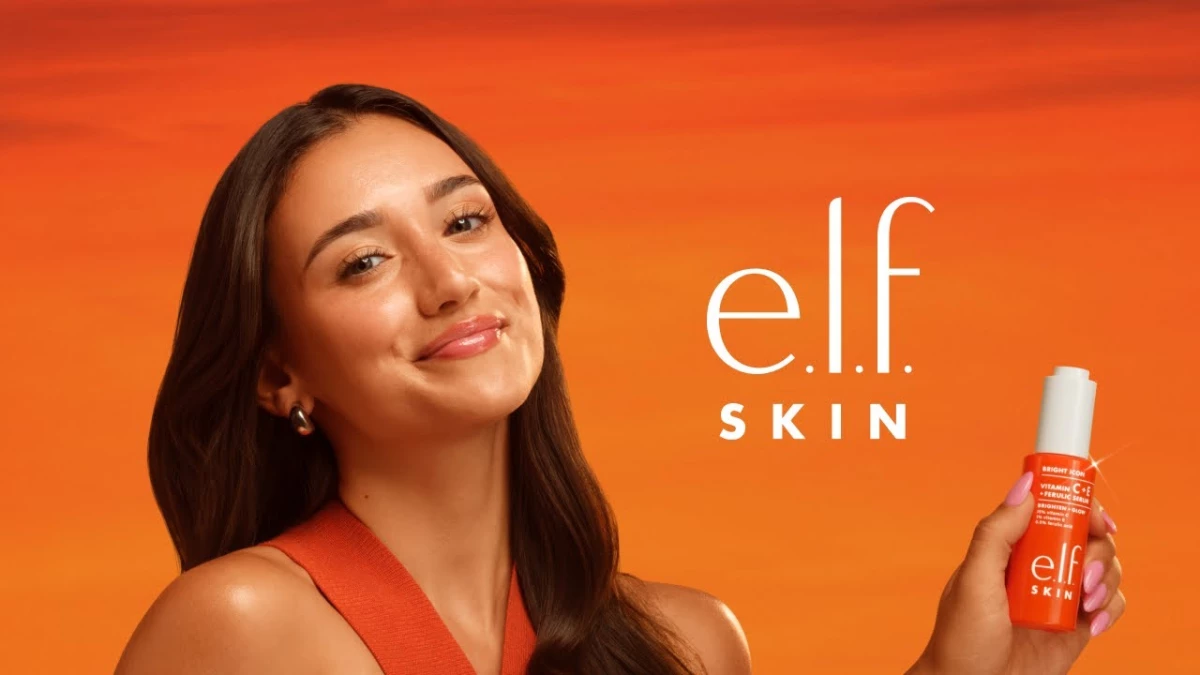

e.l.f. SKIN's 'Face Card': Key Points
- e.l.f. SKIN’s new campaign transforms a viral Gen Z phrase into a creative push celebrating confidence and accessible skincare.
- The Bright Icon Serum combines Vitamin C, Vitamin E, and Ferulic Acid to promote radiant, healthy-looking skin for $20.
- Social activations and user-generated content invite fans to join the “never declines” narrative, echoing e.l.f.’s past viral success.
The internet’s favorite clean beauty disruptor is back, and it's cashing in on radiance.
e.l.f. SKIN has launched a playful new campaign to promote its Bright Icon Vitamin C + E + Ferulic Serum.
Most notably, it takes the common Gen Z slang “face card never declines” into a literal beauty moment.
It's an effort that reimagines skincare confidence as currency; a credit system where your glow is the only limit.
Retailing for $20, the budget-friendly serum combines three hero ingredients:
- Vitamin C for brightness
- Vitamin E for protection,
- Ferulic Acid for defending against free radicals
Together, they create what the brand calls "the ultimate credit card for your skin," which provides users with a "complexion so consistently radiant and healthy-looking that it never gets declined."
Accessible, clean, vegan, and cruelty-free, the serum sits at the heart of e.l.f.’s mission to democratize skincare without compromising quality.
The campaign is proof of the brand’s long-standing reputation for affordability and transparency.
The best part: it upholds its brand values while taking notes from Gen Z language, humor, and self-expression that shape their generation's relationship with beauty.
Turning Phrases into Power
The campaign’s hero film takes the viral saying “face card never declines” and visualizes it through a playful, surreal lens.
It starts poolside, where a woman basking in the sun attracts everyone's attention, including a server who trips and falls into the pool at the sight of her.
Downtown, the woman turns the heads of people in the street as she walks into a fashion store, with the concierge going, "What the elf?"
When it was time to check out, the counter asked the elf model whether she would pay with cash or card, to which she responded: Face Card.
The spot takes a comedic turn when the card scanner declines her "face card," despite the counter describing it as "lethal."
The woman then takes her mug shots quirkily, making sure the cameraman gets her good angles.
The commercial ends with the policeman calling her face card "lowkey insane."
The brand, known for its savvy understanding of online culture, continues to find ways to turn these phrases into attention-grabbing beauty marketing moments.
The campaign also echoes e.l.f.’s earlier hits like its “Eyes. Lips. Face.” TikTok challenge, which became one of the platform’s most successful brand-driven trends, garnering billions of views.
That campaign helped cement e.l.f. as a leader in the beauty market.
This year, the brand was part of Fast Company’s list of Most Innovative Companies in Beauty, just one feat of its growing list of achievements.
What We Can Learn from e.l.f. SKIN’s Gen Z Play
For marketers, e.l.f. SKIN’s “face card” campaign is a lesson on how to be culturally fluent and creative with timing.
- Viral slang can uplift your brand's perception when it’s rooted in authenticity and emotional insight.
- Digital-native beauty campaigns work best when they invite users to participate rather than rely solely on celebrity appeal.
- Revisiting successful campaign frameworks like e.l.f.’s past TikTok challenges can strengthen creative continuity and brand familiarity.
Other brands like Kylie Cosmetics have leveraged pop culture in a similar fashion.
Recently, Jenner redid the decade-old beauty brand alongside her "King Kylie" persona, making rounds across all social media platforms.
Our Take: Can Confidence Be the New Currency?
I love it when a brand understands that cultural timing is literacy.
e.l.f. knows how and when to code-switch between internet humor and self-worth with ease.
This campaign works because it treats “confidence” as an emotional economy.
On top of that, e.l.f. packages its new product with zero pretense: a $20 serum sold with the energy of a luxury ad, yet rooted in accessibility.
It’s proof that in beauty marketing, confidence sells best when it feels earned, not sold.
In other news, Sephora and Lady Gaga's Haus Labs unveiled their latest global push rooted in inclusivity.