
Ducati is celebrating a century of Italian engineering the way only it can.
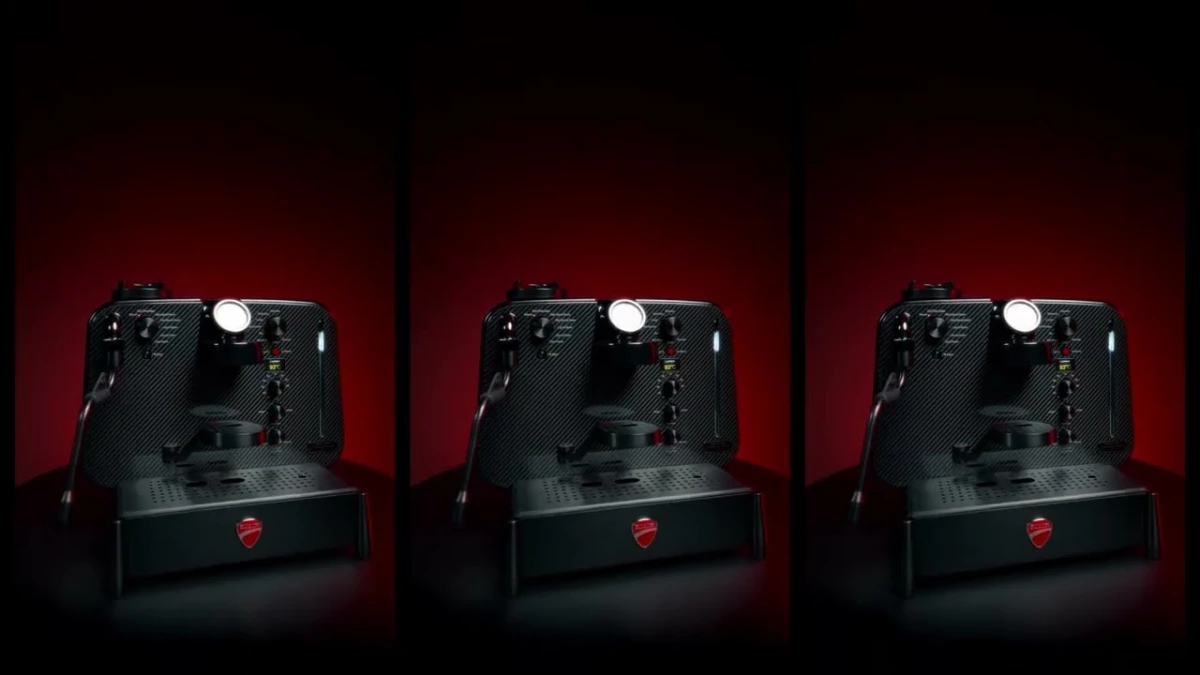
The Barista M3 1926 Carbon Fibre, built in collaboration with Swiss manufacturer Cuisine Barista, launches as the limited-edition centerpiece of Ducati's 100th anniversary.
The machine retails at $3,000 and is capped at 1,926 units, a nod to the brand's founding year.
Ducati and Cuisine Barista previously released the Barista M3, but the 1926 Carbon Fibre is a significant upgrade and a more deliberate brand statement.
The coffee machine functions as a lifestyle artifact for Ducatistas who want the brand present beyond the garage.
The machine ships with a Ducati-branded cup, reinforcing the collectible logic behind the launch.
"The Cuisine Barista M3 coffee machine combines Swiss-designed excellence with advanced brewing technology," the company said.
Features include precision-adjustable temperature, a seven-second cold start, a premium milk steamer, and an in-cup frother.
The unit itself has a removable 1.4-liter water tank, a PID controller, descaling alerts, a push-button interface, a steam nozzle, and up to 19 bar of pressure.
A companion app handles fine-tuning for preferred extraction settings.
The product design mirrors the visual language of the Panigale, with carbon fiber paneling, Ducati badging, and a matching colorway.
A Pod Machine at a Purist's Price
The Barista M3 runs on Nespresso Original pods, not ground beans through a portafilter, which is the detail most likely to divide the market.
Cuisine Barista specializes in Nespresso-compatible machines, and its expertise shows in the milk-frothing system, which the brand calls the world's first in-cup milk frother.
Users place milk directly in a steel cup, which the machine heats via induction to produce both hot and cold foam.
The flexibility supports lattes, cappuccinos, and other milk-based drinks, an unusual capability for a pod machine at any price point.
The machine is available in black, white, and red, with Ducati's signature red as the most on-brand option.
Pre-orders are open now, with shipping expected in October.
The Barista M3 shows what brand extension looks like when a company knows exactly who it is selling to and prices accordingly.
Ducati targets a narrow, high-affinity audience and gives them something just for them.
The Risk of Pod Culture
Selling 1,926 units at $3,000, double the price of the standard Barista M3, makes this a revenue-efficient, high-visibility launch.
The first batch sold out immediately, with the second batch scheduled for delivery in October 2026.
The positioning that makes this machine a must-have to Ducatistas may be what limits it.
Pod coffee has a cap in the enthusiast market, regardless of how premium the machine looks.
Charging that much for a pod machine signals the buyer is paying for brand equity, which works only when the audience is a diehard fan.
Reactions will likely split between buyers drawn to the aesthetic and enthusiasts who question what the price actually reflects.
Here are some takeaways for marketers watching how Ducati handled this launch:
- Anchor scarcity to a meaningful milestone: The 1,926-unit cap is tied to a 100th anniversary celebration, which makes the limitation feel intentional.
- Match the product to the audience's lifestyle, not just the logo: The machine's visual design speaks to an existing Ducati owner's home and identity.
- Be transparent about what the product is: The premium is on experience and identity, and Ducati priced it accordingly.
The first question any brand should ask about a lifestyle product extension is who is actually buying it.
The answer is almost always a narrower audience than the initial hype suggests, and Ducati's unit cap shows what honest audience sizing looks like in practice.
Our Take: Is Ducati Building a Lifestyle Brand or Buying Time?
The Barista M3 arrives as Ducati faces real pressure in its core business.
Declining motorcycle volumes and intensifying competition across key segments make its centenary as much a commercial challenge as a celebration.
This context turns the espresso machine from a vanity project into something more strategic.
It signals that Ducati is serious about extending its brand into daily life.
The Barista M3 moves into the kitchen, which is a different kind of real estate entirely.
If it works, Ducati has a proof of concept for reaching Ducatistas at touchpoints its motorcycles and riding gear never reach.
And we think that extending into lifestyle matters more now that the core product category is under pressure.
Working on collectible launches that need stronger demand forecasting, community management, and scarcity planning?
Explore these Top Viral Marketing Agencies in our directory.