
Agency packages used to follow a simple structure: set deliverables, fixed timelines, defined scope. The client signs off, and delivery starts
In practice, that model is under strain.
Digital marketing in 2026 moves too fast for a static plan.
Search behavior is shifting under the influence of AI-generated results, platform algorithms are evolving continuously, and customer expectations around personalization are rising.
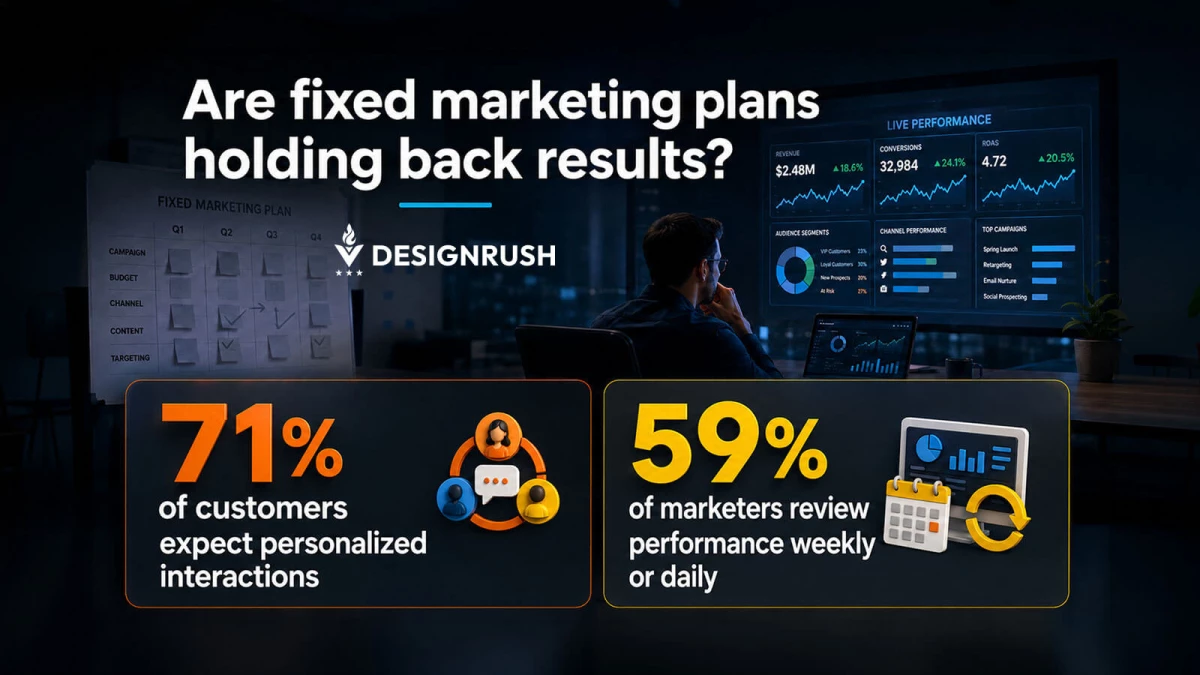
Seventy-one percent of customers expect personalised interactions from companies, according to McKinsey, reinforcing rising expectations around relevance and timing in customer engagement.
A static package is not just inefficient in that environment. It can actively work against performance.
That is why we moved away from traditional packages at ForeFront Web and built Success Plans designed to evolve in real time.
This was not a branding decision. It was a direct response to what we were seeing happen to client performance.
The Problem with Fixed Marketing Packages
Most agency packages still assign fixed monthly outputs like blogs, ads, landing pages, or SEO tasks per month.
Billing and reporting stay simple. Work stays fixed even when performance signals change.
In fact, nearly 63% of total media spend is now allocated to awareness and conversion, with CMOs shifting budget toward customer acquisition and growth, according to Gartner.
Fixed packages don’t respond to that kind of movement. Work stays tied to planned tasks even when performance signals change.
Now consider what happens inside a fixed package.
You commit to a content calendar, keyword targets, and channel allocation based on a snapshot in time.
A few months later:
- Search results shift due to AI-generated answers, reducing visibility for previously valuable keywords
- Paid platforms adjust attribution models, distorting perceived performance
- New customer insights emerge from sales conversations that were never part of the original plan
Yet the work continues as scoped.
From a performance standpoint, this creates a structural problem.
This shows up clearly in delivery models built around scope rather than outcomes.
When output is locked to a monthly plan, it continues on schedule even after results flatten, because no one on the account is incentivized to stop and ask whether the work is still the right work.
Fixed packages are a major reason why: they prioritize consistency of output over adaptability of strategy.
The result is familiar: campaigns plateau, teams hesitate to pivot due to scope constraints, and reporting becomes an exercise in explaining why execution did not translate into growth.
A Smarter Approach: Living Success Plans
At ForeFront Web, we start in a different place. Not with deliverables, but with outcomes.
Instead of asking what we will produce each month, we ask:
- What needs to move in the business?
- Where are the biggest leaks in the funnel?
- What is already working that should be scaled?
- Where are competitors gaining ground?
From there, we build a Success Plan that adapts as priorities change.
Deloitte notes that organisations with stronger talent agility can move people and resources more easily as priorities change, so work gets adjusted instead of left on autopilot.
That’s how modern teams operate, with resources reallocated based on performance signals rather than fixed activity plans.
In practice, a living plan means:
- Budget shifts across channels when performance trends change
- Content priorities move forward or backward based on emerging opportunities
- Strategy adjusts in response to algorithm updates, competitive movement, or user behavior
The strategy remains stable. The execution evolves.
How We Know When to Pivot
A living plan depends on continuous signals, not periodic review cycles.
Our team tracks performance signals across channels, including conversion rates, cost-per-lead trends, search visibility, engagement patterns, and competitive positioning.
Companies that monitor and optimise campaigns regularly reflect this cadence in practice, with 59% of marketers reviewing performance on a daily or weekly basis, according to HubSpot.
That level of visibility supports faster decisions when patterns begin to change.
For example:
- A gradual increase in cost per lead signals inefficiency before it becomes a budget issue
- Unexpected organic traffic reveals new keyword opportunities worth scaling
- Declining click-through rates suggest misalignment between content and search intent
These are not failures. They are signals.
Fixed packages tend to miss them because no one is accountable for acting on emerging data.
In a living model, responding to those signals is the work.
From Fixed Execution to Adaptive Growth
The impact of this approach becomes clearer in practice.
When Arc Solutions (Arc) came to ForeFront Web, they had a strong Shopify storefront and a deep product catalog.
However, their visibility in non-branded search was limited, and competitors were consistently winning high-intent queries tied to buying decisions.
A traditional fixed package approach would have focused on producing a set number of SEO deliverables each month.
Instead, we built a living SEO strategy grounded in continuous data analysis and reallocation of effort.
Using Semrush, we identified where competitors were capturing demand and where Arc was missing opportunities.
From there, the plan evolved dynamically across three areas:
- Closing keyword gaps tied to buyer-intent searches
- Prioritizing content and collection pages based on real performance potential
- Continuously refining technical SEO to support visibility and indexing
As new data emerged, priorities shifted. Content themes were expanded or accelerated.
Page optimizations were re-sequenced. Technical fixes were addressed based on impact, not timeline.
The results reflected that flexibility:
- Organic traffic increased by 205%
- Organic keyword visibility grew by 103%
- Monthly Shopify revenue from organic traffic increased by 71%
- Total monthly Shopify revenue surpassed their goals
More importantly, this growth was not driven by a fixed set of deliverables. It came from continuously aligning strategy with real-world performance signals.
As one of our SEO specialists put it: the value was not just in the data, but in the ability to turn that data into an evolving roadmap.
The Power of a Connected Strategy
Another limitation of fixed packages is fragmentation. SEO, paid media, content, and creative often operate in silos, each delivering against separate scopes.
A living plan connects those channels.
Data from one area informs decisions in another:
- SEO insights guide paid keyword targeting
- Paid performance validates messaging before scaling content
- Content engagement shapes creative direction
About 71% of CMOs now run integrated, full-funnel campaigns that combine brand and performance activity, according to McKinsey.
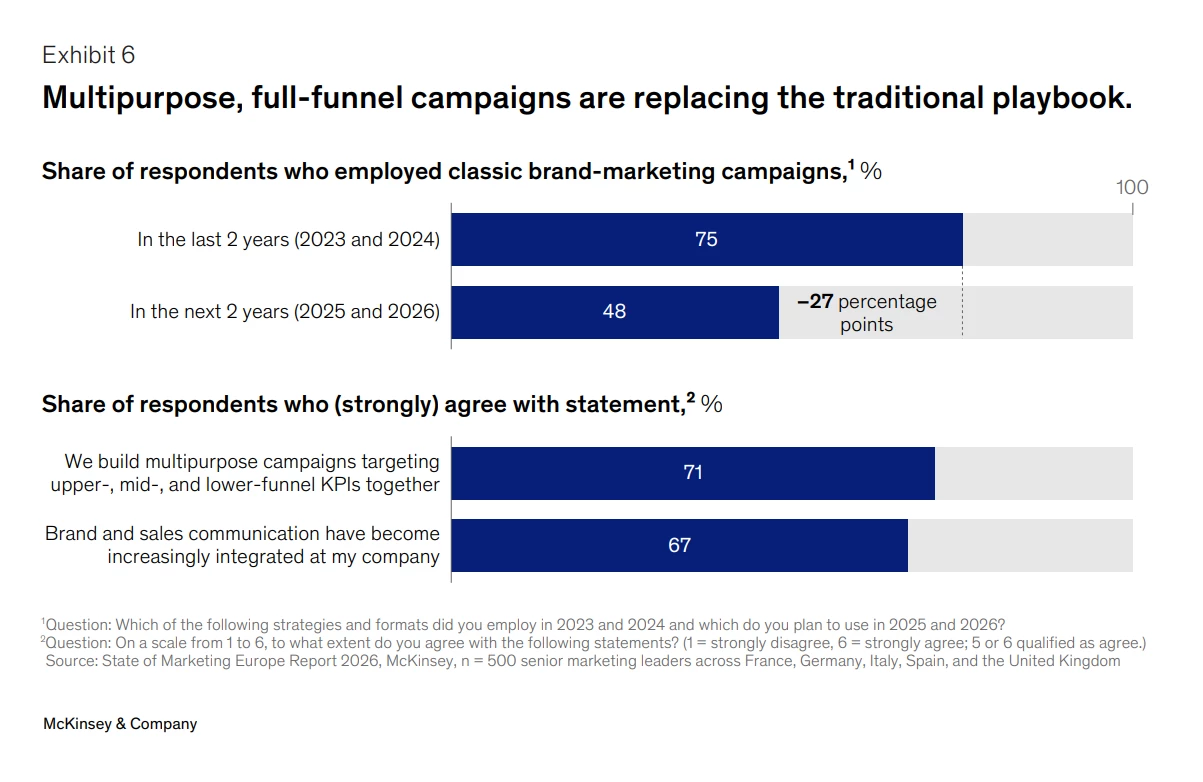
When everything is aligned to shared performance signals, marketing stops being a collection of activities and becomes a coordinated system.
Fixed Plans Can't Keep Up With How Marketing Moves Now
AI’s now playing a role in how people find and assess information, which changes how visibility works across channels.
Search results and platform updates move quickly and customer journeys aren’t linear anymore. Plus, people move across different touchpoints with intent changing as they go.
Then, there’s timing to consider. Plan built months in advance rarely match what’s happening once campaigns are live. While this doesn’t make planning irrelevant, it does mean adaptability is essential.
And so, the most effective marketing organizations will likely be those structured to respond quickly when those plans need to change.
That’s what makes ForeFront Web’s Success Plans so useful. They’re designed to provide a stable strategic foundation with a dynamic execution layer that evolves alongside the market.
Because the advantage today is not having a plan; it's having one that can change and a team already watching for when it should.