
Eighty percent of organizations believe that future customer experiences will be highly personalized and anticipatory, according to Adobe's 2026 AI and Digital Trends Report.
Yet, one in four customers already turns to AI-powered platforms as their primary source when searching for information, surpassing brand websites and online reviews.
For entertainment brands, a website that delivers only information is already losing ground.
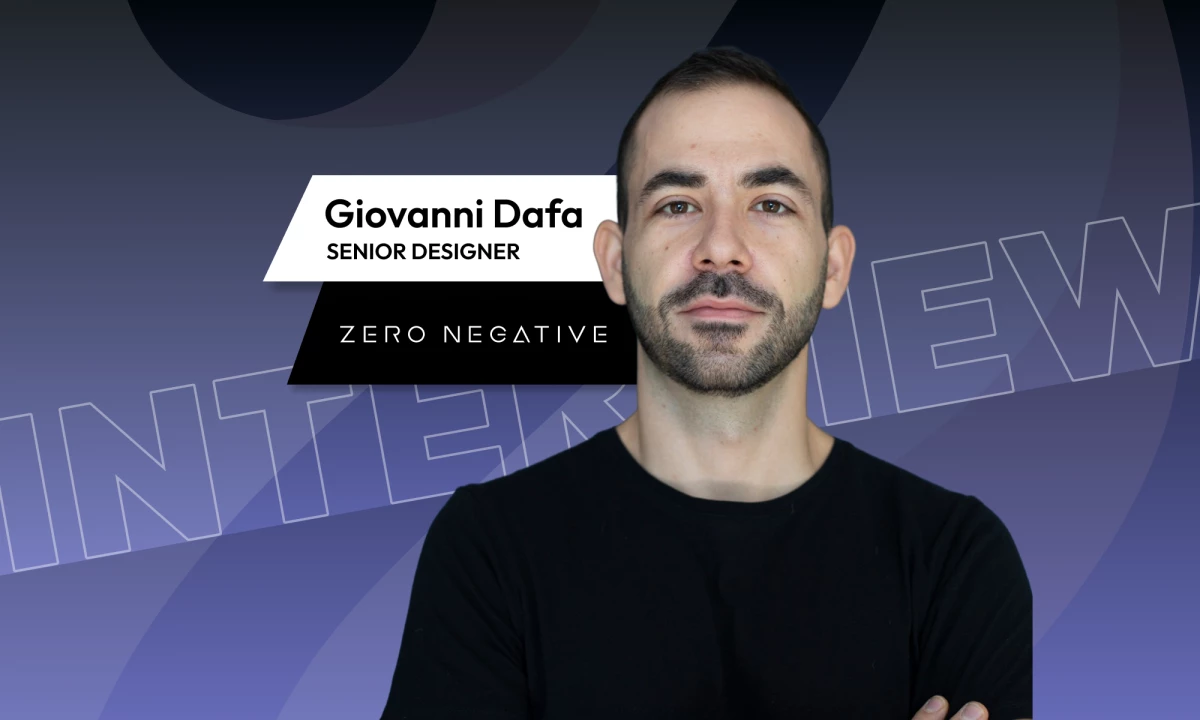
Giovanni Dafa, Art Designer at Zero Negative, has spent his career building the kind of experiences that give brands a reason to stay relevant.
His work on the Invincible VS site for Skybound, the publisher behind the Invincible franchise, is a case study in that shift.
The site needed to engage existing fans while serving as the central hub for game information before, during, and after launch, with official details easy to find at every stage.
Zero Negative handled the project end to end, covering UI/UX, frontend development, backend development, and CMS implementation.
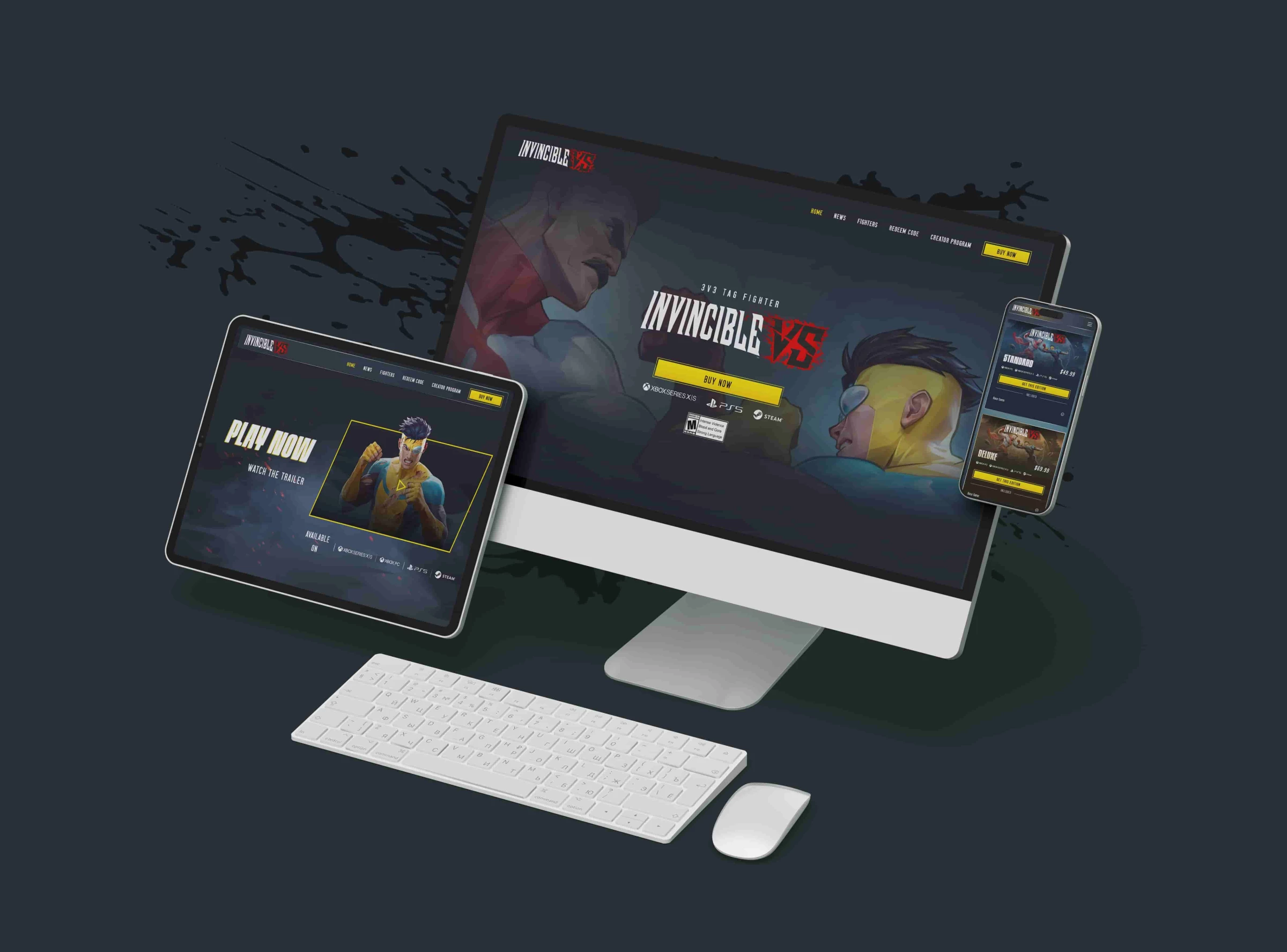
In this DesignRush interview, he explains what gaming design teaches brands and why personality is not a creative luxury.

Who Is Giovanni Dafa?
Giovanni Dafa has been an Art Designer with Zero Negative since 2021, working across industries including biotech, software/SaaS, professional services, and entertainment.
Based in Montréal, Dafa brings a background in graphic and UI/UX design spanning more than 15 years.
When Flat Is the Wrong Default
The Invincible VS franchise runs on kinetic energy. Its visuals are aggressive, its fights are visceral, and its fanbase knows exactly what the IP feels like.
Dafa says that the tension between brand energy and digital restraint was the first problem to solve.
"Invincible is a very high-energy brand, and so it was absolutely critical the site did not come across as too flat or boring," he says.
"We immediately had a lot of unique ideas that would make for a high-impact experience, but we also had to balance the need for broad device compatibility and maintaining good compliance."
Universa and The Immortal jump start Season One.
— Invincible VS (@InvincibleVS) June 30, 2026
Today's gameplay patch also adds:
- New progression unlocks
- Ranked rework
- Endless Ladder
- More! pic.twitter.com/LQnXF5zxa4
The solution was to let the IP do the work. Vibrant colors, motion, and composition grabbed attention fast.
The content itself, fight footage, character design, franchise visuals, carried the weight.
"But even with these techniques, this level of energy and excitement is less feasible with many of our more standard business sites. Of course, they usually don't feature videos of superheroes beating each other to a pulp," Dafa says.
"The content speaks for itself, so we just had to take the time to learn how to best present this content within the realm of the established IP."
Visitors Who Aren't There for Information
Most brand websites are designed around the assumption that the user came to learn something. Entertainment brands expose the limit of that assumption.
"Especially for entertainment brands, we're seeing that users are not always visiting websites strictly to get new information," Dafa says.
"They may just be seeking to enjoy more content or products. In these cases, it's very important that these sites deliver exactly what the user is seeking and give them something worth enjoying."
Getting this wrong costs return visits. And flat, informational sites give audiences no reason to come back.
Dafa's view is that digital experiences work best when they draw from real-life interactions. The closer a site feels to something natural and familiar, the more receptive audiences are to it.
For brands without superheroes to lean on, the same principle applies. The content changes, but the expectation that a site delivers something worth the visit does not.
A Fanbase That Knows the Brand Best
Working with established IP introduces a design constraint that most projects lack.
Every creative decision has to survive contact with an audience that already knows what the brand should feel like.
"Working with well-established brands is often hard. They often have so much prior IP that needs to be considered that you don't want any new brand material to detract from that," Dafa says.
With Invincible VS, the team solved it by studying the fanbase first. For them, it was really important to take the time to understand the existing IP and digest what the fanbase enjoys.
"Once we saw from their perspective, it wasn't hard to make something that is an extension of what they already love," he explains.
Asked about the biggest challenges, Dafa says Invincible VS was actually an easier case than most established IP projects, since the franchise's existing visual identity did most of the work for the team.
How far can you go in Endless Arcade mode?
— Invincible VS (@InvincibleVS) July 1, 2026
A new single player experience to help you hone your skills and raise your character mastery. It's Battle Beast's dream. pic.twitter.com/GJV9XZP9Mr
That principle extends beyond entertainment. Any brand with a developed identity and a formed audience faces the same constraint.
So, the job is to understand what that audience already responds to before deciding what to build.
What Video Game Websites Do That Most Won't
Video game websites are among the most high-octane digital experiences produced by any industry. Dafa says that it's something that most brands avoid like the plague.
In other words, the instinct to play it safe online is a strategic choice, and not always a good one.
"I would encourage brands to not be afraid of being too high energy if it engages with your audience. You might be surprised by what audiences are receptive to," Dafa says.
For brands looking to close that gap, Dafa points to three lessons video game websites have already figured out:
- Energy is not a risk if it matches the audience. Brands that default to flat design to appear safe often disappear into the category instead.
- Entertainment has business value. Information and enjoyment are not mutually exclusive, and a site that offers only one will lose the audience that came for the other.
- Personality is load-bearing. Without something specific that speaks to people, no amount of polish creates impact.
The One Surface Brands Still Own
Social platforms have taken over discovery. Third-party platforms handle transactions. Dafa says brands that cede too much ground to those channels lose something harder to recover than traffic.
"Social media is increasingly replacing websites for interacting with audiences, and third-party platforms are increasingly replacing websites for functional and transactional needs," he explains.
"But what we do see working well for many brands is not relinquishing too much space to these third parties."
The website remains the one surface the brand fully controls. Dafa's argument is that brands should use that control to establish authority rather than just provide information.
"Make your website the authoritative source for the brand however you can, which allows you to better guide the user journey," he says.
For entertainment brands, the website is where the IP lives when it is not on a screen, and that is a different design brief than a marketing page.
The Invincible VS site works because it treats the franchise's own visuals and energy as the content itself.
Connection Matters More Than the Technology
Dafa is cautious about predicting which technologies will define the next few years.
What he does see holding steady is the advantage brands build through consistent content, regular audience communication, and presence across multiple channels.
The technology matters less than the connection it enables.
Still, that connection is under pressure. One in four customers now turn to AI platforms as their primary source for information and recommendations, per Adobe's report.
Overall, brands that treat their website as the authoritative source now are the ones best positioned to maintain that relationship as discovery habits shift.