
Data Drift: Key Findings
- Data drift is a silent threat that erodes trust, slows decision-making, and can cost businesses millions if left unchecked.
- Strong data foundations built on anomaly detection, transformations, governance, and monitoring prevent drift from undermining strategy.
- Trustworthy data is the most important competitive advantage in an AI-driven business environment.
Quick listen: Data drift can quietly wreck dashboards, erode trust, and cost millions. Here are five fixes to strengthen your data foundations in under 2 minutes.
Data drift undermines decisions in ways you don’t see coming. Dashboards may look right, but shifting data can quietly waste time, break trust, and cost you.
According to Gartner data cited by Dataversity, poor data quality, including issues like data drift, costs organizations an average of $12.9 million annually.
But what is data drift?
It’s when data changes over time in ways that break how your dashboards or models work.
Things that once aligned, such as naming conventions, formats, and schemas, start to go wrong, often without anyone noticing in time.
In business terms, this drift comes from changing customer behaviors, updates in tracking markup, or new rules at the data source.
If no one notices, your dashboards continue to report, but the data no longer reflects reality. And your team, over time, will lose faith in the numbers.
According to a 2025 study by Adverity, a data analytics platform for marketing teams, CMOs estimate that 45% of the data their teams use is of poor quality.
Distrust in marketing data isn’t new.
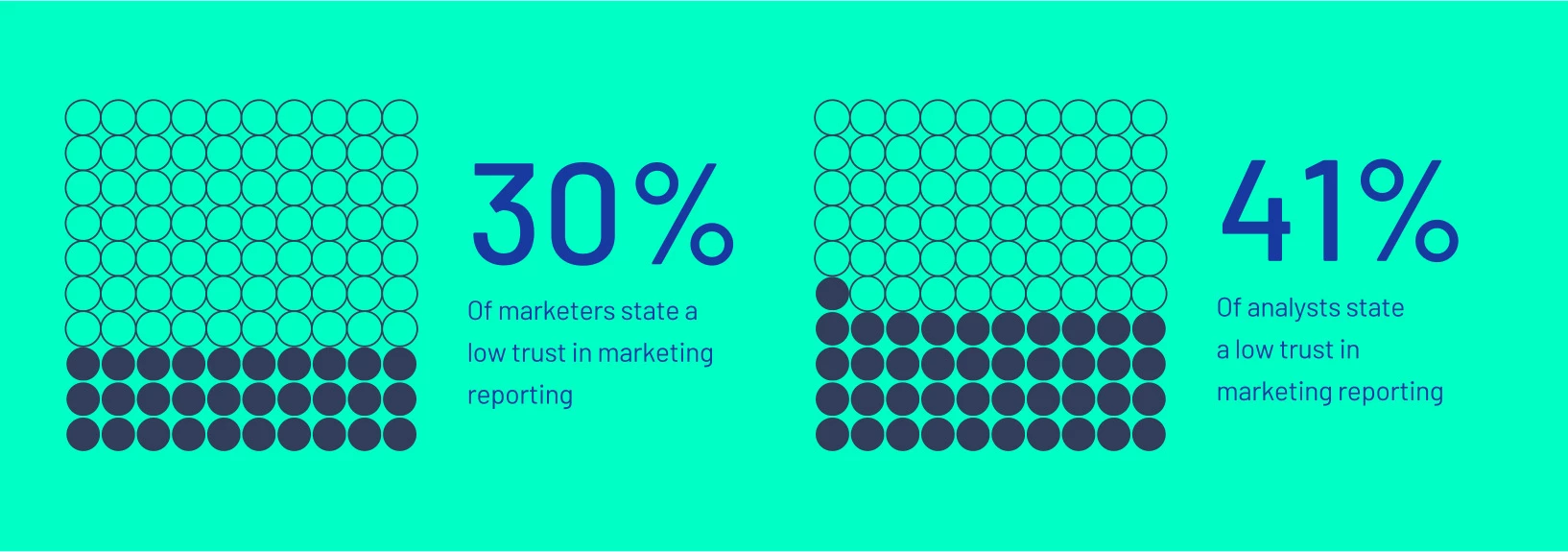
In fact, a similar Adverity study from 2022 found that 41% of data analysts and 30% of marketers have a low level of trust in their reporting.
When people can’t trust the data, they stop making decisions. That’s why platforms like Adverity focus on getting the foundations right instead of chasing flashy features.
“If you can’t trust your data, how can you measure your performance? If you can’t measure your performance, how can you adjust your strategy? And, if you can’t adjust your strategy? Well, you're just dead in the water,” said Harriet Durnford-Smith, CMO at Adverity.
Strong data foundations make analytics, AI, and predictive tools work. Without them, even the best tech fails.
The good news? Data drift can be contained.
These five fixes help stop it early and rebuild trust in your data.
Fix #1: Automate Your Data Mapping and Harmonization
One of the most common ways drift sneaks in is through naming inconsistencies.
- Inconsistent IDs: A campaign ID labeled as “CampaignId” in one source but “Campaign ID” in another
- Mismatched revenue fields: One feed calls it “Rev,” another uses “Revenue_Total”
- Conflicting date formats: U.S. months in one report vs. European days in another
Each issue may seem minor, but together they can cause misalignment when mismatched fields and split values quietly distort your metrics.
These problems often stem from an improper setup of marketing tags, snippets of embedded code that track behavior.
Without proper tag management, these can be deployed with aforementioned inconsistencies across platforms like Google Analytics and Meta Pixel, which result in data drift.
How do you fix it? Via automated data mapping.
Instead of relying on manual cleanup, smart mapping systems apply consistent naming conventions across all streams.
This standardization ensures sales, marketing, and finance all read from the same script.
The benefit?
Teams stop wasting hours on reconciliation. More importantly, they prevent “schema drift,” or unintended changes in the structure of a database or data pipeline over time, from skewing reports.
Fix #2: Apply Real-Time Anomaly Detection to Catch Drift Early
Most organizations only discover drift after it’s too late.
The quarterly review arrives, KPIs look off, and someone asks, “Why didn’t we see this coming?”
Data rarely falls apart overnight. Rather, it usually drifts gradually, with click-through rates inching down, conversion windows lengthening, or discrepancies in ad impressions skewing results.
Without an alarm system, these small deviations go unnoticed until the results are undeniable.
Anomaly detection addresses this blind spot. By comparing incoming data against historical patterns, it flags values that fall outside the expected range.
Rather than waiting for a monthly report, data teams get alerts in real time. Adverity integrates this functionality directly, so anomalies trigger warnings the moment they appear.
Fix #3: Use Transformations as a Data Gatekeeper
No dashboard can compensate for flawed inputs.
In this case, new data sources are often a common culprit, along with other updates that introduce unexpected changes that ripple through reporting systems.
For example, a partner might restructure transaction data, or a marketing team might add a new campaign feed without syncing formats.
All of these shifts can introduce silent errors that sneak downstream.
Transformations serve as the gatekeepers. They apply rules before data flows into the warehouse or dashboard.
This can include:
- Smart naming conventions to enforce uniformity
- Currency conversions to keep global revenues aligned
- Match-and-map rules to reconcile IDs across systems
- Filters that block malformed or incomplete records
With transformations in place, only “clean” data passes through.
Fix #4: Democratize Data Access with Governance Controls
Another common source of drift is human error.
Well-meaning employees download spreadsheets, copy data into personal files, or manually upload exports into the system.
Each of these actions potentially creates another version of “the truth.”
The solution lies in governance controls that balance access with protection.
With role-based filters, robust access rules, and centralized oversight, companies can allow teams to self-serve insights without splintering the data.
By democratizing access responsibly, governance reduces silos and keeps everyone aligned.
Fix #5: Monitor Data Streams Continuously
Although it’s common practice to track whether models stay accurate over time, many overlook checking whether the underlying data streams are healthy.
The thing is, APIs change. Connectors update. Feeds slow down or break entirely.
When that happens, dashboards may display zeros, partial data, or outdated numbers.
Continuous monitoring solves this. By tracking the health of each data fetch, companies can catch connector failures, latency issues, and performance dips before they spread.
Secure Strong Foundations to Drive Confident Decisions
Every executive wants advanced analytics, predictive dashboards, and AI-powered insights.
But without strong foundations, these ambitions rest on sand.
Given how automation and AI increasingly drive decisions for many organizations today, ensuring that your data can be trusted every single day becomes the most important competitive advantage.