
Celebrity-owned brands have become one of the defining commercial stories of the decade, even though many of them fail.
The early 2020s produced enough record-breaking launches and billion-dollar exits to make the model look foolproof.
Five years on, the split between the survivors and the write-offs traces back to a single decision made before launch.
We'll pick through the wreckage first, then get to the brands still standing.
Logan Paul and KSI's Prime
Paul and KSI launched Prime Hydration in 2022 as a sports electrolyte drink aimed at their combined creator audience.
It hit $1.2 billion in annual sales by 2023, then physicians disputed the hydration claims and schools banned it over caffeine.
U.K. revenue fell roughly 70% in 2024, with net profit down 92% to around $367,000, while U.S. sales dropped about 40% in the first half of 2024.
Prime Ice launched in early 2025, though nothing published since suggests the product innovation has reversed the decline.
View this post on Instagram
Lionel Messi's Más+
Messi's Más+ launched in 2024 as a hydration drink for football audiences, developed with the Mark Anthony Group.
Prime's lawsuit over packaging similarities surfaced an affidavit in which Messi stated he had no involvement in the bottle or label design.
Both sides dismissed their claims in January 2026. Mark Anthony sunset the brand entirely a few months later, ahead of the World Cup.
The Group also owns White Claw and Mike's Hard Lemonade, so the drink had serious distribution behind it, yet still couldn't hold shelf space.
View this post on Instagram
Kim Kardashian's SKKN
Kardashian launched SKKN by Kim in 2022 as a luxury multi-step skincare range, licensed to Coty in a $200 million deal.
The range sold a nine-step routine at $630 to an audience that knew the reality TV star for shapewear.
SKIMS bought the brand back from Coty in March 2025, then closed the line that June to rebuild beauty under a brand strategy that already worked.
View this post on Instagram
Blake Lively's Blake Brown Beauty
Blake Lively launched Blake Brown in 2024 as a haircare range at Target, with $100 million in sales projected for 2025.
Her dispute with Justin Baldoni triggered a boycott from Taylor Swift's fanbase over claims that Lively had pressured the singer-songwriter into backing her.
Blake Brown finished 2025 under $15 million, a decline of between 56% and 90% depending on the source.
Lively and Baldoni settled in May 2026, by which point the brand strategy had spent two years answering for a lawsuit.
SPOTTED: B & Z sipping some VIT. They do say the best tea is kept between friends, but this one? It's available nationwide.
— Betty Booze (@BettyBooze) June 30, 2025
XOXO,
BB pic.twitter.com/qkXkcU9Jqx
Meghan Markle's As Ever
Markle soft-launched American Riviera Orchard in March 2024 with a polished campaign and influencer-gifted strawberry jam jars.
The USPTO refused the trademark that August, ruling the name primarily geographically descriptive.
Markle rebranded to As Ever, then launched the first products in April 2025 through Netflix, selling out in under an hour.
Netflix canceled "With Love, Meghan" after two seasons in October 2025, then exited the brand entirely in March 2026.
View this post on Instagram
Travis Scott's Cacti
AB InBev developed Cacti with Travis Scott and put the spiked sparkling water into retail in March 2021, backed by heavy festival marketing.
It sold out at thousands of locations within 24 hours and cleared its online inventory in 12.
Ten people died in a crowd crush during Scott's set at Astroworld that November, the Houston festival he founded and headlined.
Hundreds of lawsuits named him personally, and AB InBev, itself an Astroworld sponsor, discontinued Cacti on December 10.
View this post on Instagram
Why Celebrity Brands Are Failing Faster
Every brand above failed the same test before launch, since none of their founders had a documented history in the category they entered.
This gap used to be survivable because a famous name bought enough attention to carry a weak product through its first two years.
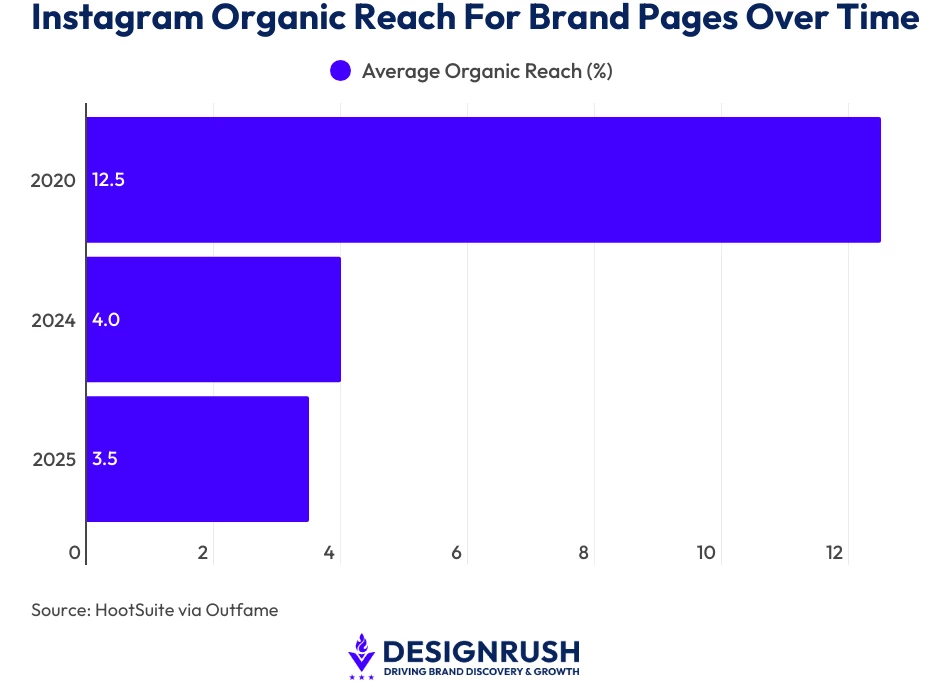
Instagram brand pages averaged 10% to 15% organic reach in 2020, and by 2025, that figure sat near 3.5%.
Celebrity founders now pay for the distribution their followings used to supply.
Buyers have also started reading a founder's conduct as product information.
Lively's personal scandal cut Blake Brown's sales by as much as 90% within months.
Meanwhile, Scott lost Cacti, Nike, Dior, and Fortnite inside five weeks after the AstroWorld tragedy.
Nike released the rapper's shelved sneaker in 2022 to an immediate sellout, and his fourth studio album "Utopia" debuted at No. 1 the following year.
Scott could release his way out of the damage, while every can of Cacti was priced on his reputation in the months following the incident
Prime shows the other half of the problem, where wide distribution erased the scarcity that made the drink worth chasing.
Fame works as a distribution channel, and channels close, sometimes through a lawsuit and sometimes through a canceled series.
A founder with real category history offers a product that people pick on its own merits, which is what every branding process is trying to achieve.
Rihanna's Fenty Beauty
Rihanna launched Fenty Beauty in September 2017 with 40 foundation shades, addressing a gap she had spent years working around as a performer.
The line cleared $100 million in its first 40 days and $570 million in its first full year, outselling every celebrity beauty launch before it.
Competitors expanded their own shade ranges fast enough that the industry named the pattern "The Fenty Effect."
Rihanna owns half the business, and the shade range she built as a customer became the product design standard the category now launches against.
View this post on Instagram
Selena Gomez's Rare Beauty
Gomez launched Rare Beauty in September 2020, pledging 1% of all sales to the Rare Impact Fund before the first order shipped.
The commitment tracked Gomez's own public history with mental health, which gave buyers a reason to return past the first purchase.
Rare Beauty is the top-selling blush brand at Sephora, taking 26% of the retailer's blush sales.
Fortune valued the brand at $2.7 billion in October 2025, with Gomez holding the majority stake in a brand strategy she still fronts herself.
View this post on Instagram
Hailey Bieber's Rhode
Bieber launched Rhode in 2022 as a minimal skincare line, selling a small number of well-formulated products used consistently.
The brand generated $212 million in net sales in the 12 months ending March 2025, direct-to-consumer only, with just 10 products.
e.l.f. Beauty acquired it in a deal valued at up to $1 billion, at 3.8 times its net sales.
View this post on Instagram
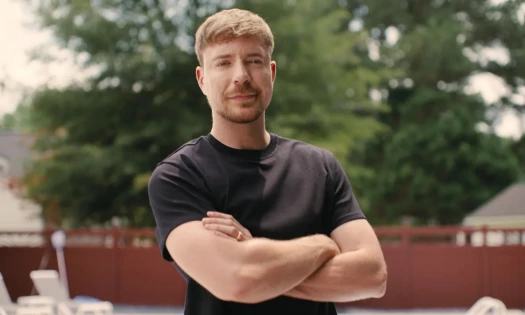
MrBeast's Feastables
MrBeast launched Feastables in January 2022 and put it on Walmart shelves from the start, where impulse chocolate buying actually happens.
His channel appears in enough of the marketing that customer acquisition costs sit near zero, with over 510 million subscribers watching each launch.
Feastables cleared $250 million in revenue and $20 million in profit in 2024, outearning his media business for the first time.
The chocolate now funds the videos, and MrBeast owns both ends of the influencer partnership his competitors have to rent.
View this post on Instagram
Emma Chamberlain's Coffee Brand
Chamberlain Coffee was launched in 2019, after years of documenting a coffee habit on a channel that the influencer's already followed.
The brand cleared roughly $22 million in revenue in 2024 across more than 8,500 stores, including Whole Foods and Walmart.
Chamberlain Coffee ran at a loss that year, and a leaked pitch deck later showed a pivot to fewer products, fewer retail doors, and more cafes.
Chamberlain moved into a co-CEO role in 2024, and the first cafe opened in Los Angeles that January.
View this post on Instagram
What the Winners Did Differently
The founders stayed operationally central after launch, which is what held their communities together once the novelty passed.
Rihanna owns half of Fenty, Gomez holds the majority of Rare Beauty, and Bieber stayed on as chief creative officer through the e.l.f. sale.
Most of the failures licensed a name to an operator, with Coty running SKKN, Mark Anthony building Más+, and AB InBev developing Cacti.
The winners also launched narrow, with Rhode selling only 10 products and Fenty leading on a single foundation range.
SKKN by Kim opened on a nine-step routine priced at $630.
A tight range gives a community one thing to talk about, which is how product design earns a second purchase.
View this post on Instagram
Here are three takeaways for agencies and marketers structuring talent partnerships in 2026.
- Apply the pre-brand credibility test before any deal is signed. A founder's public record in the category is what keeps buyers ordering after the coverage.
- Structure deals around equity and an operating role. Founders who own the product make the decisions about it, and that shows up in formulation, range, and release pace.
- Launch narrow and let the range concentrate attention. A short product list gives a community one thing to discuss and repurchase, which turns interest into habit.
Every one of these is decided before launch, which puts them in the deal memo before the marketing brief.
Our Take: Is the Celebrity Brand Bubble Bursting?
Beyoncé launched Cécred in February 2024, into the same paid-reach market that buried Blake Brown.
It became Ulta's largest prestige haircare launch on record, with the Edge Drops alone clearing $100 million through the retailer in 2025.
We think this celebrity-owned brand settles it, and the bubble has burst only for launches that treat a name as the product.
Beyoncé spent her childhood in her mother's Houston salon, which is the same qualification Rihanna brought to foundation and Chamberlain brought to coffee.
The brands that are still growing have shown what the model requires, and it has very little to do with the size of the founder's following.
Brands building products and partnerships around celebrity talent need agencies that understand how to evaluate founder credibility before the deal is structured.
Explore the top influencer marketing agencies in our directory.