
Proactive Cybersecurity: Key Findings
- BlueGrid.io uncovered malicious C2 and phishing infrastructure routed through kyuhn.host, a known bulletproof hosting provider.
- Global cybercrime is projected to reach $15.63T in costs by 2029, making early C2 detection and infrastructure-level monitoring essential for enterprises.
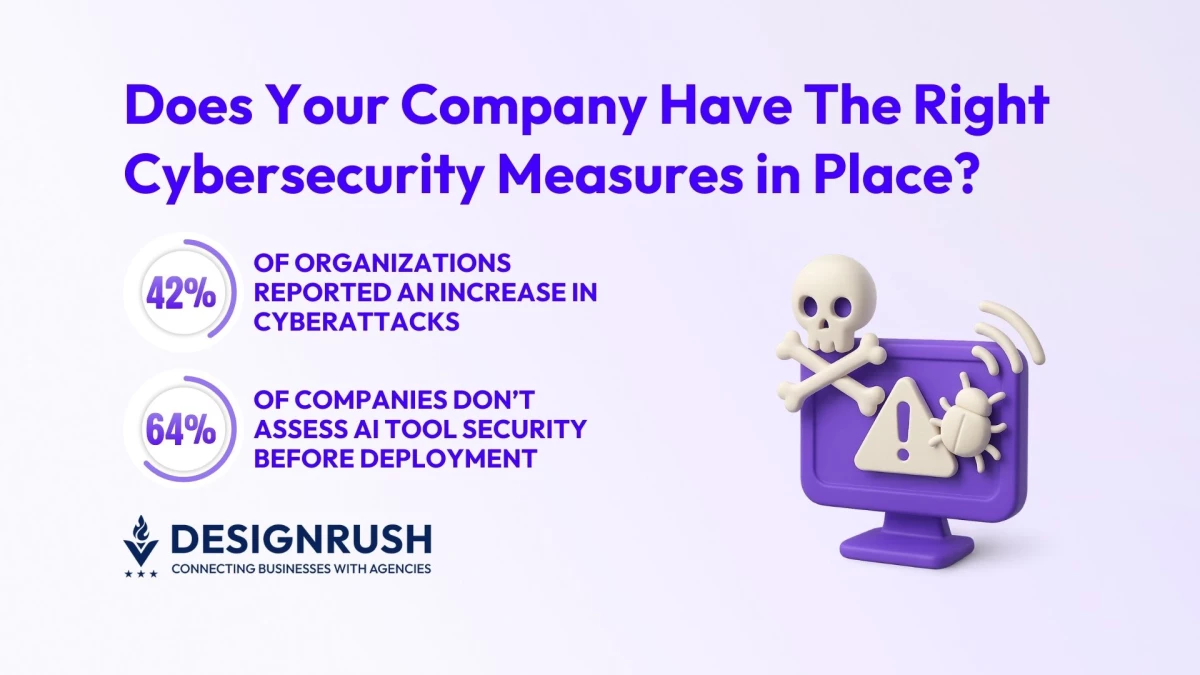
- 42% of organizations are seeing more phishing and social engineering attacks, yet 64% lack security processes for evaluating AI tools that adversaries now exploit.
Cybercrime rarely announces itself with thunderous applause. More often, it begins with something small and easy to overlook.
In this case, a single IP address nearly wreaked havoc on government assets.
BlueGrid.io, a leading IT and cybersecurity consulting firm, was able to identify an address that led straight to a malicious Command and Control (C2) and phishing infrastructure during a routine IP address analysis and C2 validation.
C2 servers are often used to control malware-infected computers, steal information, or even launch ransomware remotely.
The address in question was routed through kyuhn.host, a bulletproof hosting provider well-known in the darker corners of the internet.
The sophisticated structure was caught impersonating government domains such as cityofwilmington.org and police.cityofwilmington.org.
Real U.S. government websites always use .gov, not .org.
The discovery matters because bulletproof hosting remains one of the most durable shields cybercriminals use to stay online.
These hosts promise anonymity, tolerate abuse, dodge takedowns, and keep servers running long after legitimate platforms would have shut everything down.
“When criminals choose bulletproof hosts, they’re betting that investigations will be slow, fragmented, or automated. The only way to beat that is with people who are willing to look deeper than the surface indicators,” said Ivan Dabic, CEO of BlueGrid.io.
How BlueGrid.io Uncovered the Malicious Infrastructure
Everything began with a newly flagged C2 address in Hunt.io: 66.78.40.166.
BlueGrid.io never assumes a flagged C2 is actually malicious, or that an unflagged one is safe. Automated systems can easily miscategorize these, so the team investigated further.
This included verifying ownership details, network origin, hosted domains, and the service provider behind the infrastructure.
After all, spotting a C2 early is the cybersecurity equivalent of spotting smoke before the flames.
A WHOIS review made the picture clearer.
The IP had once belonged to Colocation America, a legitimate provider.
But it was now routed through a new Autonomous System Number (ASN): Aokigahara SRL, which was only established in 2024.
These findings matter because frequent ownership and ASN changes often indicate malicious intent.
This is because attackers use short-term IP leasing and temporary ASNs as a way to avoid detection.
Further investigation revealed suspicious top-level domain extensions like .cfd, .icu, or .fun; fake cryptocurrency domains; and phishing-style subdomains like login.domain.com, auth.domain.com, and whitelist.domain.com.
All of these red flags were traced back to bulletproof hosting provider kyun.host, a company that rents out servers for hosting malicious content.
While researching kyun.host, BlueGrid.io was able to confirm that the company:
- Offers hosting with no required verification
- Accepts only cryptocurrency payments
- Ignores abuse reports
- Advertises itself as a bulletproof hosting provider
After the investigation, BlueGrid.io and its threat intelligence partner Hunt.io alerted Wilmington officials and communicated their findings to U.S. law enforcement.
Likewise, BlueGrid.io added the associated domains and IP addresses to threat intelligence platforms to help other cybersecurity teams detect and block them.
They also applied protective solutions to client environments through updated firewall rules, DNS blocks, and SOC monitoring.
How Organizations Can Protect Themselves
BlueGrid.io’s efforts did more than just stop a phishing and malware campaign from targeting government employees and cryptocurrency users.
It also highlighted the importance of proactive security measures. And while the case here pertained to government organizations, this scenario can easily apply to enterprises as well.
This lesson is timely. Cybercrime has been on the rise in recent years, with Statista predicting cybercrime costing businesses up to $15.63 trillion by 2029.
Additionally, a World Economic Forum report revealed that 42% of organizations reported a sharp increase in phishing and social engineering attacks.
These have been attributed to adversarial advances powered by GenAI.
Unfortunately, the same World Economic Forum report found that 64% of organizations do not have processes in place to assess the security of AI tools before deploying them.
To better protect themselves from the growing number of cyber threats, organizations should:
1. Treat C2 Detection as a Proactive Discipline
An ounce of prevention is worth a pound of cure, especially when it comes to cybersecurity.
Teams should build processes that validate every high-risk IP manually, cross-reference it across multiple data sources, and confirm whether the behavior aligns with known threat patterns.
This prevents both false positives and the far more damaging false negatives.
Unfortunately, C2 detection isn’t something that many companies are set up to do on their own. In such cases, finding a company that offers SOC as a Service may be the best course of action.
2. Harden Defenses Against Bulletproof Hosting Abuse
Because bulletproof hosts ignore abuse reports and encourage anonymity, organizations need explicit defenses designed for them.
That means monitoring upstream ASNs, blocking traffic from known bulletproof networks, and enforcing policies around suspicious TLDs often used in phishing infrastructure.
Enterprises should:
- Maintain feeds that track emerging ASNs
- Block high-risk TLD categories
- Watch for login-style subdomains drifting into logs
3. Monitor Domain and IP Behavior, Not Just Payloads
Threat actors often reveal themselves through patterns that seem administrative rather than malicious:
- Domains that change hands too quickly
- ASNs that reroute for no clear reason
- IPs leased for 14 days and abandoned on the 15th
These are the tells that most automated scanners miss and that well-trained analysts can interpret as early warnings.
As such, cybersecurity teams should deploy continuous monitoring tools that flag infrastructure instability and enforce SOC review before any domain/IP interacts with internal systems.
4. Adopt a “Left of Boom” Mindset
Cyberattacks aren’t a singular moment. They’re the result of sequences of smaller events that escalate over time.
If your organization is only focused on the “boom” aspect, such as malware execution or account takeover, you’re already too late.
A left-of-boom mindset shifts attention to finding early indicators and proactively keeping systems safe.
It’s one of the best ways to counteract a cyberattack, especially since malicious entities invest heavily in the setup phase of an attack, as it increases their odds of success.
Meeting would-be attackers head-on at this stage moves the odds in your favor instead.
See the Threat Before It Becomes the Attack
BlueGrid.io’s findings underscore a sobering truth: cybercrime often flourishes in the quiet margins where infrastructure is built, not in the loud chaos once an attack begins.
Organizations that monitor these subtle shifts gain an advantage that firewalls and filters alone cannot provide.
Because in cybersecurity, catching the bad guys early is a lot like spotting termites at home. Ignore the early warning signs, and you’ll find yourself having to repair the whole house.