
Key Takeaways:
- 78% of Americans say the internet is “worse than ever” at identifying real vs. artificial content, creating a major trust challenge for brands using AI.
- ZeroGPT enables refinement, not just detection, helping businesses adjust tone, inject authenticity, and avoid content that feels automated or off-brand.
- Originality is now a competitive edge, as businesses that pair AI efficiency with human storytelling will lead in trust, differentiation, and engagement.
AI content isn’t the future — it’s the now.
But as 78% of Americans say the internet has “never been worse” at helping them tell what’s real from what’s artificial, the rise of automation comes with new risks.
That’s according to a Talker Research survey of 2,000 U.S. adults, as reported by StudyFinds.
Businesses everywhere are using large language models (LLMs) like ChatGPT to generate blogs, product descriptions, emails, and social media posts.
Since launching the AI detection platform in 2022, Baroud and his team have developed tools used by companies, educators, and institutions to identify AI-generated content, improve messaging, and promote transparency in digital communication.
While this can boost efficiency, it also raises a serious question: How do you maintain originality and consumer trust when machines are doing the writing?
Rawad Baroud, CEO and co-founder of ZeroGPT, is one of the experts helping businesses strike that balance.

Who is Rawad Baroud?
Rawad Baroud is CEO and co-founder of ZeroGPT, a platform that detects AI-generated text and helps businesses ensure originality in their communications. He holds a PhD from ParisTech and brings deep academic and technical expertise to the fast-changing world of AI and content. Since founding ZeroGPT in 2022, he has led the company’s rapid growth across education, business, and enterprise sectors.
When AI Dilutes Brand Trust
The biggest risk isn’t AI itself, but the misuse of it. Rawad emphasizes that when companies lean too heavily on AI, they risk diluting their brand’s tone and message.
Rawad outlines how overusing AI can subtly erode brand value.
“AI-generated content can lack originality, emotional depth, and brand consistency,” he says.
“Overuse without oversight may result in robotic, impersonal messaging that alienates consumers and weakens brand trust.”
As AI-generated content becomes harder to spot, unmonitored use can lead to generic, misleading, or off-brand messaging.
“There are risks of misinformation, legal issues related to AI-generated plagiarism, and SEO penalties from search engines,” Rawad warns.
The solution isn’t to avoid AI, but to strategically review and refine AI-generated output before it goes live.
How ZeroGPT Helps Brands Improve, Not Just Detect
Rawad says the real power of ZeroGPT lies in how teams use it to elevate and personalize their AI content.
“ZeroGPT enables businesses to detect and evaluate AI-generated content, ensuring it aligns with brand voice and human authenticity,” he says.
“By identifying overused AI patterns, companies can refine messaging to be more engaging and personalized, preventing content from feeling too automated or generic.”
Instead of simply flagging content, ZeroGPT helps teams assess where AI use may be affecting tone, authenticity, or clarity before refining accordingly. That might include rewriting sections that feel flat, injecting brand tone, or adjusting structure to improve clarity and engagement.
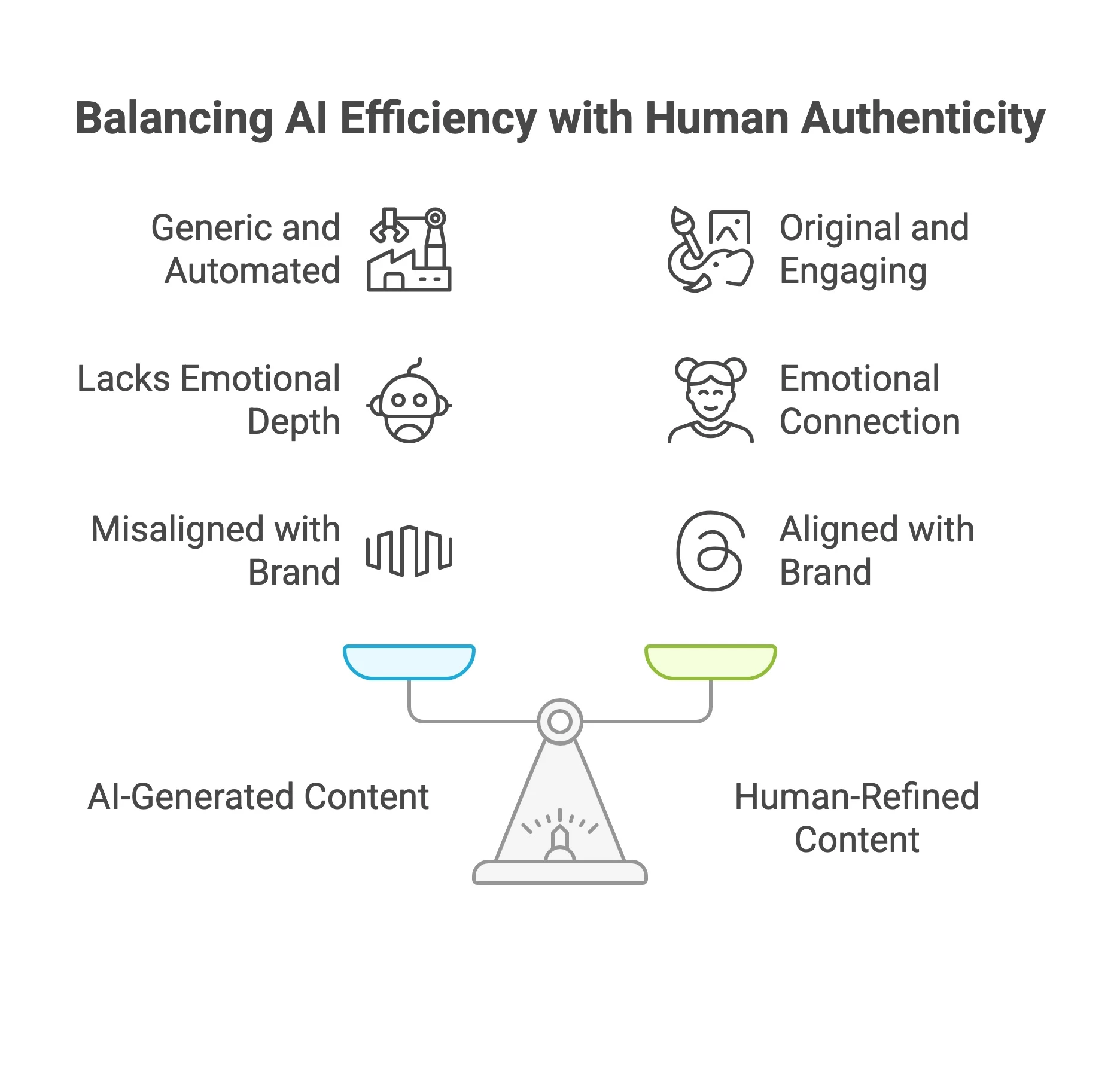
He frames detection as part of a creative loop where human editors preserve voice, trust, and relevance.
What’s Next for AI and Brand Communication?
As generative AI tools become more advanced and harder to detect, Rawad believes originality will become a brand’s biggest competitive edge.
“As AI-generated content becomes more sophisticated, the biggest challenge will be ensuring uniqueness and meaningful storytelling,” he says.
“Businesses will need to combine AI efficiency with human creativity, avoiding repetitive or overly polished AI-generated text that lacks personality.”
Rawad also sees the next wave of tools offering real-time feedback during the writing process, not just post-publication detection.
“We anticipate real-time AI-assisted editing tools that enhance, rather than replace, human content creation,” he says.
In the meantime, his advice to businesses is simple: use AI as an assistant, not an author.
“Leverage AI for efficiency but keep humans at the core of storytelling,” Rawad says.
“AI can generate drafts, suggest optimizations, and enhance productivity, but final content should always be reviewed and personalized by humans to maintain emotional depth and brand connection.”