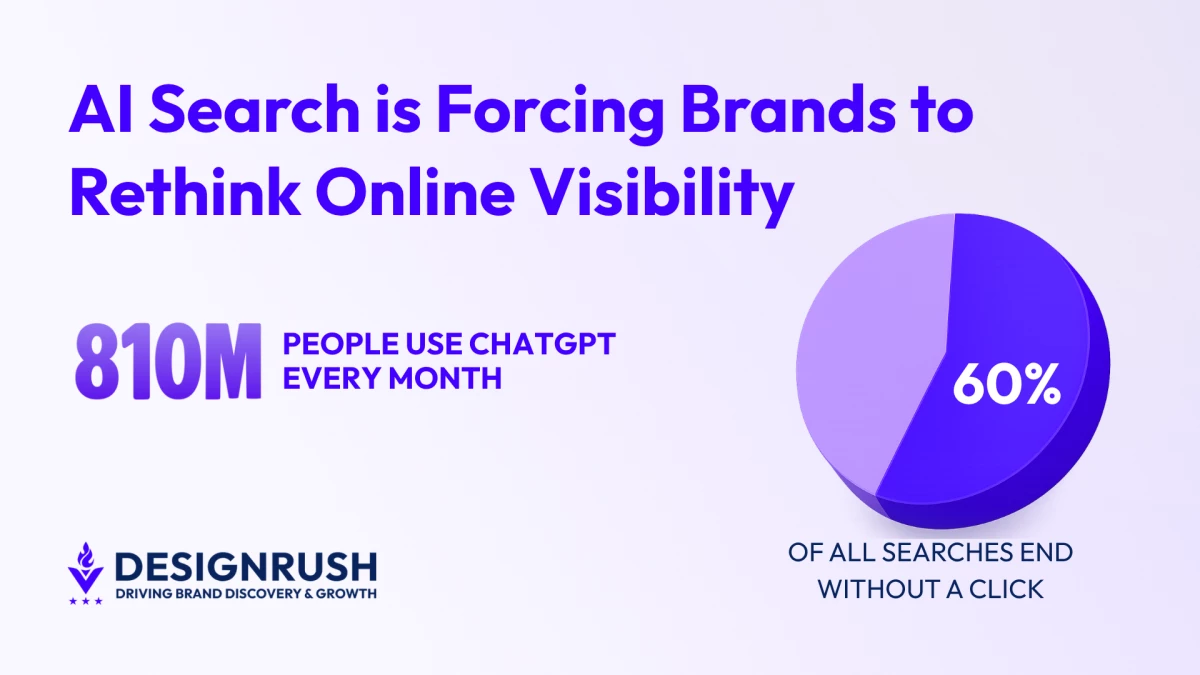

According to data from Statista, 810 million people used ChatGPT monthly.
Meanwhile, Google AI Overviews reached 1.5 billion monthly users across more than 200 countries, per Alphabet.
While this growth shouldn’t come as a surprise, it does present a problem for many brands.
Most brand websites were built to rank on the SERPs, attract clicks, and guide users through a browsing journey that AI platforms skip.
Data from Semrush's domain overview for chatgpt.com shows Gemini generating 54.2K mentions but zero cited pages.
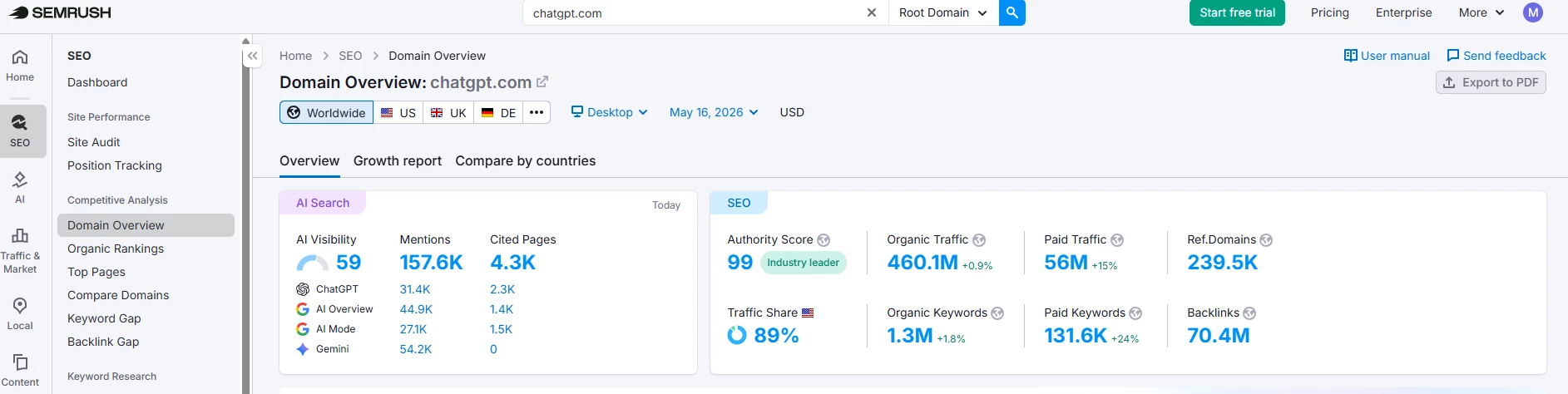
By contrast, ChatGPT generates 31.4K mentions and 2.3K cited pages.
Baunfire works at the intersection of web strategy and conversion, where the consequences of this shift are most visible, giving them a unique perspective on these glaring changes to search.
"AI platforms compress discovery into fewer, higher-intent moments. When a user chooses to visit after receiving an answer, the expectation level is already higher," said Pedro Aviles, project manager at Baunfire.
Why AI Skips Most Brand Websites
Search engines are built for users who search, scan results, click, and browse.
But AI search compresses or removes most of those steps. This is why roughly 60% of all searches end without a click, per Bain & Company.
To be cited in an AI-generated answer, a website needs to be interpretable by the system retrieving it, not just indexable by a crawler.
That distinction exposes structural problems most brands have not addressed.
Structure Is the First Filter
Logical heading structures, consistent terminology, and page groupings that reflect how a buyer researches a decision all improve retrieval and citation probability.
However, most brand websites are organized around internal priorities, product lines, and service categories rather than the questions a buyer actually asks.
The scale of the problem is visible even at the top.
Semrush data from May 2026 shows that chatgpt.com appears in AI Overviews in just 0.7% of its ranked SERP positions.
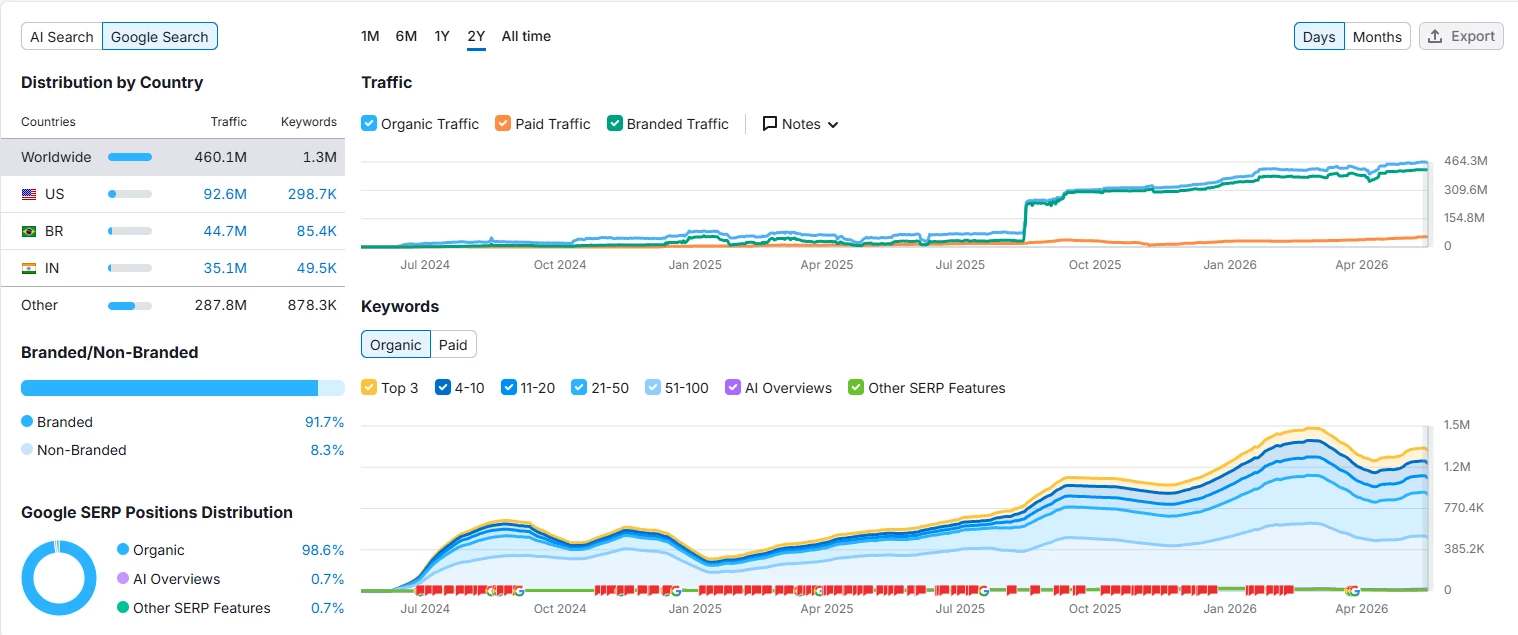
That shows that authority and traffic volume do not guarantee citation.
Yet research on AI search engines shows these systems rely on clear definitions, schema, and connected content to understand what a brand represents.
Sites without that structure enter the retrieval pool at a disadvantage.
Direct Answers Beat Broad Coverage
A page that gestures at a topic without directly answering a specific question is unlikely to be cited, regardless of how authoritative the brand behind it is.
The difference is structural. A service page that describes what a company does is written for a browser. A page that opens with "What does X solve and for whom" is written for extraction.
That’s why headings, FAQs, schema, and direct answers are increasingly becoming important for search nowadays as they signal exactly what a page covers.
That said, an Ahrefs study of 1,885 pages confirmed that schema markup alone does not boost AI citations on any major platform.
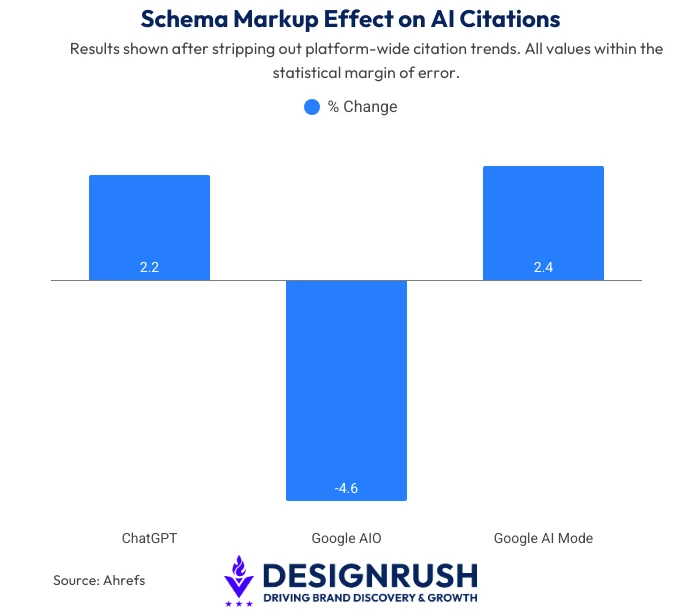 What separates cited pages from uncited ones is content authority and answer clarity rather than technical markup.
Freshness and Specificity Win Citations
Fresh, specific content that directly answers a question outperforms broad evergreen brand content in citation environments.
But differentiation still depends on strategy and human insight, even as 89% of marketers use AI for content creation.
"These platforms can introduce a brand, but they cannot fully express it. Depth, credibility, and conversion still happen on owned digital surfaces," Aviles noted.
How to Win in AI-Driven Discovery
Cited brands make outcomes easy to understand.
They remove friction from the path to conversion, and structure content so the system can extract the core answer without reading the entire page.
That means rethinking what a website is for.
A site built to introduce a brand and generate interest serves a different function than one built to survive retrieval and convert high-intent visitors who already know what they are looking for.
Baunfire approaches this through three priorities:
- Validate trust quickly through clear messaging, proof points, and case studies that confirm the AI's recommendation.
- Expand on what summaries cannot provide, including pricing context, nuanced service detail, and real outcomes.
- Convert high-intent visits through frictionless UX and clear next steps.
"Brands should shift from broad visibility to precision and conversion readiness. You may not control where discovery happens, but you still control what happens next," Aviles pointed out.
Being Cited Is Not the Same as Being Chosen
The brands optimizing hardest for AI discovery right now are the ones most likely to miss where the real competition is happening.
Getting cited requires presence on platforms AI already trusts, YouTube, Reddit, and Medium. But being cited does not mean being chosen.
A user who arrives from an AI recommendation has already compared options, processed a summary, and formed a preference.
The website either confirms that preference in the first ten seconds or loses a buyer who was already halfway there.
Most brands are rebuilding for the retrieval problem. The conversion problem is older, harder, and still mostly unsolved.