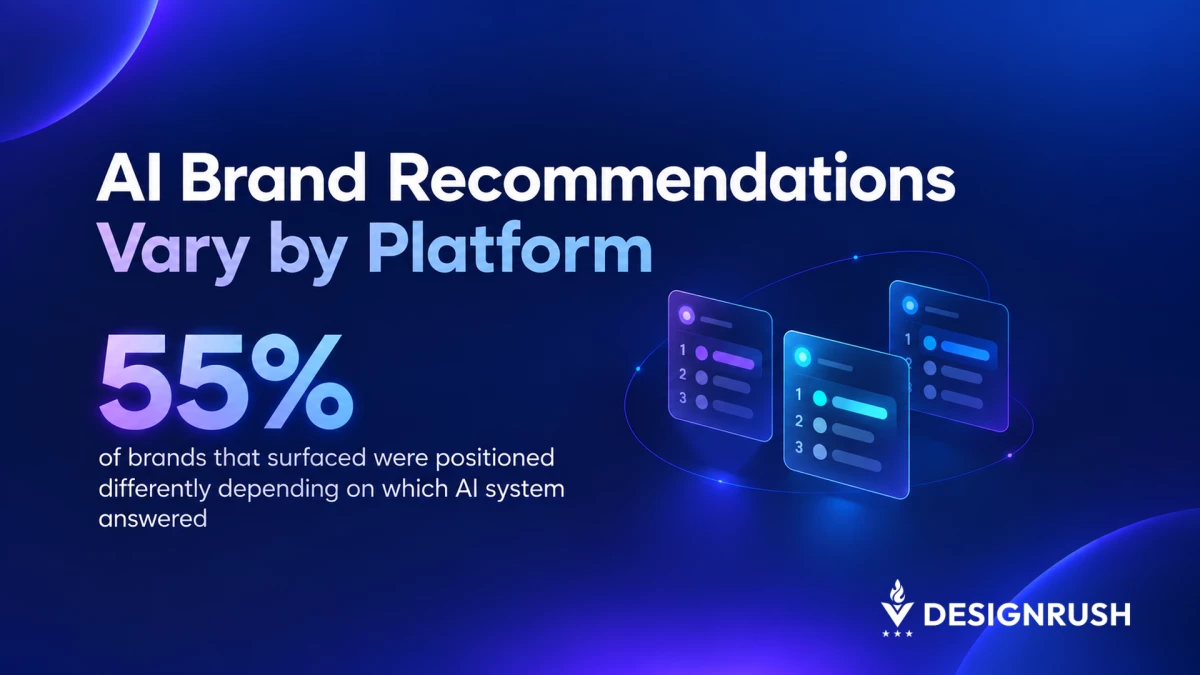

When researchers asked ChatGPT, Claude, and Gemini for running shoe recommendations, the brand Brooks appeared reliably.
Curiously, Nike, the world’s largest athletic brand, appeared far less consistently.
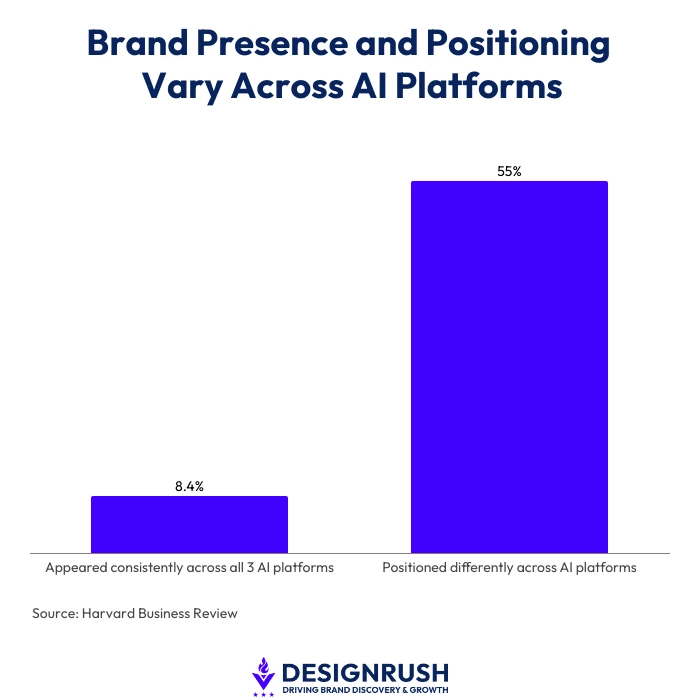
This was the results of a Harvard Business Review study that covered 15 retail categories and tracked more than 1,000 brand mentions across 716 brands.
In it, only 8.4% appeared consistently across all three AI platforms, while 55% of brands that surfaced were positioned differently depending on which system answered.
It’s the kind of gap that AI visibility and generative engine optimization platform, Brandi AI, tracks across major AI assistants, including how brands are described and which competitors surface in their place.
CEO and Co-Founder, Leah Nurik, says the Brooks-Nike result shows how differently consumer recognition can translate into AI visibility.
“Recognition is about surface-level recall such as a logo, a tagline, or a jingle,” she says.
“AI doesn’t ‘see’ logos or hear jingles the way humans do. But what AI does understand and trust is structured, consistent, and corroborated information across many sources.”
Smaller Brands Can Outperform in AI Recommendations
The Harvard Business Review research found that familiar brand-building advantages become less decisive when AI systems mediate product discovery.
The researchers point to whether a brand can be connected to specific customer needs through identifiable attributes and supporting evidence.
Nurik says smaller companies can compete by building a stronger body of information around a focused category or use case.
A focused company may also have tighter positioning around a specific customer need, while a larger brand can span numerous products, categories, and associations.
She also points to recency, where active press coverage, recent reviews, and ongoing community discussion can provide newer information about a smaller company, while established brands may carry older or less specific associations across multiple categories.
Their size can create another complication when the same name is tied to many products, controversies, or other meanings.
“AI models don’t weigh ad spend or global fame. They weigh the density and quality of relevant, authoritative mentions,” Nurik says.
Nurik sat down with Cracking the Code to discuss how GEO, structured content, and third-party signals shape brand visibility in AI-generated answers:
Third-Party Evidence Influences AI Brand Visibility
Nurik says third-party evidence can shape how AI understands and recommends a brand. She points to three areas brands should pay attention to:
1. Keep Brand Information Consistent
A brand’s name, domain, descriptions, and relationships should remain consistent across its structured data, press coverage, Wikipedia when applicable, and other authoritative sources.
The same applies to category and use-case associations.
If a company wants to appear when someone asks an AI system for the best product for a particular need, independent sources need to connect the company with that category and use case.
Claims about numbers, partnerships, and capabilities are stronger when those details can be verified elsewhere.
2. Prioritize Independent Coverage and Reviews
Analyst and expert coverage can give AI systems detailed third-party descriptions of a company, while structured knowledge bases establish basic entity information.
Review platforms such as G2, Trustpilot, and Gartner reviews add customer sentiment and category context, particularly when the reviews are recent.
This includes reputable journalism, podcasts and video interviews, Reddit and specialist communities, and customer stories published outside a brand’s own site.
For PR teams, she recommends pursuing coverage that explains what a company does, where it fits, and what makes it different, rather than treating every mention as equally useful.
Review and expert influence programs belong in that mix as well. A weak presence on major review platforms can leave a gap that another company blog post may not fill.
3. Build Content Around AI Questions
Content teams can also work from the questions people are asking AI systems.
Nurik recommends creating material that directly addresses category and use-case queries, including questions about which products or services are best suited to a particular need.
She also recommends monitoring AI outputs alongside traditional search rankings to see where a brand appears, where it does not, and whether changes in on-site or off-site work coincide with changes in visibility.
PR and GEO teams can coordinate around the same company descriptions, categories, claims, and use cases rather than producing conflicting information across channels.
“Press releases and owned content matter less than most teams think,” Nurik adds.
“They’re useful for getting information out there, but AI models increasingly distinguish between self-published claims and independently corroborated ones.”
AI Brand Visibility Metrics CMOs Should Track
For CMOs, those checks fall into three areas:
1. Track Recommendation Presence and Accuracy
For CMOs, AI visibility starts with a basic question. Does the brand appear when someone asks an AI platform for a recommendation in its category?
Nurik recommends tracking that presence regularly across ChatGPT, Gemini, Claude, Perplexity, and Google AI Overviews.
When a brand does appear, teams can check whether the description is accurate, whether it is placed in the right category, and whether the answer reflects current differentiators or outdated, generic information.
A company can appear in an answer and still be described in a way that does not match how it currently sells or positions the product.
2. Compare Competitors and Sentiment
Competitor visibility provides another benchmark.
Teams can track who AI recommends when their own brand is absent, then compare the third-party evidence available for those companies.
Teams can also monitor whether mentions are positive, neutral, or tied to negative coverage. The context around an appearance can tell PR and brand teams more than a simple mention count.
3. Audit Brand Data and AI Share of Voice
The review should also cover public brand information, including Google Business Profile, Wikipedia when a company has an entry, and schema markup.
Teams can also compare AI share of voice with traditional search visibility.
A company can rank well in Google and still appear much less often in ChatGPT, Gemini, and other AI systems, leaving a gap conventional search reporting may not capture.
“Who does AI recommend instead of you, and why? Look at what third-party evidence exists for those competitors that doesn’t exist for you,” Nurik says.
So ask yourself this. If your current brand reporting doesn’t track AI recommendations, would you know when a competitor starts appearing in recommendations where your brand doesn’t?