
When mobile gaming company Ace Games leveraged AI to optimize its creative strategy, it increased its click-through rate (CTR) by 52%.
On top of that, its percentage of successful creatives increased from 55% to 80%.
How?
By eliminating guesswork, focusing resources on high-performing assets, and reducing inefficiencies through AI, Ace Games’ creative strategies are transformed into growth engines for modern marketing.
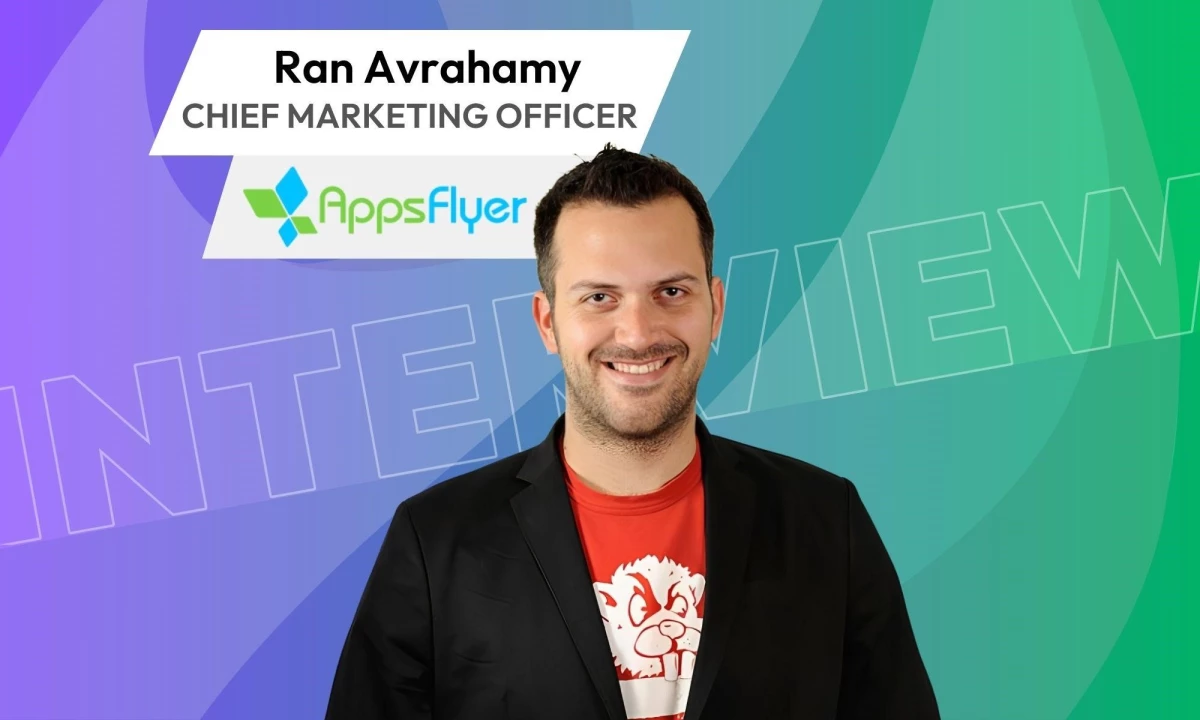
Ran Avrahamy, the CMO of AppsFlyer and Ace Games’ success partner, attests to these milestones.
As a mobile attribution and marketing analytics platform, AppsFlyer enables businesses to measure and optimize their marketing campaigns across various channels and devices — using a winning creative formula fueled by performance data and AI.
In our interview, Ran discusses why embracing artificial intelligence and modern marketing tactics is the key to mastering marketing attribution in a multi-channel world.

Who Is Ran Avrahamy?
Before joining AppsFlyer, Ran co-founded Scringo, a mobile community builder that empowers native apps with social and communication capabilities, which was later acquired by Google. Over the years, he worked in various marketing and business development roles, helping startups grow. Now, as CMO at the leading mobile marketing analytics platform, he empowers growth masterminds and accurate attribution data.
It all starts with the type of challenges marketers face, says Ran. These include broader audiences, weaker intent, and rising acquisition costs — all magnified by data deprecation.
“We believe that to overcome these hurdles, creative strategy must evolve to uncover the ‘why’ behind ad performance, not just the ‘what.’ The traditional reliance on instinct and experience worked when there were no better options, but now AI enables precision and scale,” he explains.
AppsFlyer develops an AI-driven solution to identify winning variables, optimize them dynamically, and build a repository of creative intelligence. This approach empowers marketers to collaborate across performance, creative, and Business Intelligence (BI) teams.
“AI allows creative teams to deliver scalable, high-ROI campaigns while remaining agile in the face of evolving challenges,” he adds.
Identifying Emerging Trends to Get Ahead of Competition
He adds that this adaptability comes from AI’s ability to process millions of data points, allowing it to identify emerging trends.
“For example, viewing duration, engagement patterns, and audience reactions to specific creative elements.”
Conversely, Natural Language Processing (NLP) improves localization, narration, and classification, so manual bottlenecks can be removed and global scalability enabled.
“The granular understanding of performance helps marketers create ads tailored to diverse audience preferences.
Practically speaking, by continuously iterating, testing, and measuring localized content, creative teams are managing to stay ahead of shifting trends,” he explains.
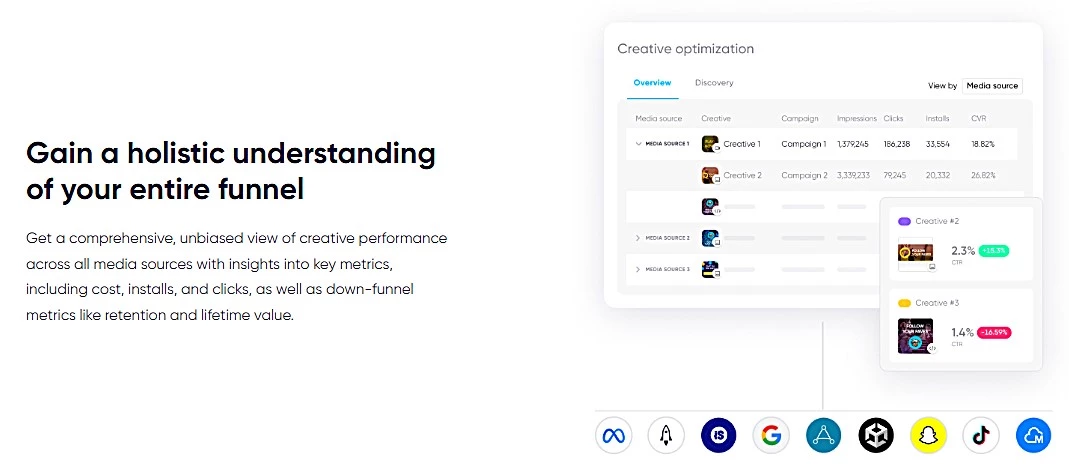
The reason why Ace Games was able to successfully transition from traditional methods to AI-powered insights is that AppsFlyer’s Creative Optimization solution gave it visibility into performance, maximizing ad spend.
“This success wasn’t just about better numbers — it was about better decision-making,” says Ran.
“I think it’s a great demonstration of how AI can elevate creative strategy into a true growth engine for modern marketing.”
From Traditional to Transformational
Ran believes that incorporating AI and data-driven insights into your creative process isn’t about reinventing the wheel — it’s about making the road smoother.
“Start with the fundamentals: research, testing, and measurement. Then, introduce AI to scale what works. Once you can identify winning creatives, the next stage is to reveal why they perform, and then extend their impact.
Generally, this approach helps avoid creative fatigue while allowing teams to focus on innovation.”
And the results will start immediately. Because AI tools analyze fresh data in real-time, marketers can access instant recommendations to adjust their campaigns.
This includes shifts in platform trends, messaging preferences, or creative formats. The key to remember is that AI can help ensure a campaign remains relevant and high-performing.
“With this agility, we find that marketers can often act on insights before the competition even identifies the change,” he adds.
In AppsFlyer’s case, its AI solution analyzes creative performance at the most granular level. This allows both UA and Creative teams to break down each creative element — like visuals, messaging, or format — and pinpoint what drives engagement, conversions, and retention.
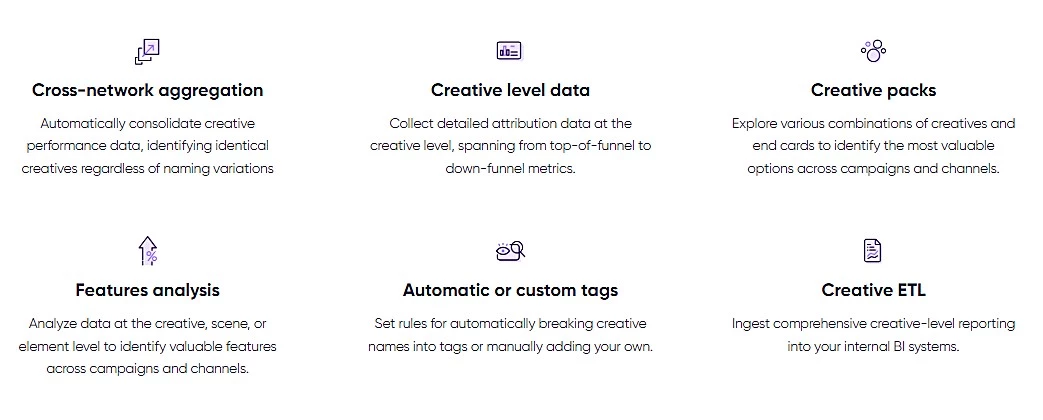
Ran believes that understanding these details allows marketers to make data-backed decisions to focus on high-performing creatives (directly improving ROAS) and tailor creative strategies to improve lifetime value (LTV).
“We believe the best marketing is where creativity meets data. Data tells us what works; intuition tells us why it matters.”
“AppsFlyer provides a comprehensive view of creative performance with full-funnel metrics. Teams can optimize using top-level metrics like cost, installs, and clicks, as well as deep down-funnel metrics such as retention and LTV.
These insights complement each other, fostering better collaboration between UA and Creative teams, enabling data to drive optimization and enhance creative ideation,” he explains.
For example, when gaming company Smartmove expanded beyond basic metrics like CTR to focus on creative-level ROAS and retention data, it cut creative fatigue by 50%.
By identifying and scaling high-performing creatives more effectively, the company kept audiences engaged with fresh, relevant content.
“Ultimately this created a measurable boost in ROAS and longer-lasting customer relationships through improved LTV,” says Ran.
Redefining Creative Strategies for Tomorrow
Looking ahead, Ran believes we are entering an era of predicting campaign success before launching to co-creating concepts.
As AI is redefining creative optimization, enabling a new level of precision and personalization, he says privacy-friendly innovation must be crucial as we move into a cookieless world.
“AppsFlyer helps brands navigate this transition, combining AI precision with human insight to create scalable, compliant campaigns.”
And brands can prepare for these changes by investing in tools that balance compliance with innovation — ensuring that campaigns remain impactful and adaptable.
“The future of marketing belongs to those who embrace collaboration. By integrating creative, performance, and analytics teams, brands can harness AI to optimize spend, reduce risk, and amplify results,” he concludes.