
AI Use in 2025 Holiday Ads: Key Findings
- Coca-Cola used AI again for its global campaign, but softened the edges with a human-led truck tour in the U.K. to re-engage communities.
- Apple rejected digital tools entirely, opting for handmade puppets and practical effects to center emotion and artistry.
- AI appeared across multiple campaigns, but brands like Nescafé used it to support human connection and storytelling.
AI is everywhere this holiday season, but not every brand is leaning in the same direction.
Some are automating creative production and reviving old mascots with machine learning.
They're also deploying tools to streamline storytelling, despite mounting criticism and negative audience perception around AI use in creative executions.
And this is why other brands are slowing down when it comes to generative AI use.
Instead, they’re investing in craft and treating human creativity as a premium.
This reveals how 2025’s holiday campaigns are exposing the tradeoffs between speed, emotion, and cultural perception.
1. Coca-Cola’s AI Story and Human-Led Tour
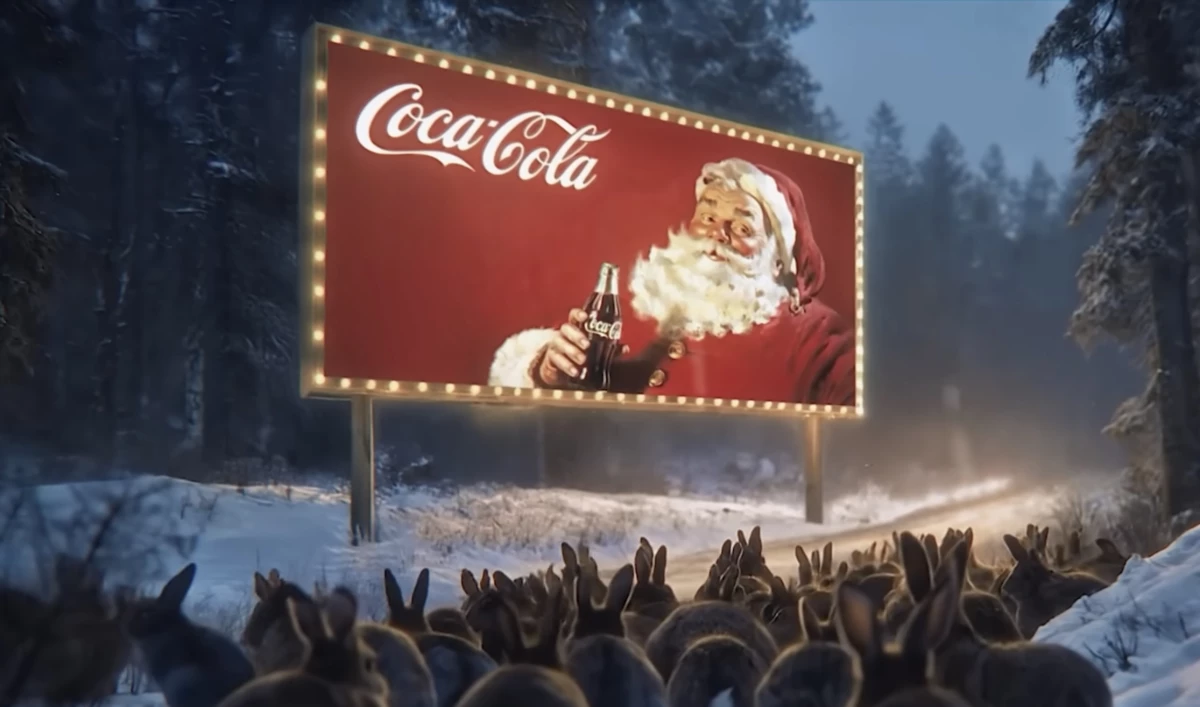
The soda giant brought back its AI-generated polar bears again this holiday season.
"Refresh Your Holidays" used AI tools to let users remix holiday elements with branded assets, building on last year’s controversial experiment.
But this time, the company also relaunched its iconic Christmas Truck Tour in the U.K. with a very different tone.
The in-person activation focused on community and donation hubs, while the AI campaign showcased experimental visuals and language.
But consumer unease and creative imperfections, like the inconsistent number of wheels on the trucks, sparked fresh debate.
Coca-Cola’s choice to continue using AI while adding a community-led event suggests the brand is softening its application of technology.
2. Apple's Handmade Puppets
Apple went the opposite route and released its holiday films, "A Critter Carol" and “Fuzzy Feelings,” created entirely with handmade puppets and practical effects.
It’s a slow, quiet short about an office worker channeling heartbreak into storytelling, with every scene built without CGI or AI-generated content.
Agencies TBWA\Media Arts Lab and Smuggler focused on in-camera magic, reinforcing Apple’s image as a company that values detail and originality.
3. McDonald’s 'Terrible' Christmas Ad
McDonald’s Netherlands aired a fully AI-generated commercial soundtracked to a dark parody of “It’s the Most Wonderful Time of the Year.”
The ad showed chaotic scenes of holiday failure before suggesting that viewers retreat to McDonald’s until January.
After just three days since release and mounting backlash, the brand pulled the campaign entirely.
McDonald's has released an AI-generated Christmas ad
— Culture Crave 🍿 (@CultureCrave) December 8, 2025
The studio behind it says they 'hardly slept' for several weeks while writing AI prompts and refining the shots — 'AI didn't make this film. We did'
Comments have been turned off on YouTube pic.twitter.com/Es5ROvI7n2
4. Google's AI-Animated Short
The search pioneer's holiday campaign used a more meta approach (no pun intended).
It created animated shorts using Gemini, Veo, and Nano Banana, three of its latest AI tools, to showcase the tech.
Google managed to showcase its products through catchy, relatable stories that kept the tech approachable and engaging.
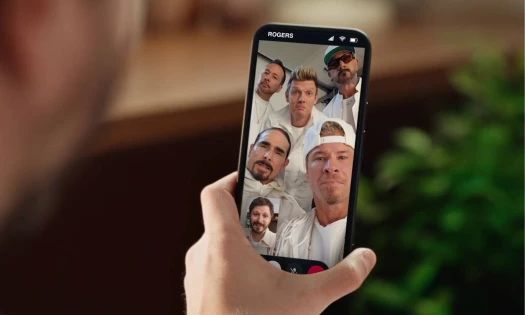
The brand also balanced out its holiday ads with a hilarious, human-focused, and nostalgic reunion of "Love Actually" stars for the Pixel 10 Pro.
5. Maybelline's Nostalgic Microdrama
"Maybe This Christmas" reunites early-2000s icons Lacey Chabert and Dustin Milligan for a scripted, low-stakes holiday rom-com about a missing lipstick.
Styled like a Hallmark movie, the microdrama leaned on glam, human chemistry, and tongue-in-cheek humor, without any visible use of AI.
In a season packed with algorithm-made ads, Maybelline's character-led story is a real breath of fresh air.
Honorable Mentions: Svedka and Nescafé
While not a holiday campaign, Svedka’s return to the spotlight and Nescafé’s Thai campaign fit the trend.
The Swedish vodka brand is planning a Super Bowl debut with its long-dormant “Fembot” mascot reanimated using AI.
Here, the controversial tech served a narrative purpose rather than replacing production outright.
Nescafé took a quieter approach with "Always Here for You," where people spoke to what they believed was an AI assistant.
The interaction was later revealed to be with someone they cared about, shifting the focus to appreciation and emotional connection.
The brand showed that AI can support storytelling without replacing the emotional core that audiences respond to.
This year’s holiday campaigns show that how a story is made now carries as much weight as the story itself. Here are some things for brands and agencies to consider:
- Keep human judgment in charge of tone. Emotional calibration still determines whether a campaign feels right.
- Treat the holidays as a high-risk context. Nostalgia, tradition, and family rituals leave little room for creative missteps or experimental shortcuts.
- Design technology around people. The strongest work used tech to frame the message, then stepped back and let humans deliver meaning.
Brands that showed restraint and intent earned attention, while those chasing speed or novelty discovered how quickly trust can slip.
Our Pick: Apple’s Forest Critters
I’m choosing Apple’s holiday ad because it showed how human a tech brand can be.
For a company known for precision and polish, the decision to use handmade puppets and practical effects is really thoughtful.
Some fans expected something bigger or more overtly “Apple,” but the choice to scale back is what made the work memorable for me.
I liked that the ad captured a sense of childlike curiosity for wild animals, with the iPhone woven in so naturally that it didn't feel like an interruption.
In a season full of automated visuals and technical flexing, it showed me that the strongest holiday work still comes from trust in human creativity.
Restraint is becoming a creative advantage. These top agencies help brands decide when technology should support the story and when to step aside.