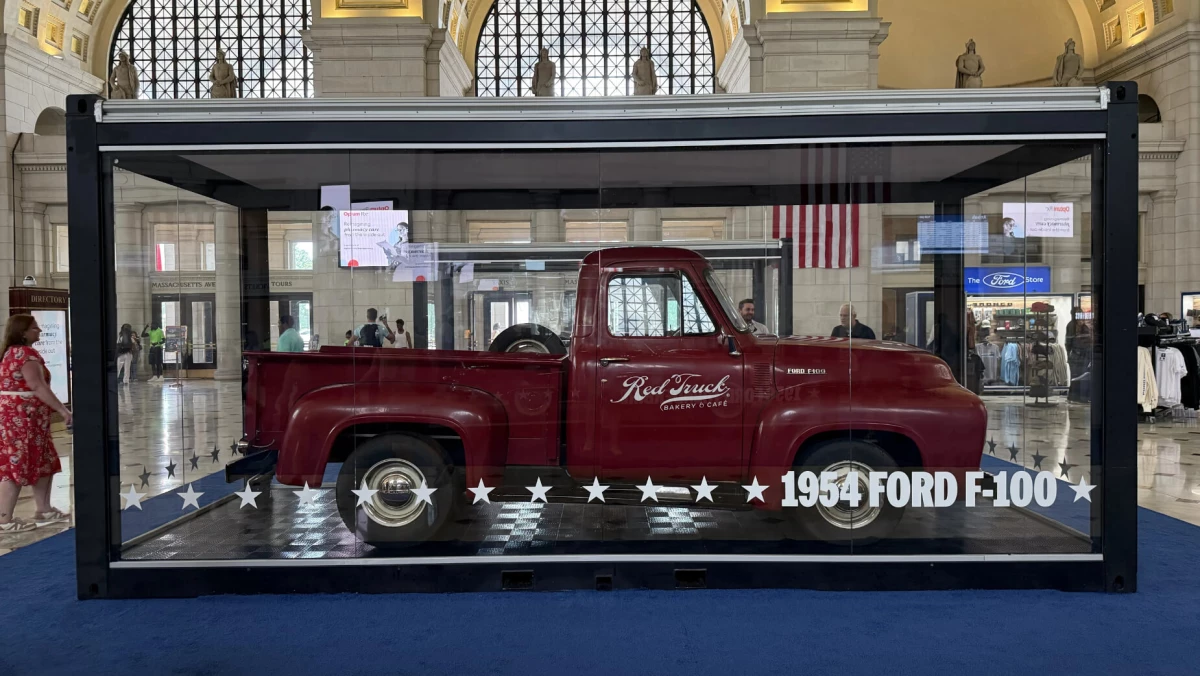

Ten vehicles that helped define a nation now sit under the arches of Union Station, and none of them need a velvet rope to draw a crowd.
Ford and experience design agency Imagination opened a free public exhibit timed to the height of the America 250 celebrations.
"Driving America Forward," which runs until July 14, transforms the main hall of the historic Washington, D.C. train station into a pseudo-museum.
Huge glass displays trace more than a century of automotive history.
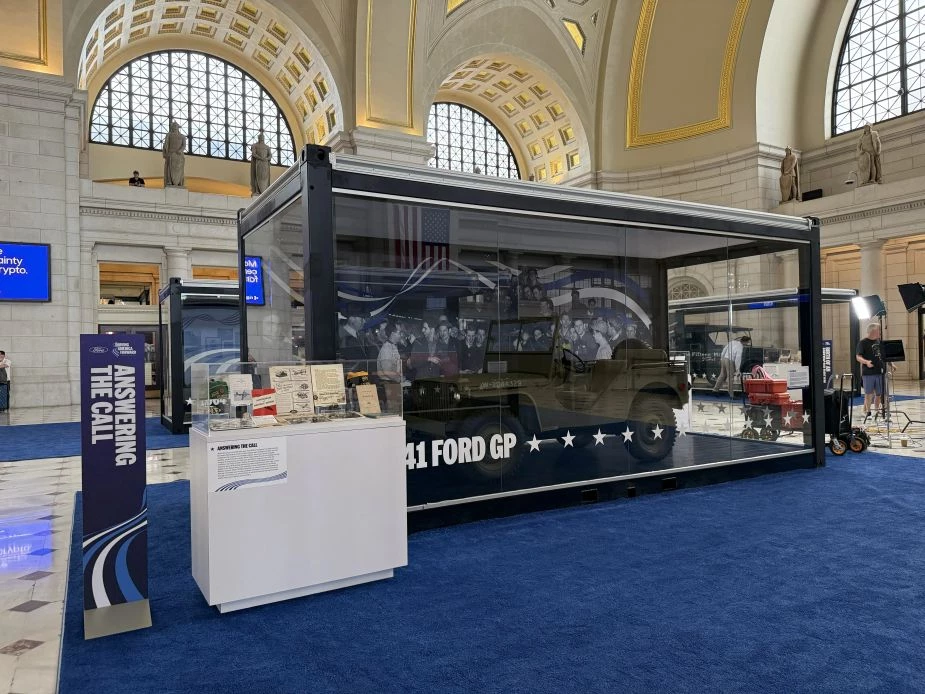
The best part? It's pulled straight from the Ford Heritage Fleet.
"We wanted to build an experience that makes people stop and interact," said Jennifer Grace, executive director of Imagination Detroit.
She added that Union Station "provides the perfect canvas" to show off Ford's last century of innovation and also frames where the brand says it's headed next.
10 Cars, Three Themes, One Free Show
The vehicles are grouped into three themes: Shaping Pop Culture, American Innovations, and 125 Years of Racing.
Together, they cover everything from breakthrough racing engineering to Ford's wartime and humanitarian work.
This gives the exhibit a wider lens compared to your typical product showcase.
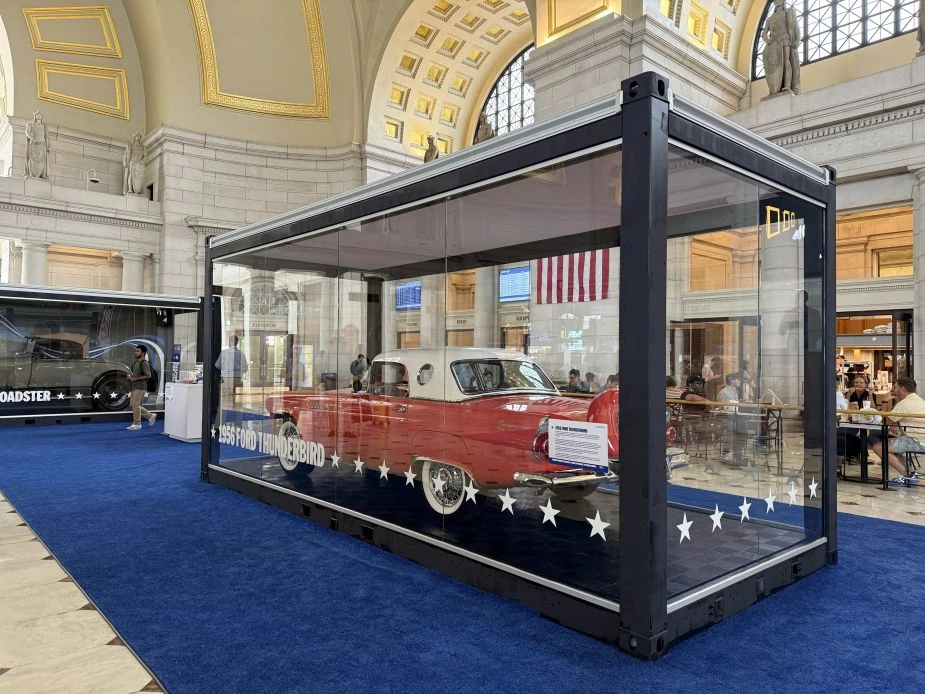
Union Station sees heavy daily foot traffic, and the activation is built to catch people already moving through it.
A photo postcard station lets visitors pose against a large-format "Greetings from Union Station" backdrop.
From there, they can walk away with a printed, Ford-stamped keepsake and a digital copy to share.
A large LED screen runs as a digital gallery pointed toward where Ford's storytelling is headed.
And QR codes placed around the space unlock content on individual vehicles and artifacts.
Ford Brand Ambassadors staff the exhibit daily, handing out merchandise and answering questions for anyone curious enough to stop.
Other automakers are also marking America's 250th anniversary. Chevrolet, for instance, revived its "Heartbeat of America" tagline this year.
It built a campaign around a rock band and the real heartbeats of actual owners rather than a physical exhibit.
Nostalgia is apparent in both approaches, as the nature of the campaign being a celebration of history calls for it.
Though bound creatively by a common holiday, Chevrolet built a story around people, and Ford built a walkable one around its cars.
Overall, it's apparent that history draws its own kind of attention in automotive marketing.
The Location Is the Media Buy
When you build a physical stop inside a space that already sees enormous daily volume, you don't really need attention.
Union Station handles tens of thousands of commuters and tourists each day.
And Ford placed its brand directly in that path instead of paying to interrupt someone's scroll.
A free, physical experience converts casual passersby into participants without asking for an email address or a follow.
Ford also has a milestone of its own this summer, having turned 123 shortly before America marked its 250th, so it has two reasons for the exhibit.
Here are some lessons marketers can learn from the efforts:
- Physical placement can outperform paid placement: A high-traffic public space does targeting work that media budgets usually pay for.
- Give people something to take home: People love free items, and a simple postcard activation can both be an act of celebration and a keepsake for passers-by.
- Anchor a campaign to a real event. America 250 gives the exhibit a built-in reason to exist and a built-in expiration date that creates urgency to visit.
Experiential marketing wins on dwell time, trading a three-second scroll for the minutes someone spends walking the floor.
Our Take: Can an Exhibit Beat a Big-Budget Ad?
Anyone can shoot a nostalgic ad, so Ford and Imagination took the harder route.
They built an exhibit people have to visit in person, which asks far more of an audience than a clip they can scroll past.
To us, this is the real gamble, and it works because people are already there and can easily choose to go down memory lane and check out the exhibit.
We'd argue that this beats a big-budget ad when the goal is to be remembered.
And Ford isn't the first brand to treat a train station as a stage.
Apple TV+ dropped a glass "Severance" set into New York's Grand Central, where the cast worked in character as commuters stopped to watch.
Both executions rest on the same idea that a captive station crowd will give a brand minutes no ad can buy.
Automotive brands need partners who understand how to build campaigns for diverse audiences.
Find top automotive branding agencies in our directory