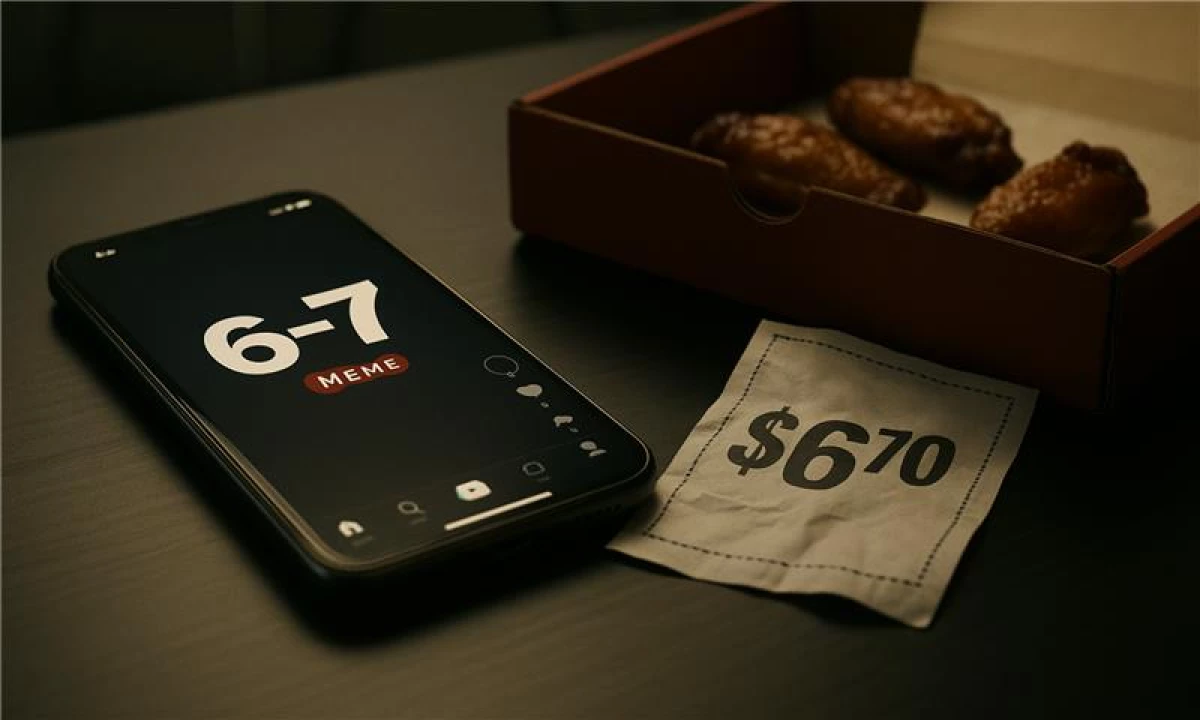

The '6-7' Meme Decline: Key Findings
- The "6-7" meme's lifecycle lasted just three months, peaking in late October before brands could fully capitalize on it.
- Pizza Hut's 67-cent wings campaign succeeded by moving fast, while late adopters risk looking out of touch.
- Google Trends shows search interest declining since last month, with brand adoption accelerating the meme's death among Gen Alpha.
The "6-7" meme has taken over TikTok, invaded classrooms, and spawned brand campaigns faster than any viral trend in recent memory.
Now, just three months after it started, the data shows it's already dying.
Google Trends reveals the meme peaked in late October 2025, with search interest dropping steadily ever since.
Pizza Hut managed to capitalize on this trend with its recent 67-cent wings promotion, but brands still considering campaigns should pay mind to the speed of internet culture.
"It's like analyzing the stock market. We have passed a peak and it's like reading tea leaves. But it does look like it's on the wane," said Robin Fishley, Search Director at DesignRush.
The meme's decline signals a fundamental shift in viral marketing.
Brands once had months to develop meme-based campaigns, but now, the window has shrunk to weeks, or even days.
What Is the '6-7' Meme and Why it Exploded So Fast
The "6-7" meme originated from rap artist Skrilla's track "Doot Doot (6-7)," which then spread across TikTok as an absurd catchphrase.
Gen Alpha then adopted it as a nonsensical saying that could mean anything or nothing.
"It's so random that it captivated them, and it's relevant for any occasion," Fishley explained.
"You can just say '6-7' at any point and it never makes sense. That's the point of the meme."
Searches for the term first appeared in August of this year, and by September 9, momentum was building.
October 31 saw peak interest, and now in November, search volume is rapidly declining.
The meme's spread is following a predictable path.
TikTok videos proliferated, streams filled with kids spamming "67" in chat, teachers reported classroom disruptions, and Dictionary.com named "6-7" its Word of the Year.
Of course, this presented the perfect opportunity for brands to jump in.
Pizza Hut's Window vs. Everyone Else's Miss
Pizza Hut's 67-cent wings campaign represents perfect timing for meme marketing.
The brand hopped on the trend while Gen Alpha still cared about it, moving fast enough to use pricing that actually made sense.
Domino's followed with $6.70 pizzas at select locations, catching the tail end of relevance.
Both of these campaigns worked because they embedded the meme into the brands' actual product offering, rather than forcing it into traditional advertising.
However, by the time more brands could move, the meme was already growing stale.
The Streaming Platform Effect
Streaming platforms have become the primary distribution engine for Gen Alpha memes, accelerating both their spread and demise.
"I think that's where these memes incubate, is on stream, because there's huge amounts of kids from all over the world, all gathering in one place and they share what they're watching," Fishley shared.
Memes that start on Twitch or YouTube stream chats reach global audiences instantly.
However, the same mechanisms that spread memes also create overexposure that kills them faster.
When streamers start ignoring or banning a meme, it signals the beginning of the end.
For example, popular gaming streamer iShowSpeed (with 45 million YouTube subscribers) recently shared his fatigue over the "6-7" craze.
The "6-7" spam has reached its threshold, with moderators filtering it and streamers rolling their eyes at the repetition.
Reading the Death Signals
Search data provides the clearest indicators of viral trends dying out.
Initial "what is 6-7" searches indicate the discovery phase, and peak volume shows mainstream awareness, but declining searches reveal audience fatigue.
Recent statistics compiled by Brandwell also found that the average lifespan of modern memes is continually shrinking.
This is a major decrease from 2008, when the life of a meme was nearly two years long. This has shrunk to just a little over four months in 2023.
Fishley also points to additional signals brands should monitor.
When TikTok views plateau while comments shift to ironic usage, the trend is aiming downwards.
"Sometimes when something enters the mainstream and everybody's talking about it, that's when it starts to become less cool," he notes.
The spike in late October marked the beginning of a decline rather than sustained interest.
The "6-7" meme's three-month lifecycle shows what happens when traditional marketing timelines match Gen Alpha's internet speed.
These three actions show how brands can move at the same pace as their audience:
- Spot trends early: If it’s already viral, you’re already late.
- Move without the red tape: The brands that catch momentum are the ones willing to launch fast instead of waiting for approval.
- Make it part of the product: Pizza Hut and Domino’s tied the meme to their menu offerings, not their ads.
With Statista projecting the global meme market to hit $6.1 billion by 2025, the challenge is in knowing and choosing which moments can grow into real brand equity.
Our Take: Can Brands Keep Up With Gen Alpha's Trend Cycles?
I think any brand still considering a "6-7" campaign has already lost by now.
The real opportunity isn't in catching this meme, or even the next one, but in building systems that can move at internet speed.
This is what digital trend marketing looks like now.
It's all about speed. You need to be fast enough to still be part of it.
I predict that Gen Alpha will generate another absurd trend soon enough.
The question that remains is whether your brand can recognize it and respond before it's already dead.
Meme marketing success depends on spotting trends early and moving fast. Discover social media agencies built for viral timing in our directory.