
Fixing Data Silos: Key Findings
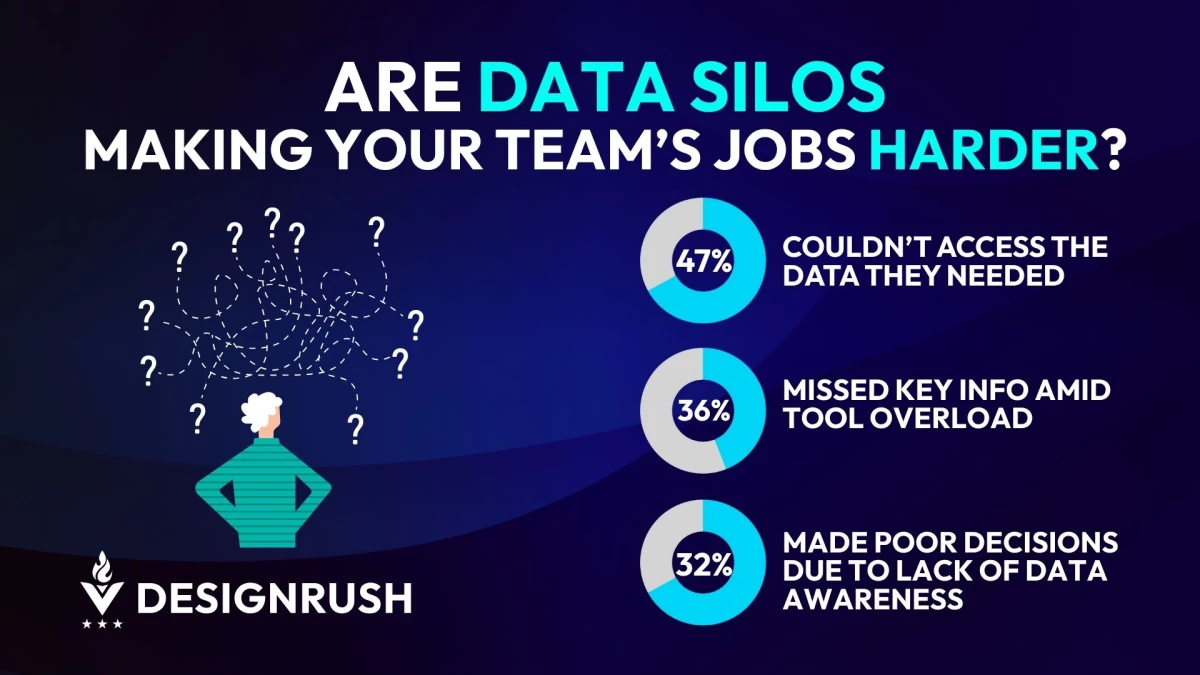
- 47% of workers can’t find the data they need, showing how tool overload creates confusion instead of efficiency.
- Disconnected systems lead to contradictory KPIs, duplicate data, and missed insights; which slow decisions and erode clarity.
- Breaking data silos requires mapping sources, standardizing terms, unifying pipelines, and ongoing governance.
Given how quickly technology has advanced in the last few years, it’s not surprising that businesses have adopted a wide range of CRMs, ERPs, analytics platforms, and other tools.
After all, more tools should translate to better efficiency, right?
Unfortunately, that might not be the case.
A 2023 survey by Gartner revealed that 47% of workers struggle to locate the data they need to do their jobs effectively.
This is mostly due to the sheer number of tools and platforms within their organizations.
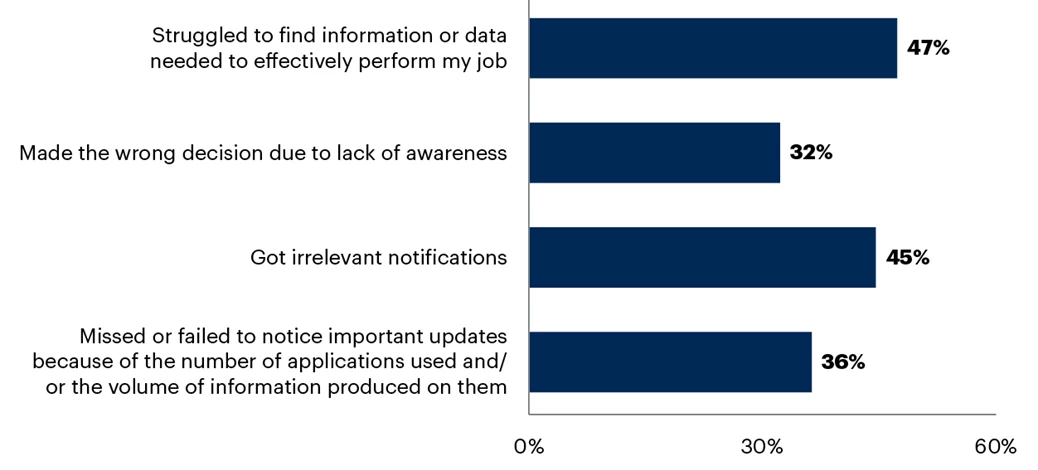
This surprising statistic highlights a clear structural handicap: when teams cannot rely on a single version of the truth, they’re essentially driving “strategies” with one eye closed.
“With every new tool added to the stack, leaders think they’re solving a problem, but in reality they may be creating a bigger one,” said Unico Connect CEO Malay Parekh.
“The more disconnected your systems are, the harder it becomes to answer even basic questions. By the time data is pieced together, the opportunity to act often passes.”
The scenario Parekh paints is not just a minor inconvenience.
This siloing of data weakens alignment across an organization, turning everyday decisions into friction points, leaving everyone without the clarity needed to lead decisively.
As a result, fragmented systems slow down executives, obscure the health of the business, and delay responses to changing markets.
How Data Silos Block Insights
Fragmented systems do more than inconvenience individual workers. They build walls between departments, which then compound into blind spots for leadership.
At an operational level, data silos block insights through:
- Contradictory KPIs: Marketing reports a spike in leads, while sales insists pipeline velocity is slowing. Both may be right, depending on which dataset is being consulted.
- Duplicate or decayed data: Customer information entered differently across tools erodes confidence in every dashboard that relies on it.
- Missed connections: Without integrated systems, insights that could bridge functions, like linking campaign spend to revenue impact, remain invisible.
The opportunity cost here is substantial. Decisions delayed are often opportunities missed. Worse still, decisions made with outdated or partial data can send an entire initiative off track.
Likewise, hours that could’ve been used to uncover important patterns are instead spent reconciling data on spreadsheets.
Break Up Data Silos With These Steps
One of the biggest misconceptions about fixing data silos is to add “more efficient” tools to the stack.
In truth, fixing data silos requires a deliberate process focused on addressing both technical and organizational habits.
Without the right structure, even the most well-intentioned projects can collapse, leaving teams frustrated and leadership no closer to clarity.
With that in mind, Unico Connect suggests taking the following steps to break up data silos:
1. Map Your Data Sources
Audit every system that collects or stores information. From enterprise software to the side spreadsheets tucked into team folders, identify where data lives and how it moves between systems.
2. Standardize Data Definitions
A “customer” in the CRM should mean the same as a “customer” in the finance system. Without standardized definitions, integrations only replicate confusion. Establish shared terms and rules so that everyone speaks the same language.
3. Integrate Through Unified Pipelines
Connecting sources manually is unsustainable. AI-powered and automated pipelines allow data to flow consistently and securely across platforms. These integrations cut down on manual entry and reduce the risk of human error.
4. Enable Cross-Functional Dashboards
Give teams and executives one consolidated view. Dashboards that span departments ensure that frontline workers and CEOs alike are drawing from the same well. Transparency reduces the time spent debating numbers and increases the time spent deciding what to do with them.
5. Establish Continuous Governance
Breaking silos is not a one-time project. Ongoing data governance keeps definitions consistent, ensures compliance, and builds confidence in the system. When data accuracy and security are safeguarded, the entire organization gains the freedom to act on insights without second-guessing their reliability.
Each of these steps is designed to strengthen the next, creating a cycle that establishes data that is accessible and trustworthy, empowering anyone in an organization to unlock data-driven CEO-level insights at any time.
Build an Organization That Moves as One
Every time leaders rely on fragmented information, they give their competitors a head start. That’s why closing the gaps that data silos create requires turning alignment into a management practice.
And the companies that make this shift move past endless reconciliations and toward real-time judgment, which is where competitive advantage truly comes from.
After all, the fastest way to lose your way is to let every department bring its own map.