
Zara Store Closures: Key Findings
- Zara has closed 60 stores while investing in fewer, high-end flagships with coffee shops and designer collaborations as it repositions upmarket.
- Budget brand Lefties grew to 213 stores with 17.44% revenue growth, targeting Gen Z with cheaper options to compete with Shein.
- Parent company Inditex's two-brand strategy generated 10.6% sales growth, proving middle-market brands need to pick premium or budget positioning.
Zara has quietly closed 60 stores worldwide between October 2024 and 2025, as parent company Inditex reshapes its retail strategy around two distinct consumer segments.
The closures show a $1 billion repositioning play that pushes Zara upmarket while expanding budget brand Lefties to capture price-conscious Gen Z shoppers.
CEO Óscar García Maceiras emphasized the company's strong performance during Inditex's third-quarter earnings call, despite not addressing closures directly.
"We are happy with the positive performance of Zara and the rest of our concept," he said.
This is a case study on how brands must quickly commit to a positioning strategy before market forces make the decision for them.
Parent company Inditex is closing stores while revenue grows because it has seen the middle market collapsing.
As a result, the company has split its portfolio into premium and budget options before competitors could force the move.
Zara Is Trading Volume for Prestige
Inditex closed 132 stores across all brands in the year ending October 31, 2025, which still leaves the company with 5,527 global locations.
The 60 Zara closures represent the largest share, with some locations converting to Zara Man stores that sell men's clothes, shoes, and accessories as standalone destinations.
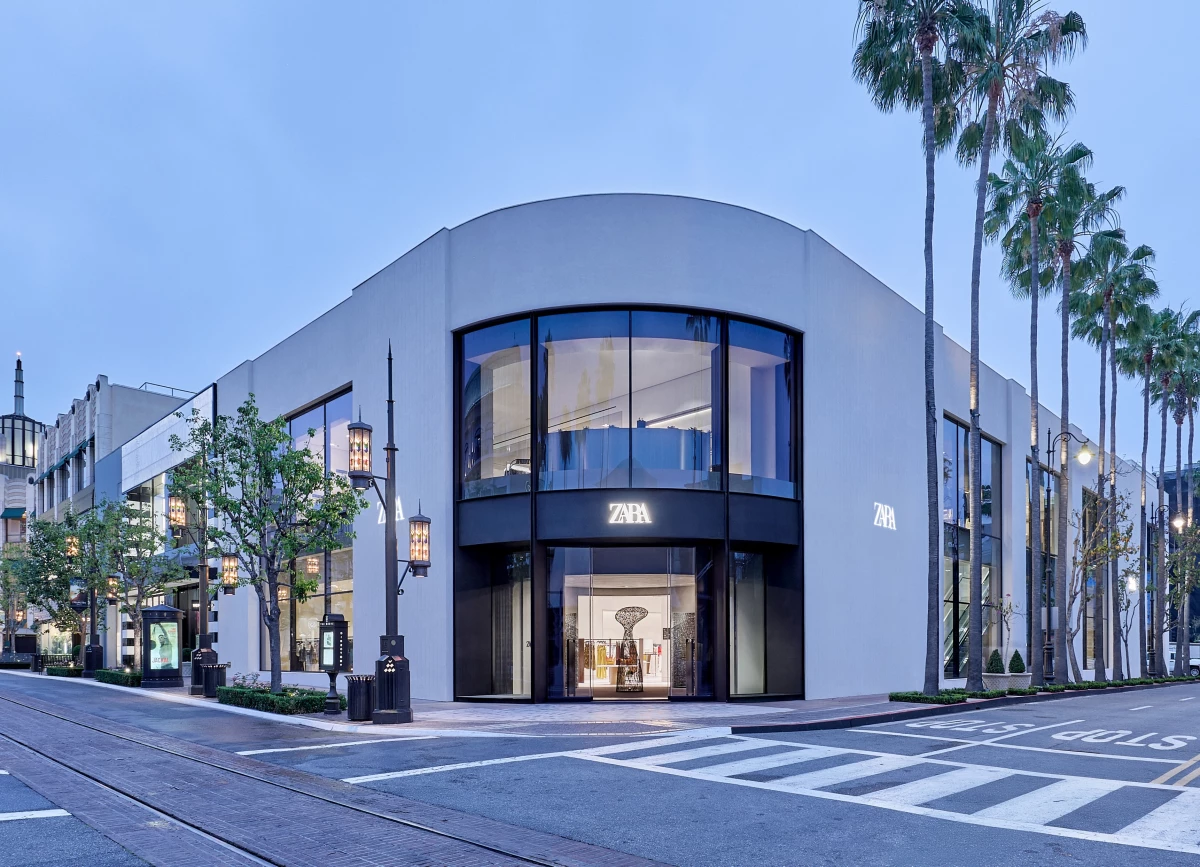
The company is also investing heavily in flagship experiences that feel more like luxury than fast fashion.
Architect Vincent Van Duysen designed Zara's new Barcelona Diagonal Avenue store with domestic sophistication that invites shoppers to linger rather than rush through their purchases.
Zara's New York Fifth Avenue location is also being renovated for 2026, while new flagships in Rome and Manchester use shop-in-shop structures with refined product presentation.
Some flagships now even include coffee shops, with Osaka becoming the first city outside Japan to combine fashion retail with café offerings.
What Zara is doing is an example of how brands moving upmarket need fewer stores that can justify higher prices through experience.
When aspiration is sold instead of access, one flagship with strong margins beats 10 mid-tier locations that are competing on convenience.
Lefties' Growth Matters for Budget Marketing
As Zara closes stores, Inditex's budget brand Lefties is expanding rapidly.
The store currently has 213 global locations, up from 203 locations a year earlier.
The brand began in the 1990s as an outlet for Zara leftovers, but has since become Inditex's answer to Chinese budget giant Shein and other ultra-cheap online platforms attracting Gen Z.
Inditex plans to open 200 new Lefties stores across Europe in 2026, including France, the UK, the Netherlands, and Germany.
Lefties generated over $750 million in revenue in its last fiscal year ending in January 2025, representing 17.44% growth.
The brand also unveiled a new all-caps logo in May with the slogan "Lefties everywhere, on everyone," showing its plans to expand beyond outlet positioning.
Budget brands need aggressive expansion and distinct identities to compete at scale.
Lefties' updated branding and category expansion show that winning requires treating it as a separate growth engine, with its own creative direction and distribution strategy.
Inditex's Brand Positioning Strategy
Inditex's approach solves a problem facing many brands as consumer preferences polarize between premium experiences and affordable access.
McKinsey research shows fast fashion generates considerable waste, with three out of every five garments ending up in landfills or being incinerated.
This has created more pressure on brands to justify their positioning.
In response, Zara is moving upmarket through collaborations with prominent designers.
This includes partnerships with Narciso Rodríguez and Pierpaolo Piccioli, 50th anniversary exhibitions featuring top models, and lifestyle category expansions into hair care.
The strategy also prioritizes profitability over volume, with Inditex Chairwoman Marta Álvarez stating as early as 2022 that the future was all about becoming more profitable.
Meanwhile, Lefties captures the budget segment Zara is abandoning as it raises prices.
Despite closing stores, Inditex reported 10.6% sales growth from November 1 through December 1, 2025, with some flagships reaching 90% self-checkout adoption compared to 30% in the first quarter.
Inditex Director of Investor Relations Groka García-Tapia confirmed the strategy is working:
"Store sales have been strong, online sales have been great, so all-around an excellent performance."
Three patterns from Inditex’s strategy show how brands can handle market polarization:
- Separate brands protect equity. Lefties captures value-driven shoppers while Zara moves upmarket without diluting either identity.
- Clear positioning speeds adoption. Self-checkout scaled at flagships once the premium experience set expectations.
- Creative signals move faster than pricing. Designer partnerships communicated the new direction more clearly than incremental price changes.
Inditex is committed to both ends of the market with distinct brands and experiences, leaving little room for halfway moves that tend to get squeezed.
Our Take: Can Zara Survive in the Middle Market?
In the retail world, I think the middle is collapsing faster than brands want to admit.
Inditex recognized this early and strategically split its portfolio before competitors forced the decision.
I also think brands trying to serve premium and budget audiences with one identity will lose to focused competitors on both ends.
The winning move is picking a clear position and building a separate brand if you want to capture the other segment.
Retail brands navigating positioning strategy need agencies that understand brand portfolio management.
Take a look at the top branding agencies in our directory.