
Pizza Hut is changing hands after decades as one of America's most recognizable restaurant brands.
Yum! Brands agreed to sell the franchise in a pair of transactions worth $2.7 billion.
LongRange Capital is acquiring the business outside mainland China for $1.5 billion, while Yum China Holdings is purchasing the China operations for $1.2 billion.
The deal follows years of sales pressure, store closures, and mounting competition across the industry.
The sale ends Pizza Hut's long run under Yum! Brands and puts its turnaround in new hands.
"After a comprehensive review, we are confident that the sale of Pizza Hut is [the] best way to unlock future growth for both companies," Yum! Brands CEO Chris Turner said in a LinkedIn post.
"We are proud of Pizza Hut’s role in Yum!’s story, confident in its continued success and excited for the opportunities ahead," he added.
For the new owners, the real challenge is Pizza Hut's brand identity.
The red-roof nostalgia fans love is the same image that connects the chain to the past it's trying to outgrow.
A Fresh Start
Founded in 1958 in Wichita, Kansas, Pizza Hut grew into the world's largest pizza chain by sales and became famous for its distinctive red-roof restaurants.
This dominance eroded over time as delivery-first rivals such as Domino's, Papa John's, and Little Caesars adapted faster to changing consumer habits.
The rise of third-party delivery platforms like DoorDash and the pandemic that made people reliant on them expanded consumers' dining options.
And this development added pressure to legacy chains with large dine-in footprints.
Yum! Brands began exploring strategic alternatives for Pizza Hut in late 2025 after multiple quarters of declining same-store sales.
The company also announced plans earlier this year to close 250 U.S. locations as part of its restructuring strategy.
View this post on Instagram
LongRange Capital founder Bob Berlin said the firm looks forward to working with franchisees and leadership to guide the brand's next stage of growth.
"Pizza Hut is a beloved global brand with a rich heritage and a loyal customer base that few brands can match," Berlin said.
Berlin's background is the real reason to take this seriously, since he led the private equity investment behind Arby's turnaround.
This experience with a struggling legacy chain is exactly what Pizza Hut's revival will demand.
Years of Falling Sales
Pizza Hut's sale follows years of underperformance within Yum! Brands' portfolio.
The parent company reported 5% global sales growth in 2025, while Pizza Hut's sales declined 2% during the same period.
According to the Technomic Top 500 Chain Restaurant Report, the brand's U.S. sales fell even further by 8.2%.
The chain operated 19,974 restaurants worldwide at year-end.
And mainland China accounted for about 19% of Pizza Hut's sales, explaining its involvement in the sale.
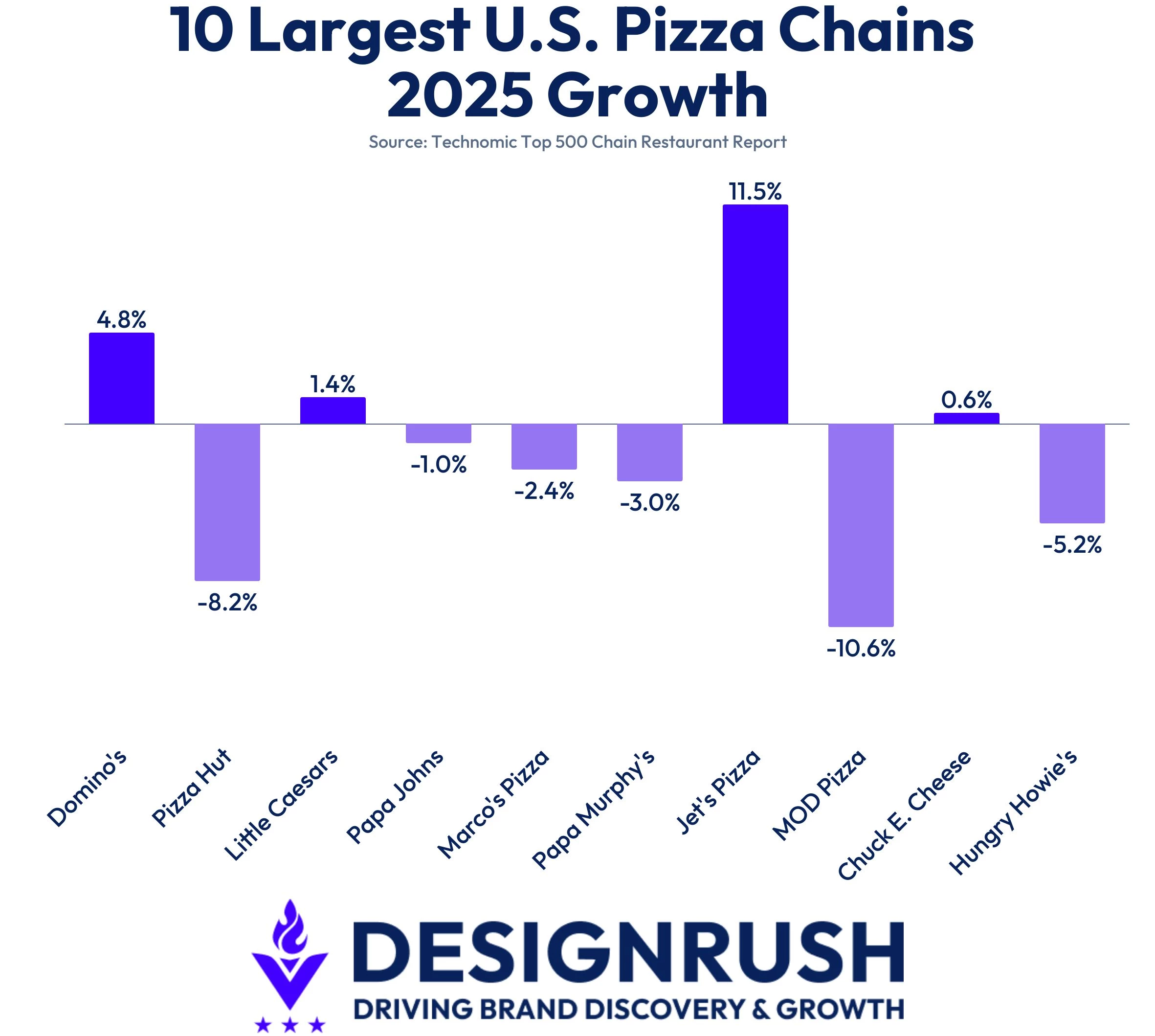
Pizza Hut's decline highlights several trends affecting restaurant and franchise brands.
- Scale doesn't guarantee relevance. Brands should regularly reassess store formats and customer experiences to maintain demand.
- Convenience now shapes competition. Restaurant marketers should strengthen mobile apps, loyalty programs, and platform visibility to capture demand.
- Portfolio focus can create shareholder value. Companies should evaluate whether struggling divisions are receiving investment that could generate stronger returns elsewhere.
When category dynamics change so quickly, ownership changes often become a tool to reposition brands for their next phase of growth.
Our Take: Can Private Equity Restore Pizza Hut?
LongRange Capital is buying a brand that almost everyone knows, and almost no one prioritizes.
We'd argue that Berlin's challenge is cultural, since brand recognition has never been Pizza Hut's problem.
Younger diners have already built their habits around apps, speed, and endless options, and a red roof means little to them.
The fix is making Pizza Hut a real choice at the moment someone opens a delivery app, not a fond memory they scroll past.
If the chain accomplishes this, the nostalgia becomes a real advantage.
Following the sale of Pizza Hut, Yum! Brands said it will concentrate resources on KFC and Taco Bell.
KFC pursued its own global refresh through a new design strategy, which included a logo rebrand, menu refresh, and store redesign.
Restaurant brands facing changing consumer expectations often need specialized support across operations, customer experience, and growth strategy.
Explore these top restaurant digital marketing agencies to find partners that help legacy brands stay competitive.