
Use of Web3 in E-learning: Key Findings
- E-learning’s $842B surge exposes gaps in trust and ownership; blockchain ensures secure, verifiable learner records.
- NFT certificates, token-gated access, and decentralized marketplaces transform courses into lasting ecosystems.
- AI tutors, global skill passports, and immersive training will define e-learning, but only scalable Web3 platforms will endure.
The global e-learning market is ballooning.
By 2030, it’s projected to hit $842.64 billion, according to Grand View Research’s Market Analysis Report.
That’s a CAGR of 19% a year from 2025 to 2030.
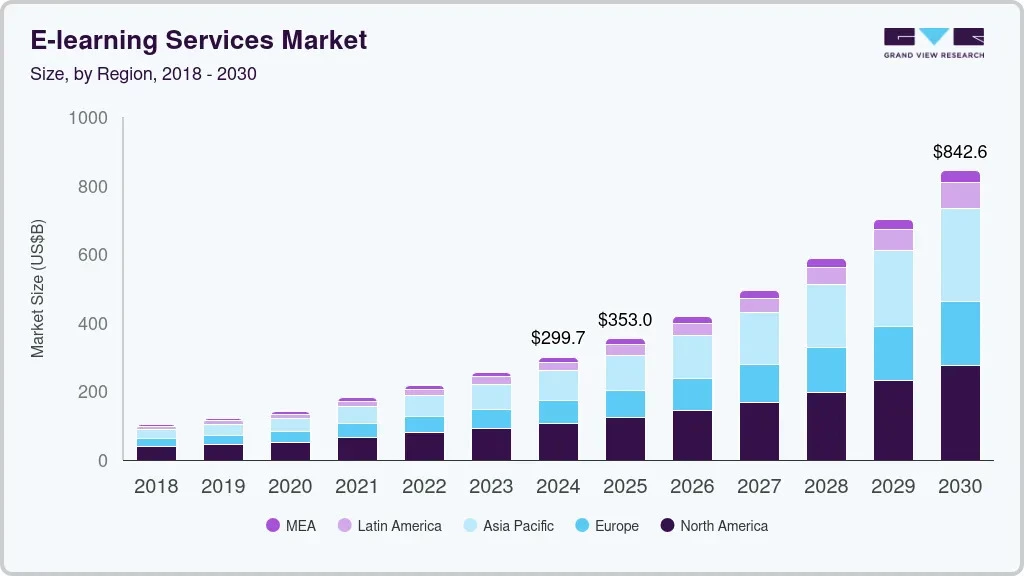
These numbers are dazzling, but at the same time, this growth has uncovered several cracks in the foundations of “traditional” e-learning.
Learners struggle with questions of authenticity. Educators worry about ownership. Employers face a flood of credentials they can’t easily validate.
In other words, if the last era of e-learning was about access, the next will be about trust.
This is where Web3 comes into play.
Built on blockchain and decentralization, it offers more than the tech jargon suggests.
It promises permanence, traceability, and ownership in an ecosystem too often defined by duplication and doubt.
The thing is, Web3 tools and experienced development agencies are already readily available.
The question is whether education companies will step up to use them.
How Web3 is Used in E-Learning Today
The growing interest in blockchain lies in its ability to solve common problems that have haunted digital learning over the last two decades, including:
- Certification Validation: Blockchain makes certification tamper-proof. This means employers can check it directly on-chain without phoning a registrar.
- Decentralization of Power: Current e-learning platforms act like feudal lords: what you learn, what you earn, and even how you share it lives under their roof. Web3 shifts power outward, reducing single-point failures.
- Ownership of Learning Paths: Learners carry their records like a lifelong passport. As a result, moving between a bootcamp course and a university no longer means losing half your achievements.
For education companies, blockchain is no longer an abstract theory.
It’s a way to build credibility, ownership, and sustainability, especially in a market saturated with fragile credentials and commoditized content.
Just a few years ago, using blockchain in education felt speculative. Today, it’s powering real-world platforms, not in theory, but in practice.
Here’s how Web3 is already shaping the next generation of e-learning:
Web3 in Action: E-Learning Use Cases Already in the Field
Not long ago, the idea of using blockchain in education seemed impractical, more theory than viable solution.
Today, it’s creeping into platforms in ways that even the skeptics can’t ignore.
Some of the most successful use cases include:
- Token-based access: Courses gated by tokens, giving learners tiered memberships without clunky paywalls.
- NFT certificates: Not cartoon apes, but tangible proof/certifications that can’t be faked.
- Decentralized marketplaces: Instructors can publish courses without handing over half their revenue to a middleman.
- Smart contracts: Tuition, royalties, and micro-payments flow automatically.
A fantastic example of these use cases in action comes from the Computer Graphics Master Academy (CGMA).
The academy, known for its digital art education linked to the gaming and animation world, hit a ceiling.
Its aging, open-source CMS was brittle, slow, and plagued with bugs, making it cumbersome to add new features or engage learners beyond course completion.
Likewise, the platform lacked social tools, student retention faltered, and it risked being overshadowed in a competitive e-learning environment.
To address these issues, CGMA worked together with Shakuro, a leading Web3 app and software development agency, to design and develop a virtual classroom platform.
-content-large-webp.webp)
Shakuro stepped in with a surgical redesign of CGMA’s online classroom:
- Redesigned scalable infrastructure built on Ruby on Rails
- Optimized for clearer navigation through UX research
- Integrated Discord chat and live Zoom classrooms
- Automated video playlist, certificate, and receipt systems
- Added support tools like PayPal payments, helpdesk integration, etc.
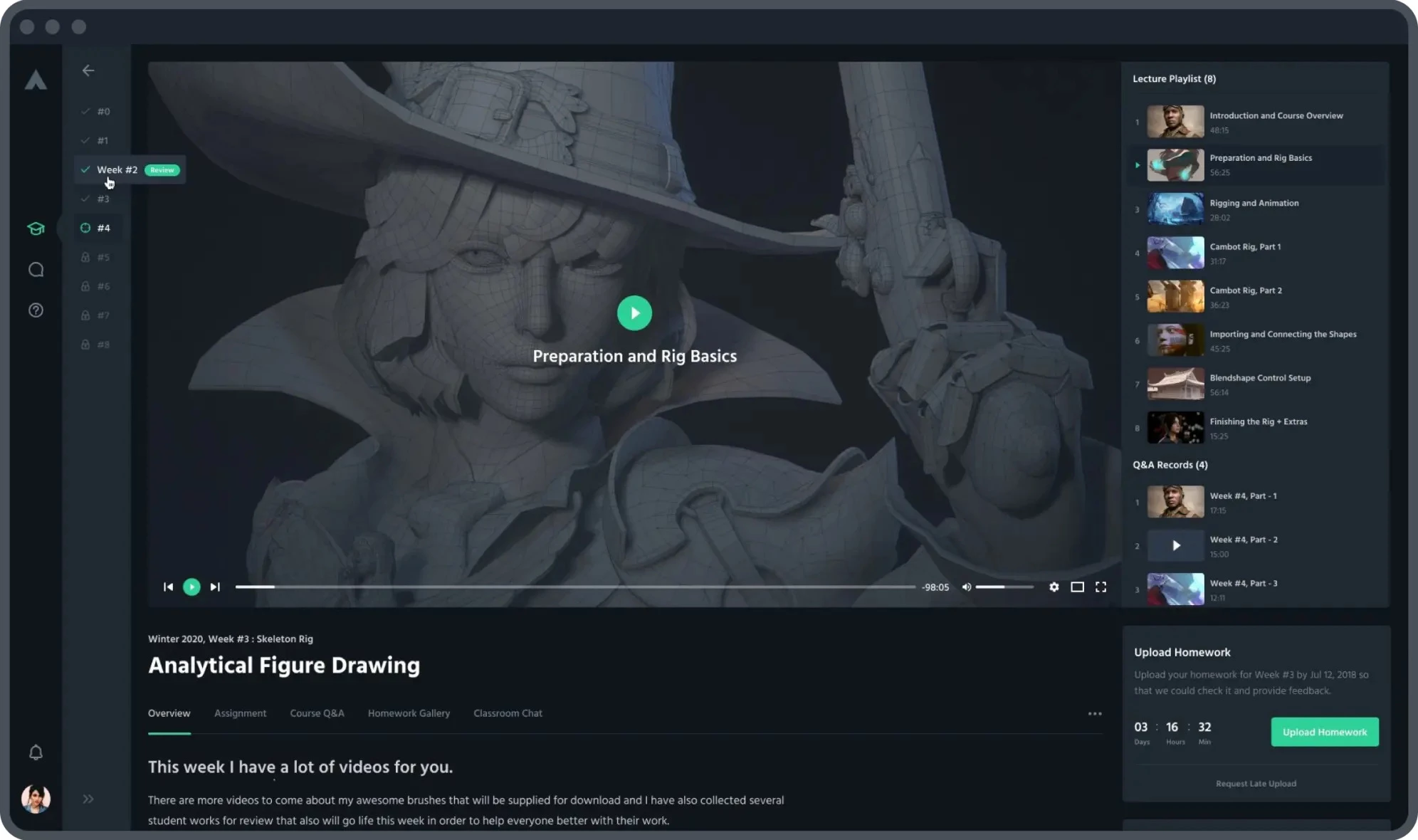
The outcome?
CGMA evolved into a bustling digital art academy that kept learners coming back.
Students lingered beyond their courses, communicating with peers and instructors through robust portals. The platform bolstered its value as a more resilient business asset that was ready for growth.
Today, CGMA hosts thousands of students and connects them with top studios like Electronic Arts and Ubisoft.
Focus on These Web3 Trends in E-Learning and Edutech
Education in general doesn’t move at the speed of an F1 car on the racetrack. It’s more like a freight train switching tracks, slow at first but unstoppable once it gains speed.
This is why those who anticipate this change and adopt forward-thinking trends in the coming years will be the ones who claim the biggest share of the projected $842.64 billion in 2030.
According to insights from Web3 experts, these are the key trends reshaping the future of e-learning:
1. AI Tutors With Blockchain-Locked Integrity
Personalized AI tutors will shape study plans, but blockchain will audit every lesson and test. This results in students getting tailored learning without sacrificing trust in the outcomes.
2. Global Skill Passports Replace Local Transcripts
Learners no longer present résumés bound by geography. On-chain IDs evolve into cross-border skill passports, instantly recognized from Los Angeles to Bangkok. For multinational companies, hiring becomes less about paperwork and more about scanning proof.
3. Immersive Technologies for In-Depth Practical Training
VR and AR tools are becoming more advanced. This is changing the way we think of “hands-on training” in an e-learning setting. Beyond simulations, these tools will create shared, persistent practice spaces where learners across the globe can collaborate, experiment, and problem-solve in real time.
Taken together, these trends point to a future where education is re-architected.
But the real challenge is in weaving them into a coherent system that actually strengthens how people learn, prove skills, and move into careers.
“The key is not to treat these Web3 trends as isolated features, but as part of a long-term ecosystem strategy. A blockchain ID or an AI tutor is powerful only if it integrates seamlessly with pedagogy, assessment, and career outcomes,” said said Kostya Stepanov, founder and CEO at Shakuro.
“By designing with open standards and long-term adaptability in mind, institutions can make sure today’s experiments evolve into tomorrow’s infrastructure rather than fading as passing fads.”
Build the Future of E-Learning with Web3
E-learning has always promised to democratize knowledge. What Web3 adds is the missing infrastructure for trust, permanence, and true global reach.
That’s why the real $842 billion question is whether the industry can embrace this shift quickly enough.
In digital education, scale is no longer the hurdle. The real test is delivering learning that sticks and proves its worth.