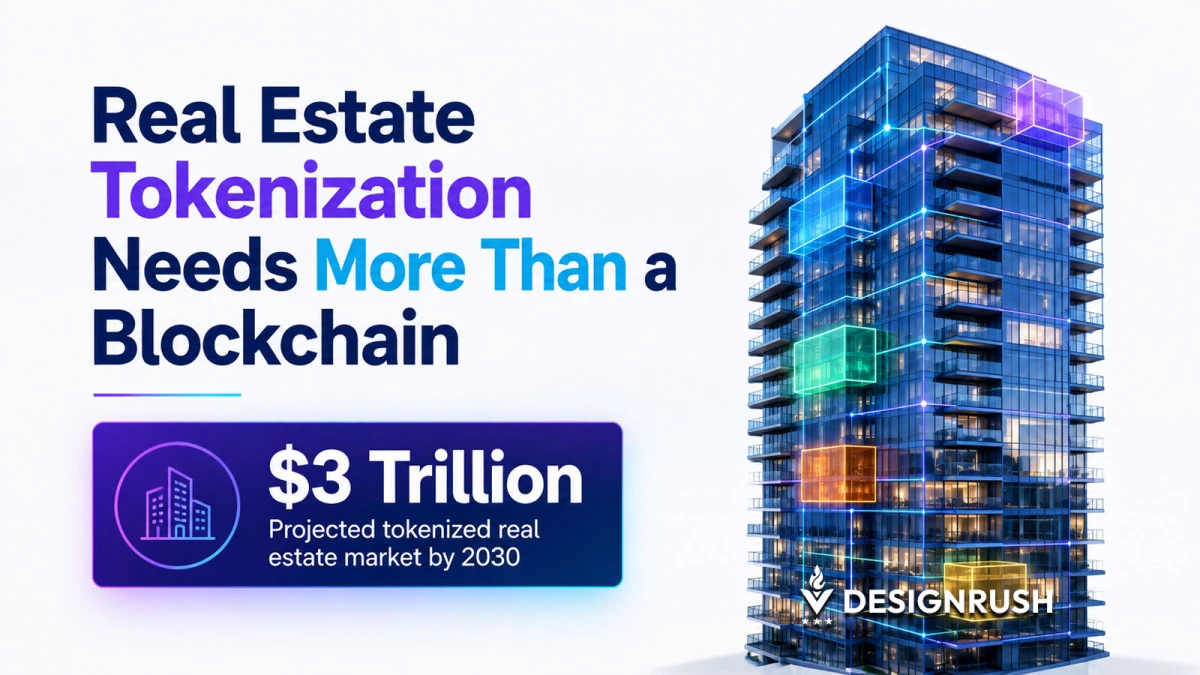

Real estate tokenization is moving from an experimental blockchain use case toward a more structured institutional market.
Research projects that the tokenized real estate market could reach $3 trillion by 2030, representing around 15% of professionally managed real estate assets.
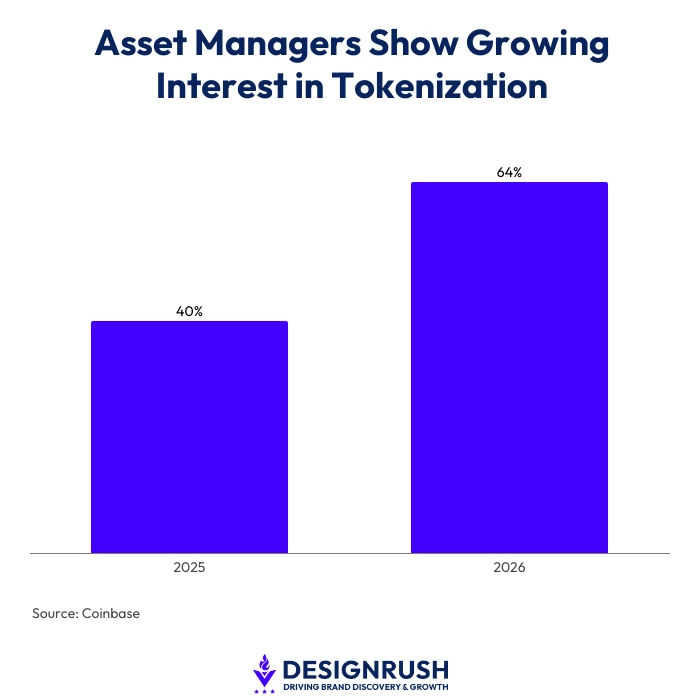
Institutional interest is also increasing. According to Coinbase’ 2026 survey of institutional investors, 64% of asset managers want to tokenize their own assets compared to 40% in 2025.
However, the process of tokenization does not end with creating a token on a blockchain.
A robust solution requires an integration of several aspects into one secure system.
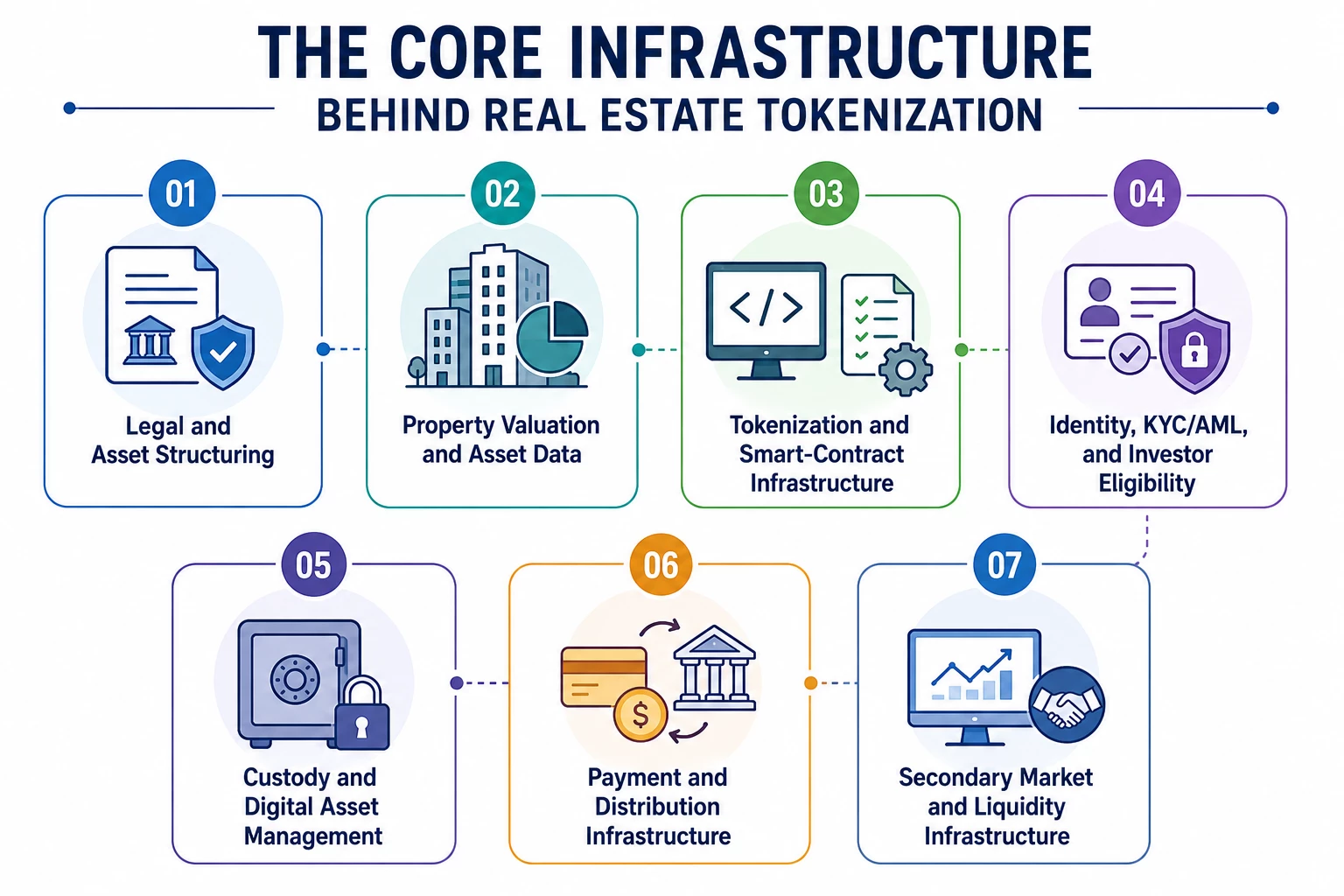
This includes the legal ownership structure, property data, token, eligibility of the investor, compliance, custody, payment, distributions, and secondary market activity into one controlled system.
CNBC explores how blockchain and tokenization could change real estate transactions, investment access, and commercial property markets:
How Enterprise Real Estate Tokenization Works
Real estate tokenization creates a digital representation of an ownership interest or economic claim connected to an underlying property or property-holding structure.
The process generally starts with the asset selection and structuring phase, followed by the valuation process, investor acquisition, token creation, and continuous asset management.
Depending on the structure used, the token could be used to signify ownership interest, economic interest, distribution interest, or any other legally defined claims connected to the underlying asset.
A smart contract and its associated infrastructure could be used to handle all transactions, record-keeping, distribution, and other lifecycle activities.
The framework can be implemented on commercial real estate, residential property, hospitality properties, development projects, and real estate investment programs.
7 Building Blocks of Real Estate Tokenization Infrastructure
A successful tokenization platform needs more than a blockchain layer. The infrastructure must connect the physical asset, its legal structure, financial information, investors, and digital transactions.
1. Legal and Asset Structuring
The first building block is determining what the token actually represents.
Enterprises may use structures such as special purpose vehicles (SPVs) to hold an underlying property while defining the rights of token holders.
The legal structure should establish ownership interests, economic rights, distributions, transfer restrictions, investor eligibility, and other applicable conditions.
A well-designed asset tokenization platform can provide the technical layer that connects these defined rights with their digital representation.
2. Property Valuation and Asset Data
The token needs a reliable connection to the underlying asset.
Property valuation, ownership information, rental income, operating performance, financial statements, and other relevant data can provide the information required to manage the tokenized asset.
Enterprises therefore need systems that can maintain and update asset information throughout the token's lifecycle.
3. Tokenization and Smart-Contract Infrastructure
A tokenization platform takes care of creating, issuing, transferring, and managing digital assets.
Smart contracts can automate the following tasks:
- Token issuance and redemption
- Eligible transfers
- Ownership records
- Distribution calculations
- Transfer restrictions
- Corporate or property-related events
The blockchain should therefore be treated as one component of a broader platform rather than the entire tokenization solution.
4. Identity, KYC/AML, and Investor Eligibility
Tokenized real estate may involve regulated investment interests, making investor verification and eligibility an important part of the platform.
The infrastructure can integrate:
- KYC/KYB verification
- AML screening
- Sanctions screening
- Investor accreditation or eligibility checks where applicable
- Jurisdiction restrictions
- Transaction monitoring
These controls can be connected to the token transfer layer so that transactions are permitted only when applicable requirements are satisfied.
5. Custody and Digital Asset Management
Once the tokens have been issued, the enterprise will need to secure the digital assets as well as the credentials for their management.
This could mean custodial wallets, custody services by financial institutions, an MPC network, or any other key management system based on the operational model.
The platform needs to provide for security measures such as access control, transaction authorization, wallet segregation, and recovery procedures.
6. Payment and Distribution Infrastructure
Tokenization does not eliminate the need for financial settlement.
Investors may need to purchase tokens using fiat or supported digital assets, while property owners may need to distribute rental income, dividends, or other eligible proceeds.
The platform may therefore connect token transactions with:
- Banking infrastructure
- Payment providers
- Stablecoin rails
- Wallets
- Accounting systems
- Distribution and reconciliation systems
This creates a link between the property's financial activity and the digital token lifecycle.
7. Secondary Market and Liquidity Infrastructure
Tokenization does not automatically create liquidity.
Enterprises need to determine where and how eligible token holders can transfer or trade their interests and what restrictions apply to those transactions.
A secondary-market infrastructure can include investor eligibility checks, transfer restrictions, order management, transaction monitoring, and settlement.
This can support models such as real estate fractional ownership platforms, where eligible investors receive defined interests in underlying real estate assets.
What Types of Real Estate Assets Can Be Tokenized?
The infrastructure can support several types of real estate assets, although the appropriate legal and technical structure depends on the asset and jurisdiction.
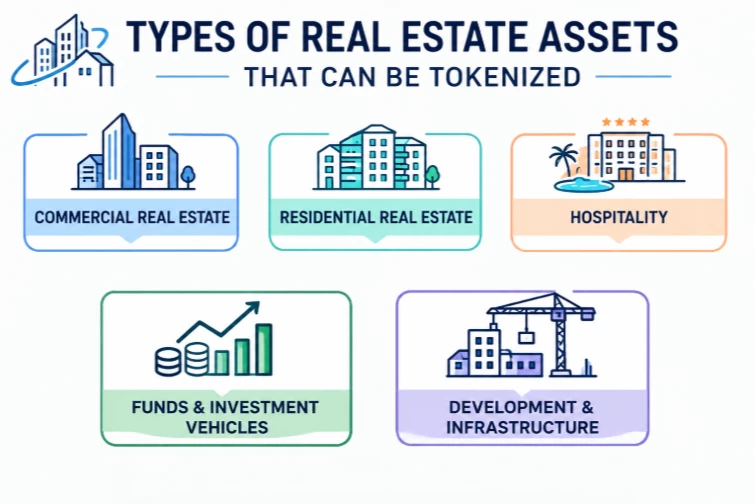
Commercial Real Estate
Office buildings, shopping complexes, industrial sites, and logistics centers can be organized on the basis of ownership or economics.
Residential Real Estate
Rental portfolios, apartment buildings, and residential developments can support fractional investment structures where legally appropriate.
Hospitality
Hotels, resorts, and serviced properties can be structured around tokenized interests linked to property ownership or eligible operating income.
Funds & Investment Vehicles
Property funds, REIT-like structures, and diversified property portfolios can use tokens to represent interests in a broader collection of underlying assets.
Development & Infrastructure
Real estate development and infrastructure projects can potentially use tokenization to structure investment participation and manage eligible interests throughout the development lifecycle.
Primior Asset Management founder, Johnney Zhang, explains how real estate tokenization can be structured in practice, including an $8 million Venice Beach development project:
What Enterprises Need to Consider Before Real Estate Tokenization
Tokenization should begin with the business and legal structure rather than the choice of blockchain.
Regulatory and Jurisdictional Requirements
Any business needs to understand the classification of the tokenized interest and all the securities regulations, property regulations, financial services regulations, tax regulations, and investor protection regulations that might apply to it.
The regulation would set out who can invest in the asset, whether the token is transferable, information disclosure requirements, and how the platform manages compliance.
Demand and Liquidity from Investors
Tokenization does not automatically create a marketplace.
Businesses must consider investor demand, transferability, market availability, liquidity, and the existence of a proper secondary-market mechanism.
Blockchain and Technology Selection
The blockchain underlying technology must be chosen considering parameters like transactions, interoperability, security, scalability, asset control, and the requirements of potential investors and operators.
Security and Smart Contract Controls
Before issuing tokens, organizations must look into smart contract security, wallet structure, access control, transaction authorization, and auditing.
Security needs to extend across the complete platform rather than focusing only on the smart contract.
Ongoing Asset and Token Management
Tokenization continues after issuance.
Enterprises need systems for managing ownership records, distributions, investor activity, compliance checks, property updates, corporate actions, and other events throughout the asset lifecycle.
How Real Estate Tokenization Can Create Business Value
When supported by the appropriate legal and technical structure, tokenization can create several potential advantages:
- More flexible investment structures: Digital representations can support new ways of structuring eligible real estate interests.
- Greater potential for access by investors: The tokenized model may increase access by eligible investors depending on regulation.
- Efficient management: Smart contracts and workflow integration may automate some processes related to ownership, distribution, and settlement.
- Increased transparency: Blockchain transactions may be used to create a consistent history for eligible participants and administrators.
- Secondary market potential: Well-designed tokenized interests may provide means for transfer and trade.
The benefits, however, depend on the underlying legal structure, investor demand, regulatory framework, and quality of the supporting infrastructure.
Why Real Estate Tokenization Requires End-to-End Infrastructure
Enterprise real estate tokenization does not just mean tokenizing a property via a blockchain.
It means linking up the legal rights, valuations of assets, identities of investors, compliance, token issuance, token management, payments, distribution, and secondary markets into one reliable system.
When it comes to real estate software solutions for enterprises, looking at tokenization as an end-to-end infrastructure project can create a stronger foundation for managing digital property interests as the market develops.
The blockchain is only one part of the system. The value comes from how effectively the legal, financial, compliance, and technical layers work together.