



As the 2024 holiday season approaches, retailers across the country are expecting sales growth.
In fact, the National Retail Federation (NRF) projects a nationwide 3.5% increase in holiday retail sales.
However, several states are expected to significantly outperform this national average, showcasing the regional economic diversity that drives consumer spending.
DesignRush's recent analysis highlights several states where sales growth is projected to exceed expectations, fueled by strong local economies and robust consumer confidence.
The study helps retailers and marketers tailor their strategies to regional trends to maximize success during the holiday season.
Understanding the economic conditions that drive retail sales in physical stores and boost conversions for eCommerce platforms in specific regions will be key to leveraging growth opportunities.
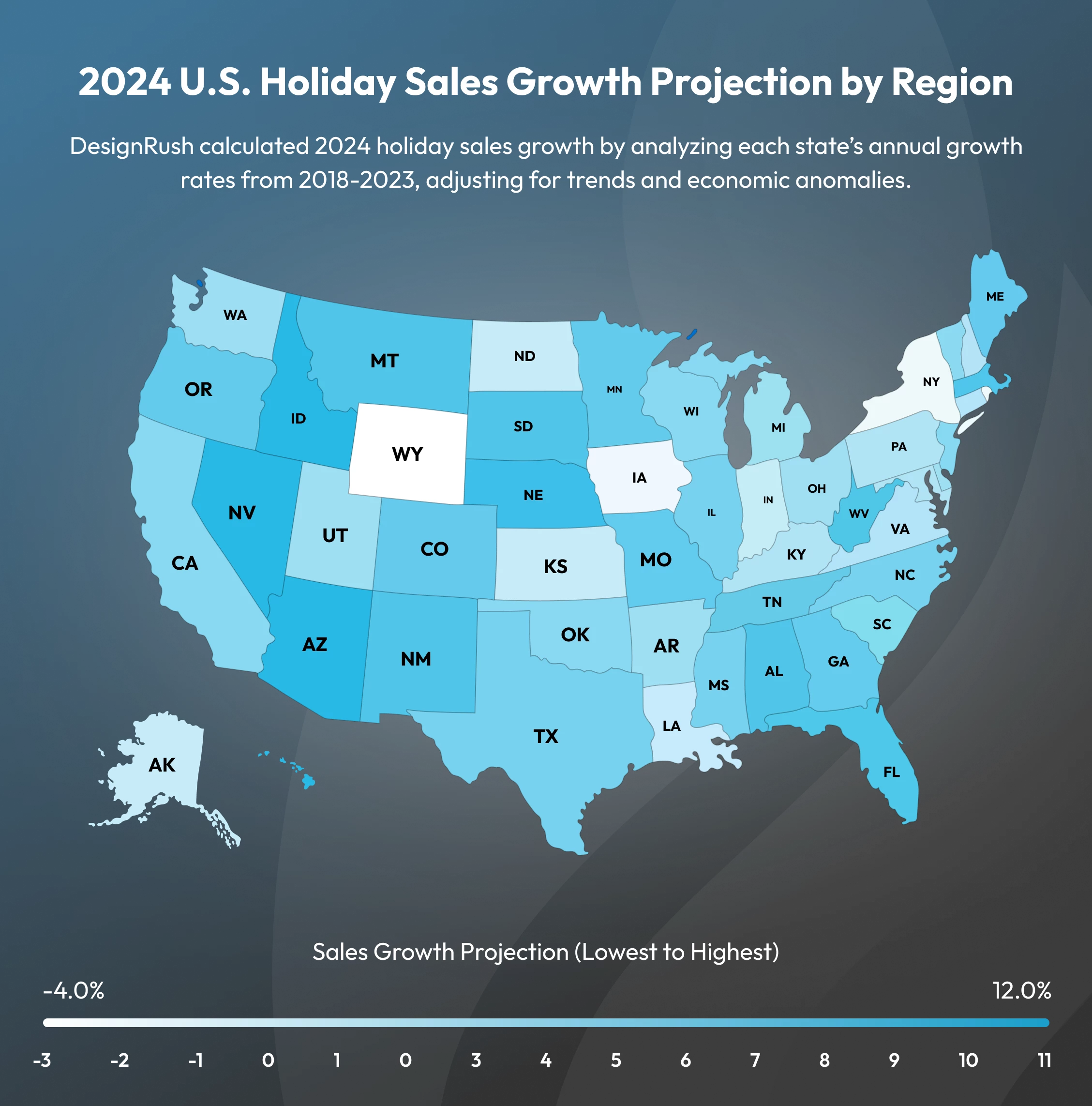
Hawaii is poised to lead with an impressive 11.7% growth forecast, more than three times the national average.
This surge is driven by Hawaii’s ongoing recovery from the pandemic, supported by strong tourism and consumer spending.
Idaho also stands out with an 8.6% projected increase in retail sales, building on last year’s momentum.
Arizona and Nevada are both expected to see growth surpassing 8%, thanks to thriving local economies and consumer spending patterns.
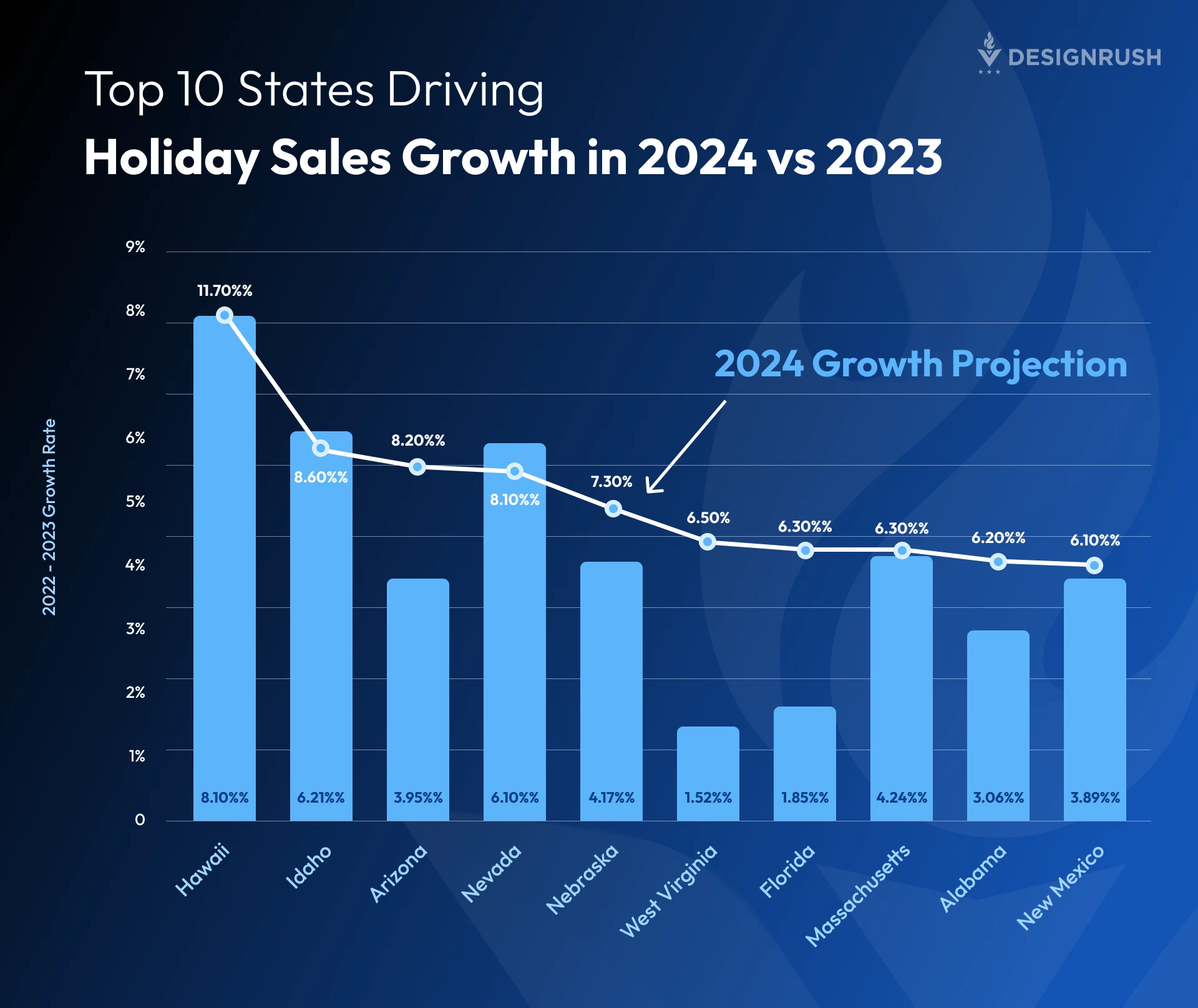
Nevada is set to recover from a previous slowdown with a projected growth of 8.1%, reflecting a revived tourism sector.
Similarly, Nebraska, with an anticipated 7.3% increase, shows positive signs of economic rebound after last year's sluggish growth.
These states' recovery trends reflect a broader national shift toward consumer optimism, even in markets that faced challenges in the previous year.
While some states are projected to exceed expectations, others are still grappling with economic hurdles.
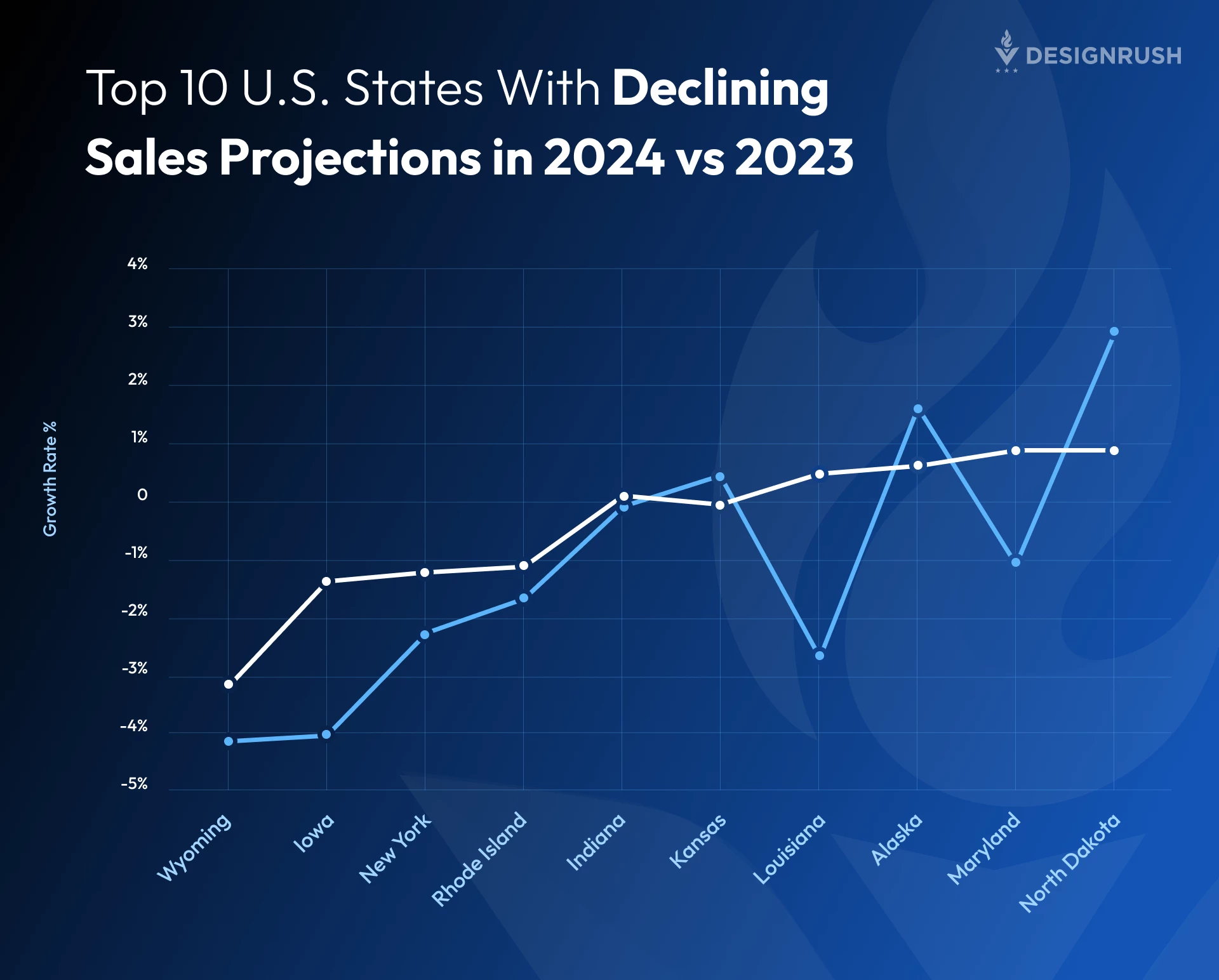
Wyoming, for instance, faces a -3.2% growth forecast, marking the steepest decline among U.S. states.
Though it shows signs of gradual improvement compared to last year’s decline, Iowa follows Wyoming with a -1.4% retail sales increase.
New York, despite a projected -1.3% growth, is expected to stabilize after years of decline, suggesting a potential turning point in its retail sector.
“Retailers in these states are leaving money on the table. These bottom-tier growth projections reflect both challenges and opportunities,” Gianluca Ferruggia, general manager of DesignRush, said.
“For brands looking to expand, this is a chance to fill gaps in underserved markets by investing in localized marketing and better eCommerce strategies. For local businesses, the need to amplify advertising efforts and lean into tax advantages has never been clearer,” he added.
DesignRush Methodology
Professional market research is a tool that arms businesses from different industries with the necessary data for making sound decisions that prevent the waste of effort and resources while giving them the proper direction for business growth.
This is why DesignRush developed a detailed analysis to forecast 2024 holiday retail sales growth across the United States, focusing on uncovering regional and industry-specific trends using a three-step methodology.
1. Data Collection and Analysis
- Time Period: The analysis covered holiday retail sales from October to December over the past five years (2018–2023), targeting peak shopping months to identify seasonal spending patterns.
- Industries Examined: Five industries were included, with a focus on Clothing and Accessories (NAICS Code 448) due to its relevance during the holiday season.
- Data Sources: The study relied on state-level retail sales data from the U.S. Census Bureau’s monthly and annual trade reports, offering comprehensive metrics by industry and region.
2. Calculating Growth Rates
- Year-over-Year Comparisons: Annual holiday sales growth rates were determined by comparing sales from the same months across consecutive years.
- Industry Averaging: A composite growth rate for each state was calculated by averaging growth across the five selected industries, providing a well-rounded perspective on state-level trends.
3. Forecasting with Trend Analysis
- Linear Trend Model: Using a linear regression model, the team projected 2024 growth rates by analyzing historical data patterns. Adjustments were made for economic anomalies, such as disruptions caused by the COVID-19 pandemic.
- Economic Adjustments: The model incorporated macroeconomic factors, including inflation, employment levels, and state-specific economic conditions, to refine forecasts and enhance accuracy.
This rigorous methodology ensures the forecasts are rooted in historical data, adjusted for economic realities, and aligned with current trends, providing a reliable snapshot of the 2024 holiday retail sales performance.




-Stressful-States-for-Male-Employees-in-2024-V2---details-preview-webp.webp)
-preview-webp.webp)
-preview-webp.webp)