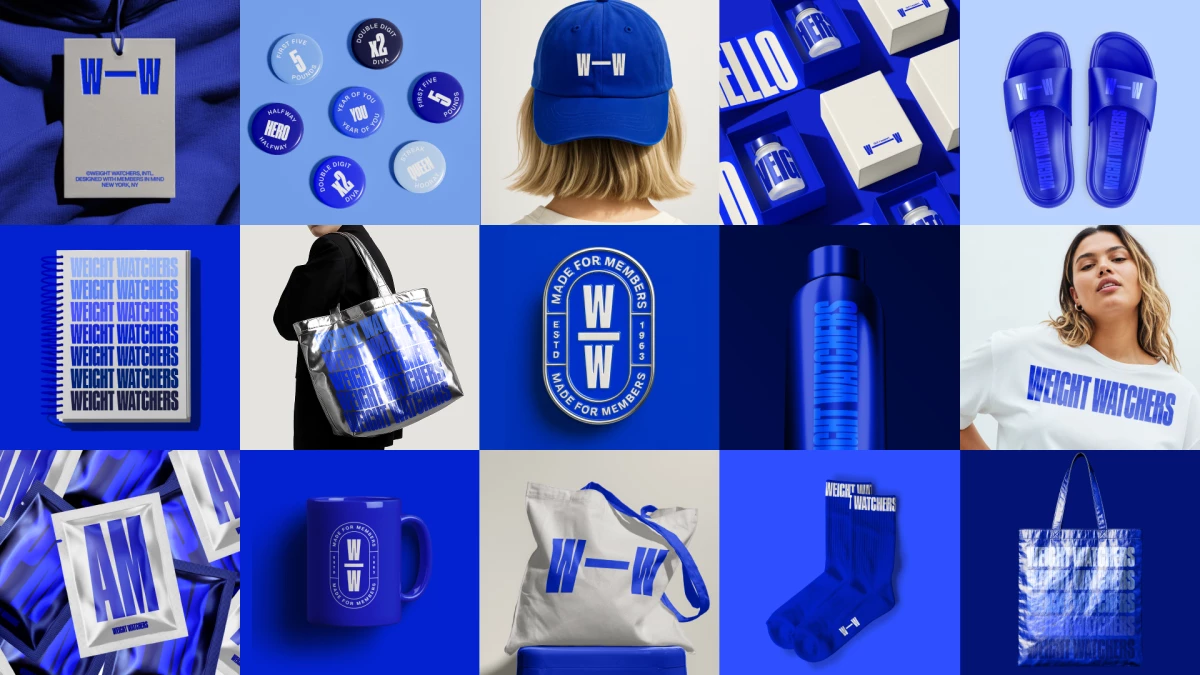

Weight Watchers Rebranding: Key Findings
- Identity shifts to meet regulated-care expectations as WeightWatchers aligns its brand with a model where clinical accuracy, safety, and guidance drive outcomes.
- The redesign creates a clearer system across clinical, digital, and coaching touchpoints, enabling members to navigate medical, nutritional, and behavioral programs with ease.
- Treating identity as a functional asset signals strategic maturity, reflecting a category where trust, integration, and evidence-backed care now influence competitive strength.

Campaign Snapshot
WeightWatcher's has introduced a global rebrand as it deepens its presence in medical weight management.
The refresh arrives as the category moves further into regulated care, where clarity, precision, and trust carry more weight than lifestyle signaling alone.
Developed in partnership with creative agency Mrs&Mr, the new identity supports a care model that brings clinicians, prescription pathways, coaching, and nutrition tools into a single experience.
The update follows WeightWatchers’ acquisition of telehealth provider Sequence, which added medical prescribing and clinical oversight to its ecosystem.
The visual system now appears across the app, global marketing, packaging, and member communications.
Cleaner typography, structured layouts, and functional color cues establish a clearer hierarchy between different types of care.
This effectively reduces ambiguity as members move between different types of services.
A Visual System for Clinical and Human Care
The refreshed brand identity prioritizes clarity because customers are navigating more than coaching programs.
Regulated medical care introduces new expectations around accuracy, guidance, and risk communication.
Mrs&Mr built a system that separates and connects each part of the experience.
This allows clinical interactions, digital tools, and human coaching to operate together without blurring their roles.
The result is a more legible structure that helps members understand access points, responsibilities, and next steps within a more complex service model.
Design choices emphasize consistency and restraint, reinforcing trust in moments where visual cues support clinical confidence rather than brand expression alone.
Market Shift Toward Science-Based Outcomes
Demand for medically supervised weight management continues to rise.
Morgan Stanley has projected that over 24 million U.S. adults could use GLP-1 medications by 2035, underscoring how prescription-based treatment is reshaping the category.
As wellness brands enter medically adjacent spaces, identity plays a different role.
Visual systems must signal reliability, transparency, and competence alongside empathy. In this context, brand design becomes part of how care is delivered.
WeightWatchers’ refresh positions the brand within these expectations.
It reinforces the company’s long-standing role in weight management while reflecting a category increasingly shaped by clinical oversight and measurable outcomes.
This rebrand highlights several lessons for brands operating in higher-stakes environments:
- Design identity as part of the service. Visual systems should help users understand care pathways.
- Build clarity into structure. Distinguish between clinical, coaching, and behavioral support through hierarchy and layout.
- Anchor trust visually. Typography, imagery, and consistency should reflect the realities of regulated care.
As categories mature, design systems that support comprehension and credibility become a competitive asset.
Our Take: Does the Rebrand Fit a Medical Model?
Yes, I think it does. WeightWatchers needed a system that reflects the complexity of integrated weight management.
The new identity mirrors how the brand now operates across its different services.
Its impact will depend on consistent execution, but I believe the foundation aligns with where the category is headed.
In contrast, Jaguar’s Type 00 rebrand faced backlash and leadership fallout after critics saw it as misaligned with the brand’s heritage and audience expectations.
For more brand identity work shaping complex categories, explore the Top Branding Agencies leading that evolution at DesignRush.