
UNO Social Club's Vegas Activation: Key Findings
- Event buzz: A viral rumor about the card game becoming part of casino gambling put UNO in the spotlight once again.
- Brand response: Mattel responded with humor and redirected attention to its real initiative.
- Strategy in action: The UNO Social Club reimagines a classic game as a lifestyle experience.
- Experience over product: Immersive events help legacy brands connect with new audiences.
Quick listen: UNO’s Vegas moment proves viral buzz only works if the brand is ready, in under 2 minutes.
Speculation around a gambling version of UNO set the internet on fire.
But what toymaker Mattel actually delivered might be even more strategic.
Social media blew up with claims that the iconic card game we all used to play was headed to the casino floor in Las Vegas.
A tweet from DraftKings even declared it “official,” and before long, millions were imagining high-stakes UNO showdowns.
It wasn’t true. But rather than shutting the story down, Mattel joined the conversation in a witty way.
“[T]he casino floor isn’t ready for us yet. We've been told that while they do have tight security, it's not robust enough for UNO at this time," the brand said in a Facebook post.
As someone who’s worked on brand strategy, I appreciated how they handled it.
It kept the tone light while clarifying the facts. They didn’t waste the attention, and they redirected it.
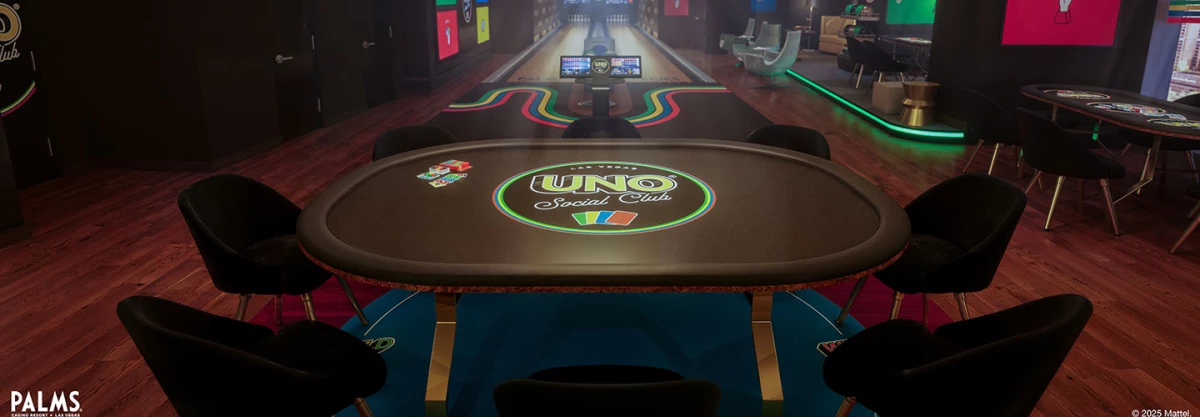
The real story was actually the launch of the UNO Social Club at the Palms Casino Resort, held from July 18 to 20.
Instead of blackjack tables, guests walked into a private suite filled with themed decor in the game's signature colors of red, blue, yellow, and green.
And of course, UNO's new game modes like Golf, Teams, and Show ’em No Mercy are available to play. There was even a bowling alley.
“We created UNO Social Clubs to reimagine what game night can be — bringing people together for real-world fun, connection, and a bit of friendly competition,” VP and Global Head of Games Ray Adler said in a press release.
What impressed me most was how intentional the setup felt.
It was all about reimagining UNO as an experience.
And it fits right into a night out, a TikTok video, or a group story. From life-size cards to themed drinks, it was built for sharing.
Mattel even ran a TikTok contest to invite fans to the event, and it has already announced that the UNO Social Club will expand to bars in major cities this August.
The toy company has created social spaces that happen to center around a game people already love.
Reinventing Game Night for a New Generation
This kind of activation makes perfect sense to me.
I’ve seen firsthand how Gen Z and millennials respond to brands that make them feel something real, especially when it connects to a memory they already hold dear.
Mattel gave UNO a new setting, and this kind of activation isn't isolated.
Hasbro turned Monopoly into a life-sized board game experience in London.
Barbie, another Mattel brand, opened themed cafés with sold-out seatings and neon-pink cocktails.
These efforts all take the same approach, using nostalgia marketing to create something people can actually go to, post about, and remember.
And this is the key. Experience-first branding gives people something to share. It moves the brand out of the box and into real life.
The Perks and Pitfalls of Going Viral
Honestly, I think UNO sort of got lucky with the casino rumor.
It wasn’t planned, but the timing and tone lined up perfectly with what it was launching.
Rather than deny it flatly, Mattel used humor to redirect the attention to what was actually happening.
This move worked because it felt on-brand: fun, a little cheeky, and grounded in something real. But not every brand gets this right.
Hasbro’s Monopoly for Millennials from 2018 is a great example of how these efforts could go sideways.
It tried to mock and charm Millennials at the same time, but the result came off as condescending.
It went viral, sure, but not in a way that actually helped the brand. The backlash spread faster than the product did.
Hasbro later said it was meant to be lighthearted, but by then, the damage had already been done.
The difference here is that UNO stayed true to its brand identity. The casino rumor didn’t clash with what UNO stood for.
It instead highlighted how people already saw the game: emotional, competitive, and tied to personal memories.
Some brands chase viral attention by staging fake announcements or outrageous stunts.
That can work for a brand like Duolingo, which once pretended its owl mascot had died, resulting in millions of impressions.
But it also sparked a wave of imitators. Lipton announced it would discontinue its Peach Iced Tea as a prank, only to face real backlash from confused fans.
Lipton have announced they are discontinuing their Peach Ice Tea flavour. pic.twitter.com/TVTOXRziJ8
— Pop Base (@PopBase) March 19, 2025
For brands, the takeaway is pretty straightforward:
- Virality is a moment, not a strategy.
- Tone carries more weight than timing.
- The buzz only works when there's something behind it.
Mattel didn’t force the moment, but it responded to the rumors amazingly well.
Plus, it had something real to show. UNO never stopped being UNO; that’s why the attention stuck.
What CMOs Should Take from This
Mattel didn’t try to make UNO cool. They treated it as if it already was, and this made all the difference.
If you’re leading a legacy brand, here’s what you should keep in mind:
- Turn your product into an experience. The best way to stay relevant is to create something people want to attend, not just buy.
- Design with cameras in mind. Every part of the UNO Social Club—from drinks to décor—was made to be photographed and shared.
- Use nostalgia with intent. It’s a powerful tool, but it only works if you give people a new story to tell.
- Let the audience lead the buzz. Don’t fake viral moments. Respond to them honestly and with personality.
- Build community, not just content. These events brought people together. That emotional connection is more valuable than a view count.
I think UNO's success here has more to do with the brand being prepared with something real when the spotlight hit.
It certainly won a news cycle, but more importantly, it reminded people why they care about UNO in the first place.
We all know attention is hard to hold these days. Algorithms change, ads get skipped, and audiences move fast.
But if you give people something to experience, something to talk about, and take part in, they remember.
UNO didn’t chase a viral moment; it was ready for it. These partners help you build brand experiences that meet attention with intent: