
Uber Eats x Bradley Cooper: Key Points
- Uber Eats expands its NFL campaign with Bradley Cooper defending football in a heated boardroom confrontation.
- The rollout continues through the season with NFL legends appearing in TV, digital, and social activations.
- Special US uses humor and celebrity marketing to tie food culture with the traditions of football fans.
Bradley Cooper isn’t laughing at Uber Eats’ latest football conspiracy.
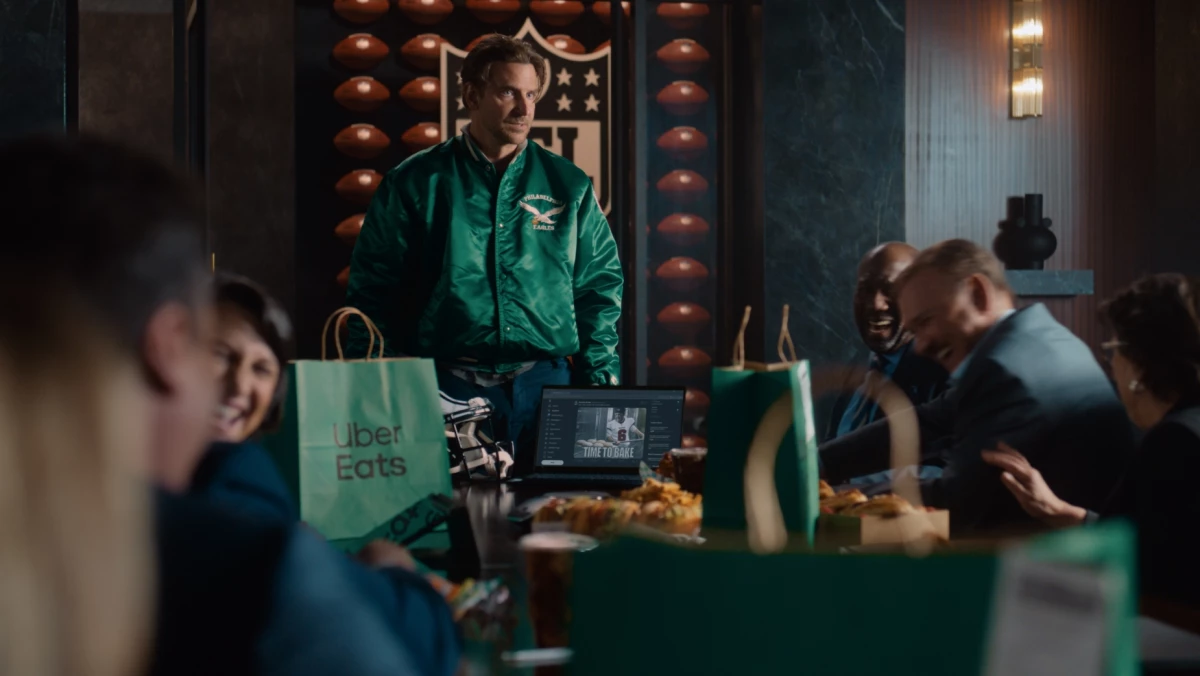
In an effort made with Special US and directed by Jim Jenkins of O Positive, the actor returns in the latest campaign that picks up where the brand’s Super Bowl spot left off.
While Matthew McConaughey led the first installment with a theory that football was designed to sell food, Cooper takes a much less amused role.
A passionate Philadelphia Eagles fan, he argues with several boardroom directors that his team’s Super Bowl win was real, not just a clever excuse to boost wing sales.
“There are so many links between football and food, we definitely knew we wanted to return for a second season,” said Dave Horton, partner and co-CCO at Special US.
“But we wanted to do it in a way that felt like an evolution so fans could see both sides of this ridiculous conspiracy.”
Matthew Woodhams-Roberts, also a partner and co-chief creative officer at Special US, said the follow-up was meant to balance the joke.
Christian McCaffrey and Matthew McConaughey in their new Uber Eats ad 😂😂
— NFL Retweet (@NFLRT) September 28, 2024
pic.twitter.com/XCNyvQtt2r
He continues, saying it was only "fair to let football defend itself" with the actor, who's one of the sport's greatest fans.
The launch marks the first push in a season-long rollout that will run across television, digital, and social channels.
It aims to keep audiences entertained while feeding into the connection between football and food.
Cooper Fights Back
The film returns viewers to the same boardroom from February’s Big Game ad.
This time, Cooper is red-faced and frustrated as executives reveal new evidence that football and food have always gone hand in hand.
"When the Eagles won the Super Bowl, that was one of the greatest days of my life. But that day was ruined by accusations that my birds only won to sell wings," he exclaimed.
Despite his protests, the executives appear unconvinced, some even laughing, almost as if they’re part of the scheme themselves.
"Bradley, what is it you want us to do?" one asks the actor, to which he responds that they should publicly deny the conspiracy.
After a deadpan exchange, they all burst into laughter as Cooper exits the boardroom, closing the spot.
The campaign will extend beyond this initial confrontation.
NFL legends Jerry Rice, Troy Aikman, and Baker Mayfield are set to appear in upcoming spots, each revealing new layers of the “Football Is For Food” conspiracy.
Uber Eats is framing the project as a "deeply unserious ode" to fandom, designed to playfully connect the culture of sports to the act of ordering in.
For the food delivery platform, it’s also a continuation of its growing use of star power.
While McConaughey spearheaded the first wave, Cooper anchors this new chapter, giving the campaign a beloved face and a dose of heated comic energy.
And by doubling down on conspiracy storytelling, the brand is once again showing how food delivery can become part of everyday sports culture.
Our Take: Is Football Just Another Product?
What interests me here isn’t just the spot's meta comedy and Cooper yelling in a boardroom.
It’s that Uber Eats is daring to say the quiet part out loud: professional sports are as much about commerce as competition.
The brand reframes fandom not as sacred, but as something negotiable.
It's become a stage for selling wings, burgers, or whatever you can have delivered in the fourth quarter.
This might irritate purists, but I think it’s exactly why the work lands.
Satirizing the commercialization of football allows Uber Eats to participate in it with a wink.
This marketing strategy also sidesteps the backlash that more earnest advertisers often face.
The takeaway for marketers is that humor in marketing can both be silly and brush against uncomfortable truths.
Recently, Toyota and NFL star Brock Purdy launched an AI-packed campaign that ties auto to football.
Sports and entertainment are powerful ad platforms. These top creative agencies know how to balance cultural commentary with product relevance.