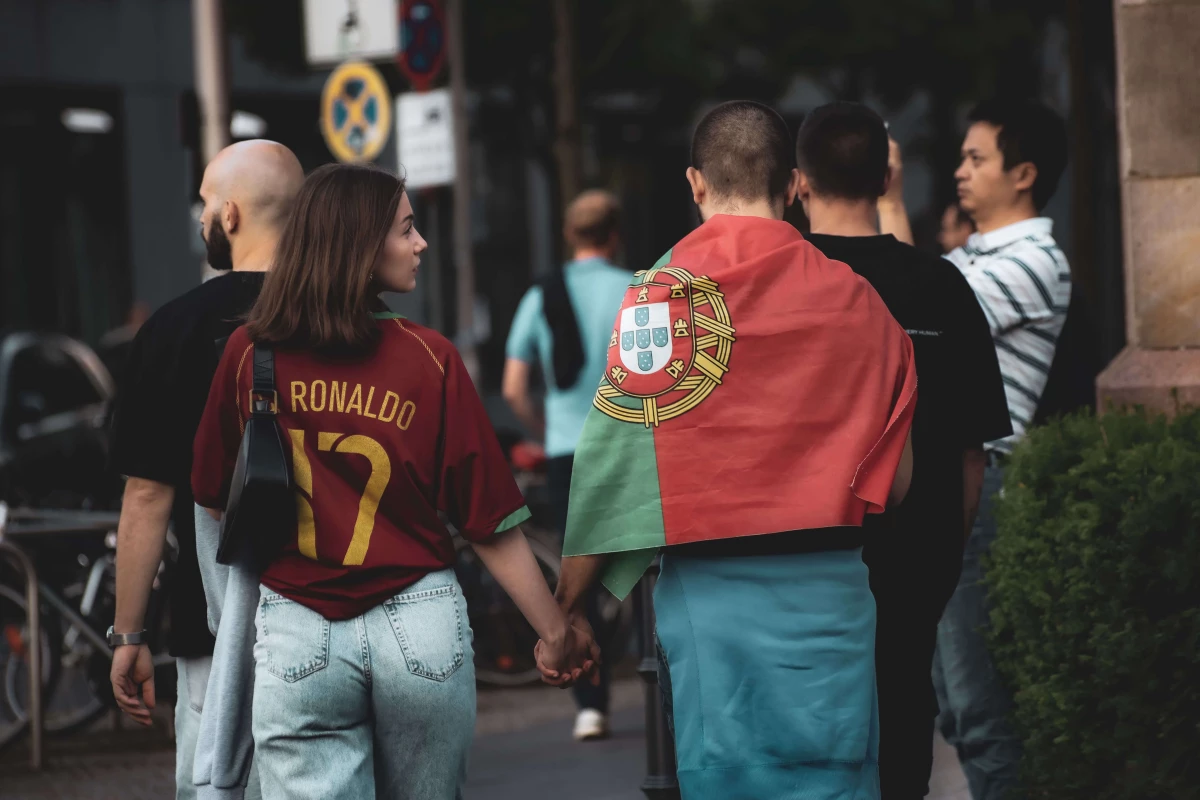

The World Cup brought football fever to the U.S., and it also turned 16 American, Mexican, and Canadian cities into the world's largest singles event.
Dating app Tinder reports a 47% average rise in international-user activity across host cities since kickoff, up against the same window last year.
Domestic users are also in the mix, up 22% over the same stretch.
And across the U.S. as a whole, the app is seeing a 15% increase in total users, a 25% jump in swipe activity, and nearly 60% more matches compared to June 2025.
The World Cup is turning into an unexpected dating hotspot, with Tinder matches up 60% across the US during the tournament
— Dexerto (@Dexerto) June 29, 2026
Tinder activity in host cities also jumped by an average of 47% as fans from around the world arrived pic.twitter.com/XvkMEjkS3z
These figures aren't that surprising.
Gatherings of emotionally charged, travel-emboldened strangers with disposable time have always been ideal grounds for romance.
What stands out is the scale, and for marketers, the context.
No official U.S. campaign or brand partnership triggered the spike.
It's what naturally happens when hundreds of thousands of tourists arrive in a new country and download the most ubiquitous dating app on the planet.
This automatic pull is a form of brand power that money can't manufacture.
Tinder is a product so embedded in how people seek connection that it activates automatically when the conditions are right.
The strongest gains are clustering around individual match days, suggesting the tournament's rhythms are directly influencing when and where people swipe.
Monterrey saw an 80% surge around the Sweden vs. Tunisia game, while Guadalajara spiked 74% during South Korea vs. Czechia.
Meanwhile, Boston jumped 47% during the Iraq vs. Norway match.
Each city's spike tracks its own match schedule, evidence that live events can drive consumer behavior in real time with no media spend behind it.
What the Internet Is Saying
These numbers show fans are building whole social lives around the tournament, with the matches as reasons to get out and meet people.
TikTok creators have been openly coaching followers on how to capitalize on the moment.
"If the World Cup is in your city, why are you trying to date someone from your city?" one creator said.
Another advised the "single baddies" in her audience:
"You're gonna have professional athletes, international men, at your disposal. This World Cup is your World Cup."
And language is half the flirting when the crowd is this international, which is exactly the gap Tinder and Duolingo went after.
In Mexico, the two ran joint activations during the Guadalajara, Mexico City, and Monterrey match days.
Users needed an active Duolingo streak and a Tinder profile to join, a hook aimed at the cross-border crowd the tournament drew in.
When fans pour into a city for a match, the dating pool swells right along with the crowd.
The internet figured this out fast, and every viral post nudging singles toward tourists is working in Tinder's favor.
The Passport Mode Surge
Tinder's Passport Mode, which lets users set their location to cities they haven't arrived in yet, is also seeing heavier usage.
The New York/New Jersey metro, Los Angeles, and Miami rank as the top destinations for inbound Passport swipes.
The top origin countries are Great Britain, Brazil, Thailand, and Nigeria, where fans are swiping before they even board their flights.
As one may guess, this isn't the first time a major sporting event handed Tinder a growth spike.
During the Paris 2024 Olympics, the app saw a 25% increase in swipe activity across France.
It also experienced a 105% increase in Passport Mode usage directed at key Parisian tourist sites.
Historically, global sports events have supercharged Tinder's numbers.
The World Cup, with 16 host cities spread across three countries and a month-long run, creates a far wider geographic footprint.
The Feeld dating app's 2025 study on Gen Z's fastest-growing interests found sports claimed eight of the top 10 spots.
Soccer specifically climbed nearly 600% from the year before.
Luke Brunning, a professor of ethics at the University of Leeds, offered a read on why.
"An emphasis on experiences, being sociable, and forging intimacy through structured activities and clubs helps understand why more people are vocal about sport," Brunning explained.
A team or a sport now signals what someone's personality is actually like, which makes fandom one of the fastest ways to size up a potential romantic match.
The World Cup just handed Tinder a month of that signal at full volume, which is why the user engagement spiked without a dollar of marketing behind it.
The Numbers Tinder Didn't Pay For
Dating apps have faced a challenging period. Tinder's own revenue dropped 5.2% in 2025, according to Business of Apps.
The whole industry is grappling with stalled growth and rising acquisition costs.
It also has a perception problem, since younger users link the major apps with dating fatigue.
And yet when Scottish fans descend on Boston and Norwegians pack Times Square, Tinder's numbers spike without the brand lifting a finger.
This gap between declining baseline numbers and explosive event-driven surges is worth paying attention to.
Brand awareness for an app like Tinder is not the challenge because everyone knows what it is. The challenge is making it feel relevant.
Events like the World Cup do this work for free, injecting urgency, novelty, and cross-cultural energy into an experience that can feel repetitive.
The real lesson for brand marketers is how a live event can make an established platform feel new again.
Here are some useful takeaways:
- Real-world gatherings still move the needle: A product with strong cultural pull rides a major live event for free, no ad buy required.
- Geography is a product feature: When location sits at the core of the product, users find their own creative ways to put it to work.
- Organic spikes reveal unmet product opportunity: A surge this big with no feature built for World Cup fans is a gap Tinder left on the table.
The smartest move now is converting these borrowed spikes into something repeatable, so the next big event arrives with a new feature ready to meet it.
Our Take: Is Tinder Sleeping on the Best Marketing Brief It's Ever Had?
It's unusual watching a brand benefit this spectacularly from an event it had no hand in whatsoever.
We don't say this as a criticism, but as a provocation.
With 60% more matches and fans using the app as a cross-cultural arrival ritual, you'd expect the platform to respond with more than just the data.
But whether or not Tinder decides to act on this spike doesn't take away from the fact that the numbers are the campaign.
And in a category like dating apps, where brand fatigue is real and user drop-off is accelerating, it feels like leaving the meal half-cooked.
The app already proved it can convert football fever into swipes. It has the data and the audience.
What it does with the next global event (a new built-in feature or another missed chance) decides whether these spikes ever become something it owns.
Global brands building sports campaigns need creative partners who understand how to carry a single concept across markets and formats.
Explore these top creative agencies in our directory.