
SXSW 2026 New Clubhouse Format: Key Findings
- With the Convention Center closed for redevelopment, SXSW will rely entirely on venues across Austin.
- Three “Clubhouses” will anchor the new layout, each tied to Film & TV, Music, and Innovation badge communities.
- Experiential agency WINK worked with SXSW on the concept, building spaces for programming, collaboration, and brand activations.
SXSW (South by Southwest) will look different this year.
For decades, the Austin Convention Center functioned as the festival’s meeting point.
With the building closed for redevelopment, organizers are moving the event outward into the city itself.
What's happening from March 12 to 18 is a festival that spreads across Austin rather than gathering in just one huge complex.
Three Clubhouses will serve as base camps for the event’s largest communities: Film & TV, Music, and Innovation.
Built specifically for these badge groups, the spaces are designed to feel anything but corporate.
They are meant to be places to kick off the day, linger between sessions, recharge, and run into collaborators unexpectedly.

Each Clubhouse will operate as a home base and a cultural hotspot, with flexible multi-use areas designed for conversation, co-creation, and discovery.
Programming inside the spaces will be developed closely with SXSW’s programming teams, so the activity inside the hubs moves in sync with the wider festival schedule.
SXSW is also tightening its calendar. The 2026 edition runs for seven days instead of the usual 10.
Creative Hubs Replace a Central Venue
The Clubhouses are meant to solve a familiar SXSW problem, which is orientation.
The festival has always stretched across dozens of venues, but the Convention Center once gave attendees a common starting point.
With this space offline, organizers are introducing smaller hubs that mirror the festival’s main badge tracks.
SXSW Chief Commercial Officer Peter Lewis said in a press release that this change reflects a more deliberate layout.
"[The Clubhouses] give our partners meaningful ways to show up and engage, and they give badgeholders spaces designed for connection, collaboration, and momentum.
It’s a smarter, more focused footprint that reflects where SXSW is headed," Lewis added.
The intention is simple. Give people recognizable gathering spots without pulling the event back into a single building.
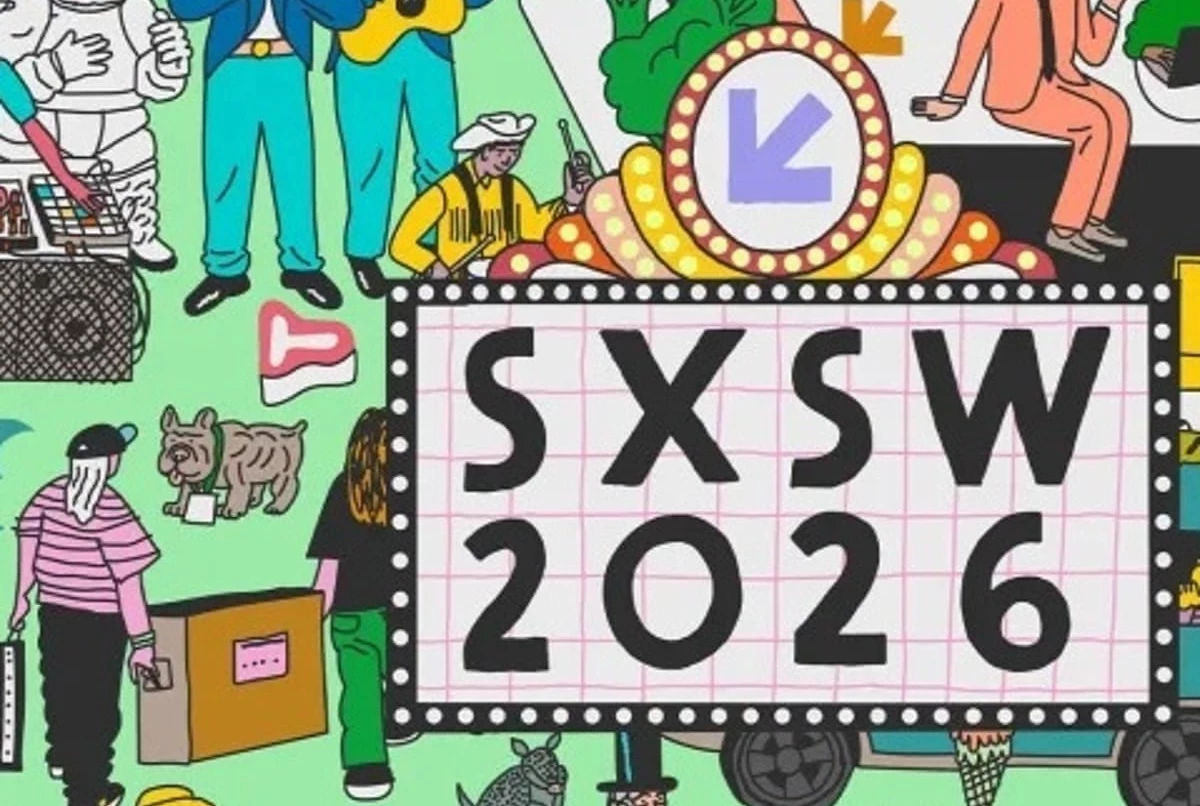
Visually, the Clubhouses will also introduce a completely new look for SXSW.
The spaces are inspired by the surreal illustrations of muralist Josh Cochran, whose bold, colorful artwork will shape the visual personality of each hub.
His playful murals and graphic elements will appear throughout the Clubhouses, turning them into highly recognizable landmarks inside the festival.
This also helps give the new citywide format a distinct visual identity, intended as the physical expression of a new chapter for the festival as it goes outside its comfort zone.
WINK Helps Design the Format
The Clubhouse concept emerged from collaborative work between SXSW and WINK.
The experiential studio began in Amsterdam and later opened a presence in New York.
Over the years, it has produced large-scale brand activations for companies such as Budweiser and Corona, including work tied to events like the Winter Olympics and the upcoming FIFA World Cup.
Its connection to SXSW goes back to 2017.
That year, the agency helped launch New Dutch Wave, a program that spotlighted Dutch entrepreneurship and creativity during the festival.
This new Clubhouse concept grows out of this long-standing relationship.
Over the years, SXSW has grown from a small local gathering into one of the world’s largest creative festivals.
Participation expanded from about 700 attendees at the first event in 1987 to more than 417,000 across conferences, festivals, and related events at its peak before the pandemic.
While attendance has fluctuated in recent years, the numbers still reflect a massive global audience.
And this new citywide format suggests the festival is experimenting with fresh ways to bring its community together again while attracting new and younger audiences.
“Great experiences create the conditions for connection," WINK Founder Arne Koefoed told DesignRush.
"With the Clubhouses, we want to design open, welcoming spaces where SXSW badge-holders can recharge, connect, and let ideas cross-pollinate.
"I’m incredibly proud that WINK, as the first external creative XM agency to shape the look and feel of SXSW, could help bring this new format to life. It feels fresh and new — yet somehow completely SXSW at the same time.”
Established creative festivals increasingly rely on shared gathering points. Three patterns often appear in formats like this:
- Designated hubs simplify navigation. Meeting points help attendees orient themselves across large event footprints.
- Shared spaces amplify brand activations. Sponsors gain visibility when programming and networking happen in the same place.
- Creative environments encourage collaboration. Informal encounters often spark partnerships and new ideas.
SXSW 2026’s Clubhouses are combining these elements while adapting the festival to a citywide layout.
Our Take: Can SXSW Reinvent Its Own Format?
SXSW has reinvented itself more than once.
Music defined the early years. Film arrived later. Technology and startups eventually reshaped the schedule again.
The Clubhouse idea hints at the festival’s next stage, and we think it's about time it gets out of the walls of the Convention Center and out into the real world.
With this, SXSW will start to feel like a network of creative neighborhoods scattered across Austin.
And we think that this is a great thing, because it allows SXSW to stay relevant by adjusting to the way creative communities gather and collaborate today.
Brands seem to be responding well to this change, with Redbreast Irish Whiskey returning to SXSW alongside Andrew Scott for the second edition of its “Unhidden” filmmaker award.
Brands exploring real-world activations at cultural gatherings can review these top experiential marketing agencies that specialize in live events and brand environments.