
EVs at CES 2026: Key Findings
- Sony Honda Mobility framed AFEELA as consumer technology at CES 2026, positioning its EV as a software-defined digital platform rather than a traditional car.
- Sony Honda Mobility is reshaping how EVs are evaluated and compared by anchoring AFEELA to the tech sector instead of the auto industry.
- The CES debut reinforces a contrarian strategy, doubling down on in-vehicle intelligence, entertainment, and personalization amid market uncertainty.
Do EVs now count as a consumer technology product?
Sony Honda Mobility certainly thinks so.
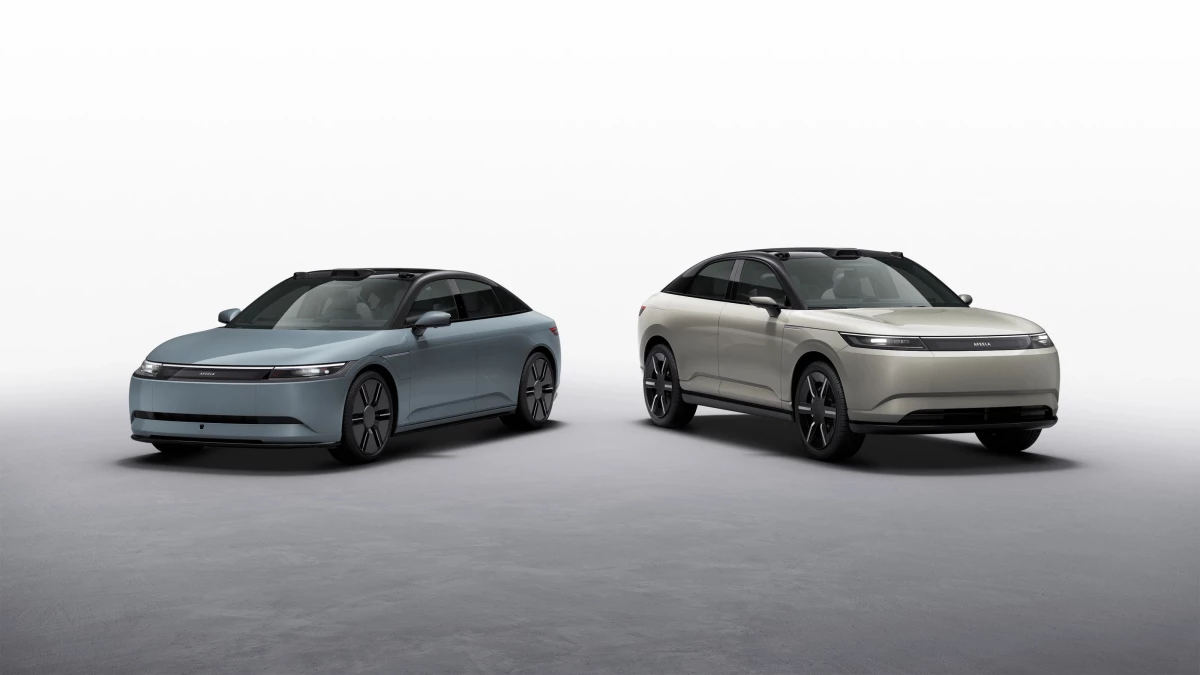
The joint venture between Sony and Honda presented its new AFEELA EV Prototype at CES 2026 in Las Vegas.
The prototype builds on the company’s AFEELA concept and follows earlier previews of its first production model.
The CES presentation leaned heavily into Sony Honda Mobility’s vision of the car as a software-defined, connected environment.
Executives emphasized in-vehicle intelligence, entertainment, and personalization, framing AFEELA less as a conventional EV and more as a digital platform on wheels.
Sony Honda CEO Yasuhide Mizuno said that they aim to deliver a new model based on the unveiled prototype to U.S. customers as early as 2028.
CES has become the company's preferred stage for major updates. During CES 2025, the company introduced the AFEELA 1, its first EV model.
CES 2025 is officially underway!
— AFEELA (@shmAFEELA) January 8, 2025
At the Sony Honda Mobility AFEELA booth (Central Hall booth # 19904), the newly announced AFEELA 1 is on display.
We’re excited to see you there!#AFEELA1#AFEELA#SonyHondaMobility#CES2025pic.twitter.com/E88IT5ksEs
This has cleverly positioned the brand closer to the technology sector rather than the traditional automotive sector.
The company expects to deliver the AFEELA 1 to customers in California sometime later this year.
Pushing Forward as Others Pull Back
The reveal offered a clearer picture of how the joint venture plans to enter an EV market that has grown more cautious.
Over the past year, multiple automakers have slowed EV investment, delayed model launches, or revised production targets.
This is mostly due to high interest rates, uneven charging infrastructure, and a softer demand for premium EVs, all of which have reshaped expectations.
In the U.S., policy uncertainty has added another layer of hesitation.
President Donald Trump has rolled back EV tax credits, removing a key incentive that many manufacturers relied on to support mass adoption.
Despite this, Sony and Honda's approach appears intentionally contrarian.
Rather than retreating, the company is doubling down on differentiation.
The prototype highlights advanced driver assistance, an AI-powered personal agent, and a cabin designed around screens, sound, and interactivity.
From a brand identity and business perspective, several implications emerge:
- Positioning EVs as lifestyle products: While competitors emphasize cost control and efficiency, Sony Honda Mobility is betting on emotional connection and digital experience as primary selling points.
- Signaling confidence during uncertainty: In a moment when many brands are recalibrating, continued public investment in prototypes sends a message of long-term intent to partners, developers, and early adopters.
- Using CES as a narrative advantage: Debuting a car at a consumer technology tradeshow is an incredible way to reposition AFEELA from a "nice to have" vehicle to a "modern necessity" similar to a smartphone or wearable.
Our Take: Is Category Reframing the Real Competitive Advantage?
From our perspective, the most strategic move on display was not the prototype itself, but the category Sony Honda Mobility chose to occupy.
By returning to CES and leading with software, partnerships, and experience, the company is signaling that it wants to compete on different terms than many of its peers.
That decision reshapes how the brand will be evaluated.
Consumer technology is judged on usability, consistency, and the strength of its ecosystem.
Choosing this frame raises expectations, but it also creates room to escape the narrower comparisons that define more mature categories.
Sony Afeela 1. Booked.
— Patient Investor (@PSInvestor) January 5, 2026
I was tempted, backed out, then went back and reserved it again. The more I looked at what Sony Honda Mobility is building here, the more it started to feel like a real alternative to the usual EV shortlist.
The biggest thing for me is the tech stack and… pic.twitter.com/HHnYSs5GBq
But reframing only works if it is reinforced at every level.
Overall, Sony Honda Mobility shows that choosing how you want to be understood may be as important as what you bring to market.
In other news, Volkswagen recently signed Austrian actress Emily Cox as its new brand ambassador to show how family vehicles need spokespersons whose lives mirror real customers.
Want to redefine how your customers perceive your brand? Get in touch with the leading branding agencies making waves in our agency directory.