
PPC Automation: Key Findings
- Smart Bidding now dominates PPC, making automation the default approach for most advertisers.
- Automation fails without clean data and context, as algorithms optimize for signals, not true business value.
- Human oversight is still critical for many accounts, especially smaller, niche, or budget‑constrained campaigns.
PPC has never been more powerful; or more dangerous.
In 2026, automation tools like Smart Bidding and Performance Max are scaling campaigns across Google Ads faster than most brands can keep up.
Ben Debono, Director at leading PPC experts, Bobo Digital, says that as algorithms continue to run the show, many marketers are taking a step back from strategy.
“And while this sort of efficiency bodes well for businesses, it is also presenting a quiet drift toward complacency that could be costing more than anyone realizes.”
Editor's Note: This is a sponsored article created in partnership with Bobo Digital.
What’s Fueling the Rise of PPC Automation in 2026
Smart Bidding and other automated tools use machine learning to adjust bids on the fly, and factor in everything from device and timing to how people actually behave online.
In theory, that should free marketers up to think more strategically. But in reality, it often removes the human judgment that keeps campaigns anchored in real‑world context.
"It puts a lot of trust in systems that don’t understand why a particular outcome matters, only that it meets a defined metric," Debono says.
That shift has brought clear performance benefits. Automation can process complex data faster than any human. But it also introduces risk, especially when it becomes a set-and-forget system.
The video below explains how Smart Bidding Exploration works:
New PPC Automation Stats Every Marketer Needs to See
The shift toward automation is now a defining characteristic of the paid search landscape.
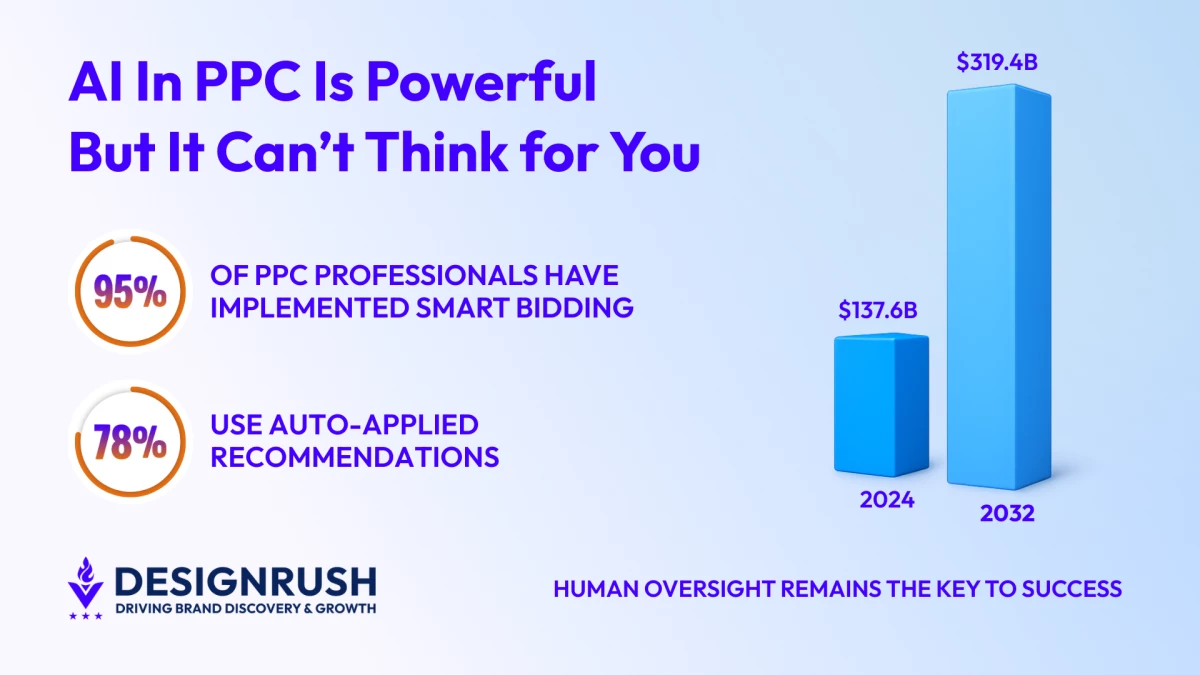
From as early as 2022, Search Engine Land says that 95% of PPC professionals have implemented Smart Bidding in their Google Ads campaigns. In addition, 78% use auto-applied recommendations, allowing the algorithm to make optimization decisions with limited review.
Responsive Search Ads are also used by 97% of professionals, reflecting just how far automation has permeated all aspects of PPC.
In parallel, the PPC market itself is expanding rapidly. Credence Research reports the global pay-per-click advertising market was valued at $137.6 billion in 2024 and is expected to reach $319.4 billion by 2032.
That’s a compound annual growth rate of 11.1%, driven by continued demand for measurable, high-performance media across search, mobile, and social.
“Not only is PPC growing in adoption growing in economic importance as well,” Debono says. “And as more spend flows into high-performance campaigns, the need for human strategic oversight only becomes more critical.”
Where Automation Falls Short and Human Strategy Wins
Experienced PPC managers know that AI automation, while powerful, is not infallible. There are key scenarios where only human oversight can steer campaigns toward meaningful outcomes.
New campaigns often lack the historical data Smart Bidding needs to function effectively. Budget shifts and sudden pacing changes can confuse the system.
Awareness-driven or lead-gen initiatives may not align with pure conversion metrics. And platform-level quirks or goal misalignment can quickly steer campaigns off course.
“These aren’t just theoretical problems,” says Debono. “While Smart Bidding may optimize, it doesn’t know if those conversions lead to revenue, refunds, or regret.”
Without human context, automation tends to prioritize what’s measurable and not what matters.
The Reasons Smart Bidding Breaks Without Expert Oversight
Automation may optimize quickly, but it doesn’t always optimize wisely. One of the most common failure points is flawed conversion tracking.
“If your data is inaccurate, Smart Bidding will confidently steer your campaigns toward the wrong outcomes because it doesn't know any better,” Debono says. “That feedback loop is only as strong as the signals it's fed.”
Scale is another factor.
Small accounts or niche products often don’t generate enough meaningful data for the algorithm to learn effectively. In these cases, AI’s automation starts guessing, and guesswork leads to wasted spend.
Instead of optimizing for revenue, it may chase proxy metrics like add-to-cart clicks or engagement.
Misaligned goals can be just as risky. Without oversight, automated systems often favor low-effort wins even when they don’t serve long-term value. And when budgets are tight, that lack of nuance becomes expensive.
“These are no longer edge cases but fast becoming everyday realities,” Debono says. “And they’re exactly why human strategy still plays a central role, even in the most automated PPC environments.”
How to Balance Automation With Hands-On PPC Strategy
While automation does the heavy lifting, it doesn’t replace strategic thinking.
The best approach is to blend automation with intentional manual oversight. This can be achieved by prioritizing accurate tracking, including Enhanced Conversions, to ensure the algorithm is learning from the right data.
It is equally as critical to control what gets automated and what doesn’t.
For example, brand awareness campaigns still run on manual CPC because their goals differ from performance-driven ones. Oversight on budget, structure, and priorities ensures automation stays aligned with broader business strategy.
“Automation should serve your strategy, not define it,” Debono says.
For those selling on Amazon, the following video reveals the top PPC tools to maximize sales:
Why PPC Automation Still Needs a Human Touch
While Smart Bidding will get smarter and Performance Max will become more autonomous, it's important to remember that strategy isn’t made by data alone.
It comes from intent, context, and the human judgment that machines can’t replicate.
In the race for efficiency, marketers can’t afford to lose sight of outcomes that actually matter. Automation should empower, and not replace the people who drive performance.
As automation accelerates, brands that pair machine efficiency with human oversight will outperform those relying on algorithms alone.