
Serena Williams for Ro's GLP-1: Key Findings
- Serena Williams lost over 31 lbs using GLP-1 medication and is now a spokesperson for Ro.
- Her story challenges the belief that weight loss drugs are only for those lacking discipline.
- Ro's campaign marks a new chapter in destigmatizing GLP-1s with high-profile partnerships.
Quick listen: Serena Williams reframes GLP-1 weight loss as healthcare, not hype — in under 2 minutes.
Serena Williams has taken on a new role, not on the court, but in healthcare.
The tennis icon is partnering with Ro as the face of a national campaign promoting open discussion of GLP-1 weight loss medications.
After losing more than 31 lbs with GLP-1 treatment, Williams is using her platform to question outdated views around seeking medical help for weight management.
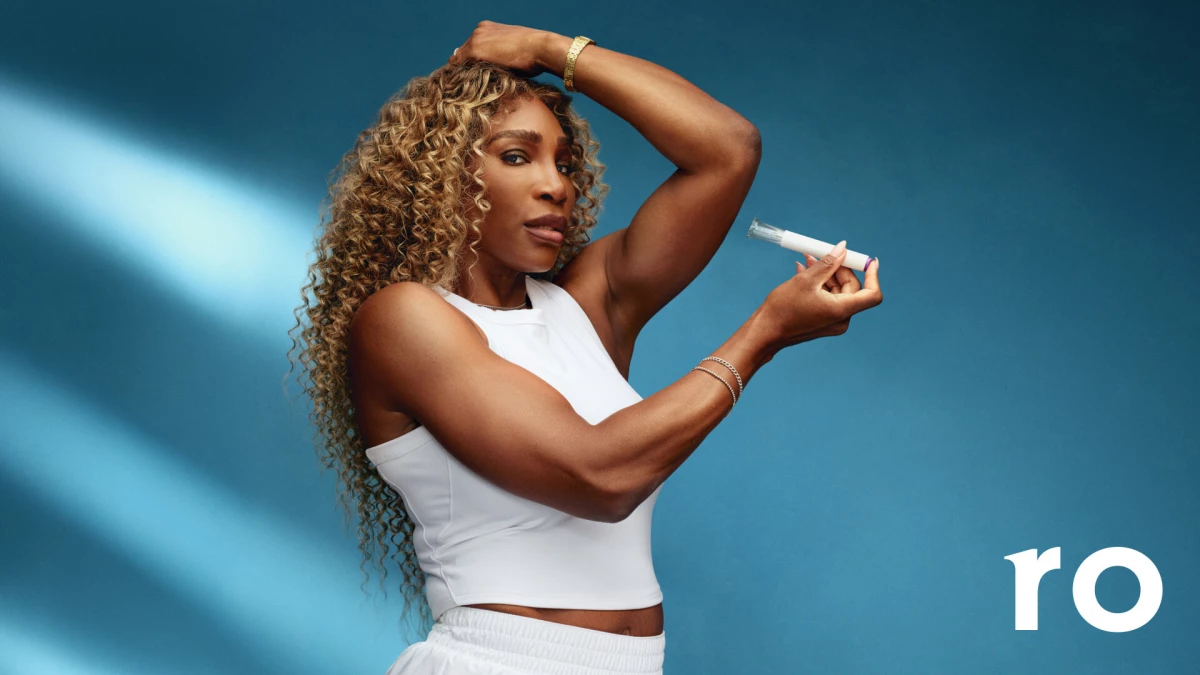
The multi-year campaign shows Williams using the Ro app and giving herself weekly injections, highlighting how treatment fits into daily life.
Medications like Wegovy, Ozempic, and Mounjaro have become much more common since 2021, when the FDA approved them for treating obesity.
Even with growing medical support, public opinion has not caught up.
Some people still think of these medications as quick fixes or something only celebrities use, especially when diet and exercise are expected to do the job.
On X, @FatouSambe1 argued:
“Serena Williams promoting ozempic/GLP-1 is problematic and disappointing because it’s being marketed as a ‘health’ choice rather than an aesthetic one. She didn’t look like this at her peak as an athlete so really she’s losing weight to achieve a certain look nothing else.”
Others pointed to access and affordability.
Well good for Serena Wms for saying she's been using GLP-1 weight loss medication. She said ppl should use it bc it works for her. Great. She's a millionaire & can afford it. Do they think about this before speaking? As in everything, it's for the wealthy pic.twitter.com/rjeT8xk7bC
— BGSU Lady😇♥️🐶♥️📚🙏 (@BGSULady) August 21, 2025
Williams directly challenges that belief.
"I trained at the highest level, ate a clean diet, pushed myself, and still, after having kids, my body just wouldn't respond.
I realized it wasn't about willpower; it was biological.
My body needed the GLP-1 and clinical support.
I'm partnering with Ro because if I needed help as a top athlete doing everything at level 10, I know others are struggling too, and everyone deserves access to the treatment they need.
This isn't a shortcut. It's healthcare."
Others defended her honesty.
X user @coachdannym posted:
“Serena Williams took a GLP-1 to lose weight. She trains harder than you ever have or will… for anything. She has a level of discipline few humans will ever know. But like almost EVERYONE, food noise is a real problem. Weight management is more than just effort and discipline, even for people who are great at the whole effort and discipline thing.”
From Patient to Public Voice
Ro selected Williams in part because she was already using the service, not solely because of her public profile.
While her husband, Alexis Ohanian, sits on Ro’s board and is an investor, the company made it clear that the campaign was based on Serena’s own experience as a patient.
Williams co-wrote the campaign’s voiceover, which will run on TV, digital channels, and in major public spaces like Times Square and the US Open.
This is not Ro’s first high-profile collaboration, as NBA Hall of Famer Charles Barkley joined as a patient ambassador in April.
View this post on Instagram
But Williams brings a different kind of credibility.
As one of the most disciplined athletes of her generation, her endorsement reframes GLP-1 treatment as a valid health decision rather than a shortcut.
A New Model for Health Brands
Ro’s business case for this campaign is clear.
Its GLP-1 program, launched in early 2023, quickly became one of its strongest growth drivers, with sales rising more than 200% within months.
That kind of traction raises the stakes for how the brand communicates its role in weight management.
Ro’s partnership with Williams represents a major shift in how weight loss products are marketed.
Instead of flashy ads, the campaign highlights Williams’ personal experience, told by someone known for discipline and hard work.
The campaign strikes a balance between honest medical care and everyday life, showing Ro as a provider that understands both health and how people live.
View this post on Instagram
For brands, it’s a cue that people connect with honesty and clarity more than polished messaging.
Ro avoids selling GLP-1s as instant solutions.
Instead, it highlights the care and support that go into making them work safely and effectively.
It is among the first GLP-1 campaigns to show up in big public spaces, a sign that this kind of care is entering everyday conversation, not just quiet mentions online.
Companies in health and wellness can learn from how Ro is handling this rollout.
When brands lead with real patient stories, talk openly about stigma, and work with voices people trust, their message comes across as both grounded and inspiring.
Our Take: Is Ro Taking the Right Risk?
I believe Ro is taking a smart but calculated risk by putting Serena Williams at the center of its GLP-1 campaign.
Sure, this move will spark debate, but that conversation is exactly what a brand in healthcare needs if it wants to shift public perception.
I see this as a long-term strategy where trust outweighs backlash, and Serena’s story gives the campaign rare authenticity.
If I were advising Ro, I would say betting on transparency and cultural relevance is smarter than staying quiet while stigma dominates.
For another look at how celebrity influence is reshaping health and lifestyle marketing, see how Skims is rewriting menswear rules with Post Malone.
Modern healthcare deserves modern storytelling. These agencies know how to pair patient journeys with public education in meaningful ways.