-details-webp.webp)

Key Takeaways:
- Merging print and digital marketing creates impactful, multi-touchpoint campaigns that enhance engagement and elevate brand visibility.
- Effective print marketing hinges on a strong online presence and professional design, which are essential for building trust and optimizing ROI.
- Integrating sustainable, eco-friendly print strategies with digital tactics positions businesses for long-term success in a future-focused, responsible marketing landscape.
Many believe print advertising is a thing of the past, but Mike Hindle, founder of Clearcut Derby, has proven otherwise.
For over a decade, he’s shown how print complements digital marketing, cutting through the noise of endless online content.
With his expertise in low-carbon websites and eco-friendly print, Mike believes in a strategy where both approaches work together — and why CEOs and founders should rethink their marketing mix.

Who is Mike Hindle?
Mike Hindle founded Clearcut Derby, a UK-based print and digital marketing business, with over ten years of experience as a local SEO specialist and sustainable web designer. The company specializes in digital sustainability, low-carbon websites, and eco-friendly print, helping local businesses connect with their target audience both online and offline.
In many respects, Mike agrees with the common belief that print advertising is outdated:
“Whereas most businesses previously relied on print advertising, it’s now reserved for a much smaller niche. But this is where the opportunity lies."
He believes the key to keeping print relevant lies in its ability to command attention.
Print gives a rare moment of focus, unlike digital platforms filled with ads and endless scrolling.
“You’re battling against a million other distractions. With a carefully considered print ad, your message has space to breathe. It’s competing against fewer or even no other distractions. As a result, you’ve gained a moment or two more in front of your potential new customer or client.”
The takeaway? Print stands out as a valuable tool for businesses looking to capture their audience’s focus.
Overcoming Misconceptions About Print Marketing
Despite its place in modern campaigns, many businesses remain unsure about the success of print marketing.
According to Mike, one of the biggest challenges is the uncertainty around cost.
“Certain businesses have become accustomed to cheap, and therefore unreliable distribution companies. This sort of work is extremely time-consuming.
If it’s too cheap, they’re either not paying their staff enough, not making a profit, or most likely, not delivering the campaign properly, if at all.”
Usually, Clearcut Derby only works with clients who recognize the required cost to complete the job, as many businesses don’t realize the potential of a print and distribution campaign.
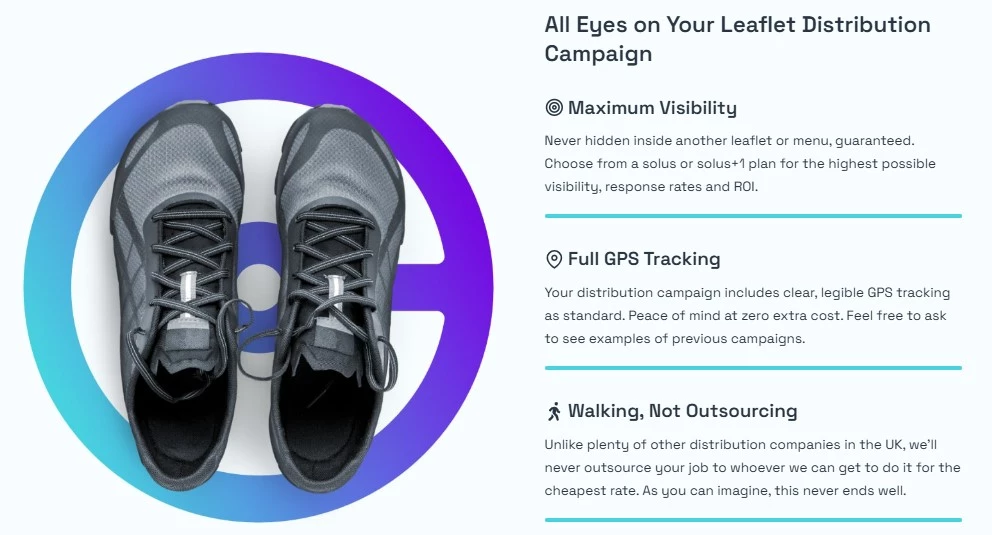
For example, the agency has worked with a few nurseries that successfully promoted their open day with flyers and leaflets.
The feedback has been overwhelmingly positive — print and distribution brought more feet to the open day than online efforts.
“Many other local nurseries relying purely on digital marketing are potentially missing out on extra footfall,” Mike adds.
As such, Mike’s approach focuses on businesses that appreciate quality and are willing to invest accordingly, allowing Clearcut Derby to deliver highly effective campaigns.
Common Mistakes in Print Campaigns and How to Avoid Them
But to make print work, businesses need to avoid some common mistakes. One key mistake is not integrating print with your online presence.
“No online visibility is the most common blooper I see. A print marketing campaign still needs to be backed up by a strong presence across the web,” Mike notes.
He says this problem is common with property investors, developers, and smaller new businesses.
“If a potential customer receives a flyer from your company, but then searches for you online and rocks up to crickets, it’s not going to instill much trust.”
His advice is straightforward: businesses should at least have a basic website, a Google Business Profile, and active social media before distributing any print materials.
This ensures that when potential customers follow up on the print campaign online, they find a credible, accessible brand ready to engage.
Poor design takes the second spot on the list of mistakes — something Mike believes should tick the basic requirements to increase ROI and inquiries.
“This can easily be avoided by running your design by a professional before sending it to print, or having an experienced graphic designer create the artwork for you.”
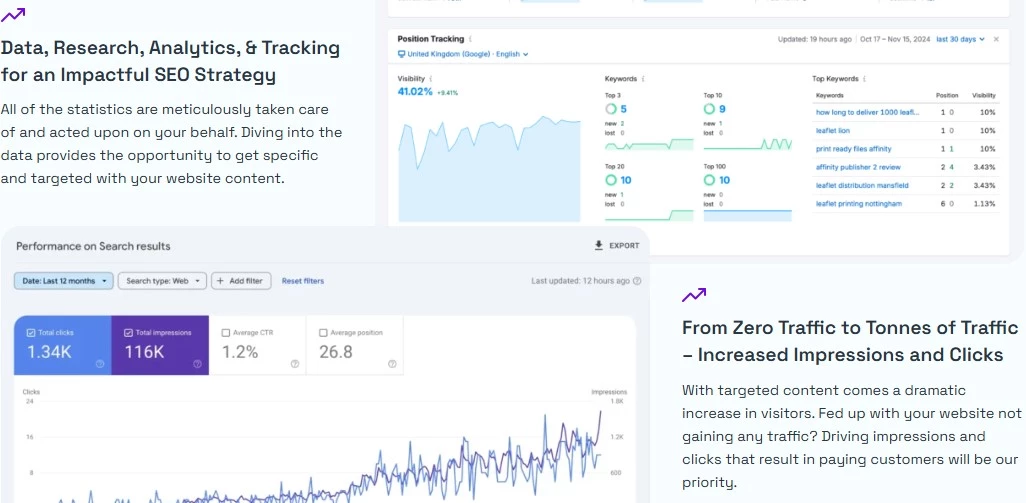
Third, tracking responses is crucial to measuring the effectiveness of a print campaign.
By measuring the impact of print campaigns, businesses can refine their strategies and ensure both print and digital efforts work in tandem.
“With a flyer or leaflet, it’s a one-way message. If you can get the recipient to your website or landing page, you can sign them up to your newsletter, or maybe they’ll follow you on social media.
I’d always recommend a QR code on a flyer or leaflet whenever possible. It can be directed to a specific landing page where you can monitor your views and conversions through your website analytics.”
“The visits can then be tracked via your website analytics,” Mike explains.
Real-World Success: Merging Print and Digital Marketing
Mike’s expertise comes from real-world experience.
He points to a successful project with a client that supplies cleaning products and machinery to schools and warehouses.
Their print and digital campaigns use the same branding across materials, social media, email, and the website — helping increase brand recognition and engagement.
“Their print and digital marketing campaigns are visually consistent each month, with both channels proving effective for their sales.
Everything works harmoniously together, providing multiple opportunities to prompt their audience to log in or register and make a purchase on their website.”
Integrated approaches like these help ensure that a business stays top of mind and creates multiple touchpoints for engagement.
If done well, the print/digital combination can drive even stronger results and customer loyalty.

As digital channels become more saturated, businesses that diversify their digital marketing efforts with well-executed print campaigns gain a competitive edge.
Clearcut Derby’s success stories highlight how integrating print with digital strategies can maximize reach, drive engagement, and create a lasting impression on target audiences.
Building a Sustainable Marketing Strategy
Clearcut Derby has built its reputation on sustainability, and Mike firmly believes in working with partners who share this ethos
When selecting agency partners, Mike emphasizes the importance of shared values, particularly when it comes to sustainability:
“As a sustainability-focused business, we opt for partners who share similar values. This includes our web hosting, which is powered entirely by green, renewable energy.
Our print partners, who only ever use sustainable and recycled paper stocks, and our tree planting service, Treeapp, who are doing some incredible work across the globe.”
Another point to look out for is communication:
“If the customer support is slow and unhelpful, we’ll be out of there like a flash.”
Sustainable Web Design: A Guide to Low-Carbon Websites With WordPress 🌱
— Mike Hindle (@MikeHindle) February 21, 2025
What is it? How does it work? How does it affect your website, and what are the benefits?https://t.co/tUnssdZn4e
Featuring @hostedby20i, @KadenceWP & Green Web Foundation 💚 pic.twitter.com/GXEcMuQdX4
Mike sees a promising future for businesses that combine traditional print with digital marketing strategies.
“When digital marketing was introduced, most businesses were happy they could reduce their marketing budget.
But as digital marketing and advertising took the spotlight, the costs adjusted accordingly. I’ve been speaking with plenty of businesses who abandoned print even though it was working perfectly well for generating new enquiries.”
He says many businesses are now realizing what they’ve been missing out on — that while a digital strategy is nearly always essential, the old-school way of marketing still has its place in modern marketing campaigns.
“Can you imagine if Domino's stopped printing and distributing their menus and discount vouchers? It would have had a substantial negative impact on their business. They kept on top of it, because it works,” he adds.
The future of marketing lies somewhere in between print and digital.
It’s not about choosing one over the other; it’s about recognizing the strengths of both and using them strategically to maximize impact.