
Samsung’s Piccadilly Circus Experience: Key Findings
- Samsung turns real-time city mood data into a public lights show, showing how AI can humanize large-scale brand storytelling.
- The campaign reframes out-of-home screens as responsive environments, proving spectacle works best when grounded in an everyday context.
- Prioritizing privacy-first design lets Samsung show how data-driven activations can earn trust.

Campaign Snapshot
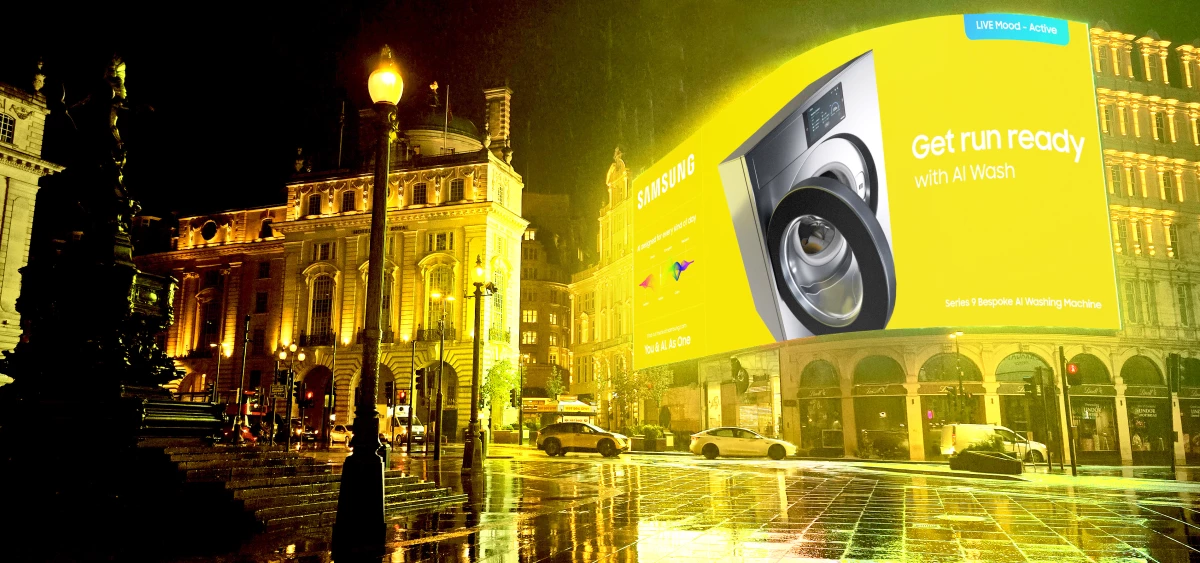
Samsung Electronics has transformed Piccadilly Circus into a living billboard that changes in response to London's mood, utilizing real-time data to highlight its AI-enabled technology.
The Galaxy maker unveiled a new digital experience in the iconic location on December 17, developed with Cheil UK and supported by Landsec and Ocean Outdoor.
The campaign transforms environmental and behavioural signals into changing visuals on the famous Piccadilly Lights screen to show Samsung’s leadership in AI-powered consumer technology.
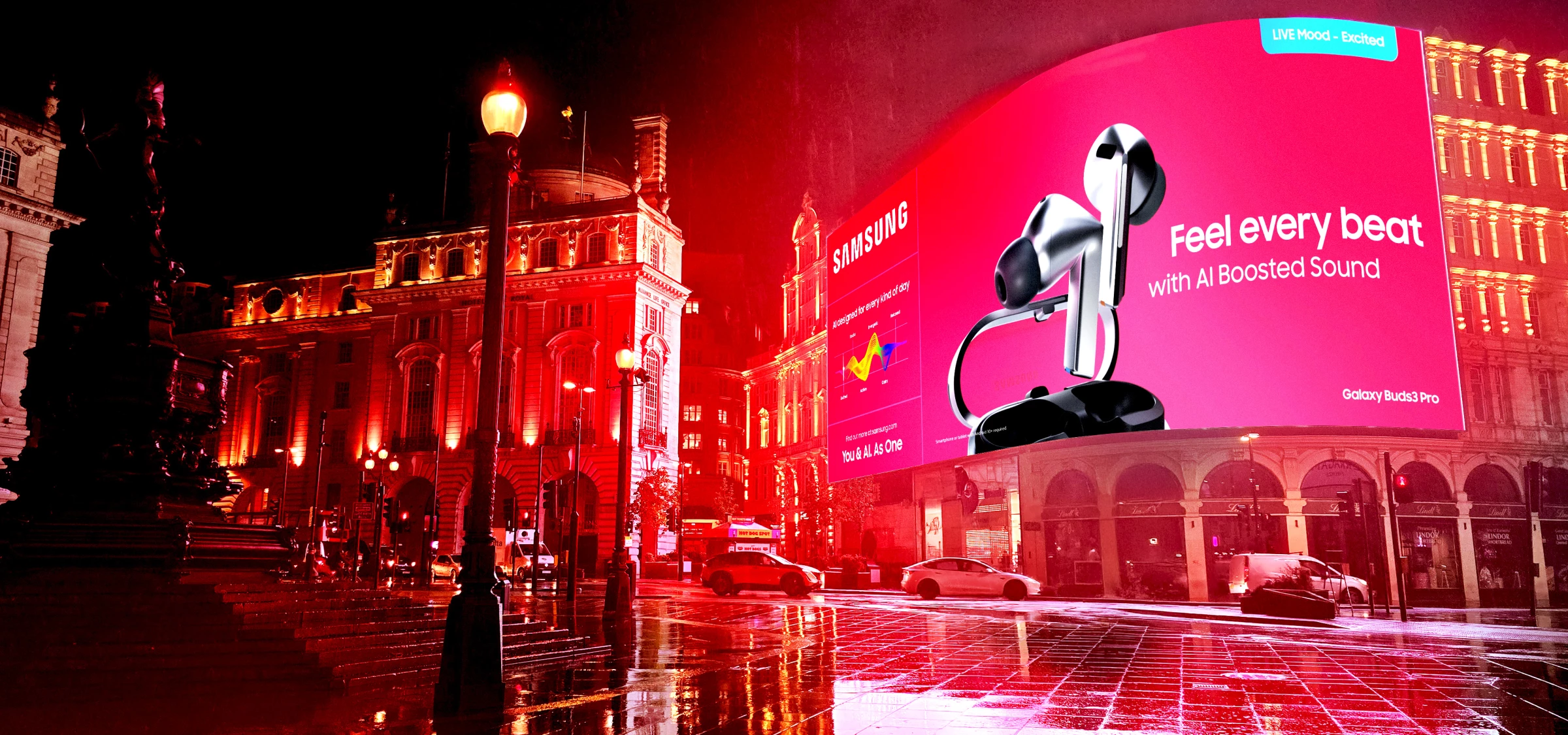
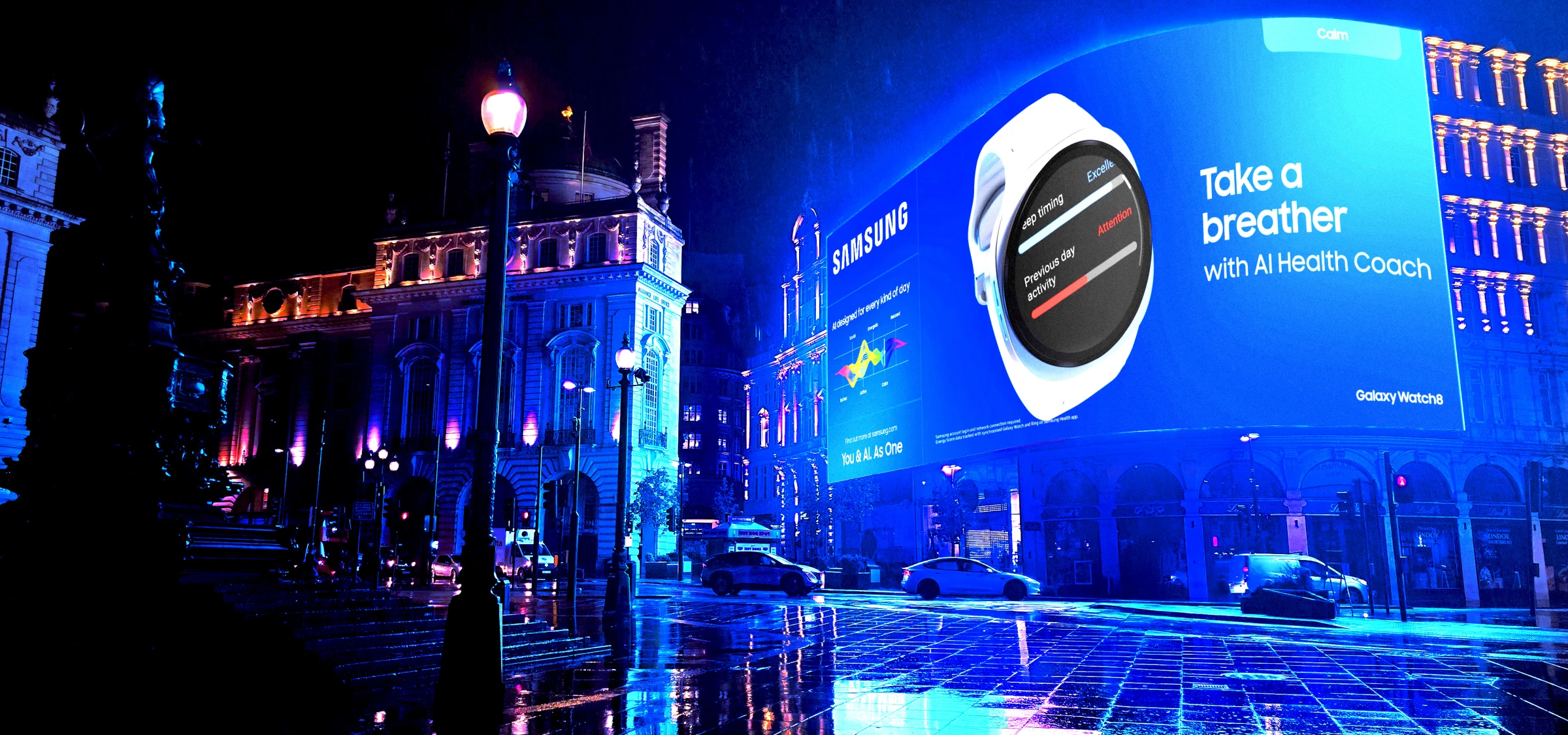
Samsung said the installation would run for a week, featuring a large-scale lighting takeover that syncs with the surrounding architecture to the screen’s visuals, bringing London’s energy to life through color and motion.
The idea was to reflect how everyday life shifts from moment to moment in a way that can connect with locals while tying those moods back to Samsung’s AI ecosystem.
The display's system captures crowd movement, local weather, and other signals to fuel what it calls a “Mood Score,” driving six different creative states on the screen.
Cheil UK Head of Account Management Donna Buckingham said the execution was rare in its scale and complexity.
"Turning the live mood of London into real-time creative on the most iconic screen in Europe is a rare creative feat.
This work shows Samsung’s belief that technology should adapt to people, brought to life through data, AI, and pure craft," she shared.
Meanwhile, Samsung Electronics UK Director of Corporate Marketing Amy Campbell reinforced these statements, describing the work as showing “how Samsung’s AI-enabled ecosystem can support people in those everyday moments.”
"It’s technology that understands the ebb and flow of real life.”
Behind the Lightshow
How does Samsung's newest OOH do what it does?
First, the experience is powered by a custom Mood Calculator that processes anonymized data to determine which visual mood should show on the Piccadilly Lights at any moment.
That data includes crowd density, movement patterns, weather, and time-of-day signals.
The installation’s lighting palette and motion graphics respond to shifts in those signals.
Notably, the tech giant built the campaign with privacy in mind.
All data is processed on-site without facial recognition, personal identifiers, imagery storage, or recordings.
Only anonymised numerical data triggers the visual states, ensuring a privacy-first execution.
For Malay Parekh, CEO of Unico Connect, Samsung’s restraint highlights how trust-first design is becoming essential as AI adoption accelerates.
“This campaign is a strong example of how privacy-first design can coexist with compelling AI-driven experiences. Samsung made it clear that data minimization and transparency were priorities, not trade-offs.
In a climate where misuse of AI data dominates headlines, executions like this help reset expectations and show how brands can innovate responsibly.”
What We Can Learn From Samsung’s Piccadilly Experience
Samsung’s city-wide installation offers a clear example of how large outdoor screens can become interactive brand storytelling platforms rather than traditional static ads.
- Real-time data can make outdoor creative feel alive and connected to what's happening locally, echoing efforts by brands like Coca-Cola with dynamic public displays.
- Privacy-centric design in public activations builds trust and avoids common data concerns in responsive tech activations.
- Executions gain momentum when tied to everyday life rhythms rather than purely product messages.
Last year, Samsung Electronics reported its highest-ever quarterly revenue in Q1 2025 at KRW 79.14 trillion ($53.4 billion), driven by strong Galaxy S25 sales and broader consumer tech demand.
Our Take: Is This How OOH Should Be Done?
Have we reached a point where outdoor screens can tell stories as fluidly as social feeds?
In our opinion, for a modern OOH billboard to truly stand out, it needs to do something no one has seen before.
Samsung’s Piccadilly experience checks both these boxes, and it’s worth noting how tying visuals directly to local moments can drive talk value without being too on the nose with product specs.
For marketers, the lesson is to simply combine spectacle with subtle meaning so audiences feel seen rather than sold to.
This work makes data feel human again, and that’s a rare win.
In other news, BBH USA and Dunkin' created a calm, immersive brand world in a new campaign that feels surprisingly fresh in modern coffee culture.
Discover top design agencies turning everyday objects into timeless brand statements in our directory.