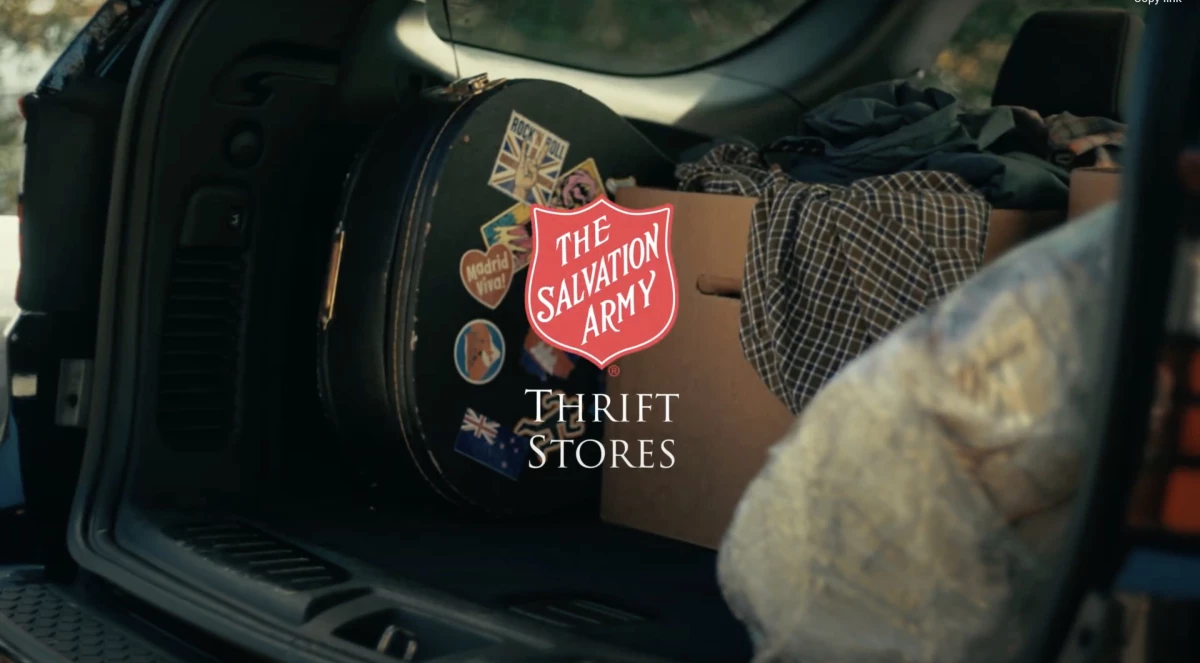

Salvation Army Campaign: Key Findings
- The Salvation Army connects donations to real outcomes through a film that shifts from neighborly comedy to addiction intervention drama.
- Director Marek Partyš uses tone shifts to reveal hidden struggles, showing how nonprofit storytelling can drive action beyond simple awareness.
- BarkleyOKRP and Spark & Riot demonstrate how cause marketing works when brands show impact instead of asking for support.
The Salvation Army's latest campaign starts with humor and ends with a family reunion.
"The Most Good Reason," filmed by studio Spark & Riot and developed by creative agency BarkleyOKRP, promotes both donations to Salvation Army stores and the organization's Adult Rehabilitation Centers.
Director Marek Partyš crafted a 60-second film that opens with two suburban neighbors competing to see who can donate more items to their local Salvation Army store.
Tim McCracken, SVP and group creative director at BarkleyOKRP, told DesignRush that the campaign is built on the insight that "people donate and shop at The Salvation Army Thrift Store for purely altruistic reasons."
"But in reality, they do it for thousands of reasons. Maybe they have an attic to clear out, they want to go viral online, or they just like being the most philanthropic neighbor on the block.
This campaign highlights all the reasons people choose to support The Salvation Army, from the heartfelt to the humorous, because whatever the reason, it all contributes to the good The Salvation Army brings to your community."
Tone Changes Build Emotional Stakes
What begins as a friendly rivalry shifts when Bill and Peter overhear a crisis unfolding next door, where a father's drinking has pushed his wife and daughter to leave.
The tonal pivot happens when the laughter stops, and things get real, showing audiences what can happen in their own communities.
Bill and Peter kindly stop by the father's house, hand him a warm drink, and offer him a path forward through the Salvation Army Adult Rehabilitation Center.
The end scene, which shows the father reuniting with his daughter after rehabilitation, gives viewers the payoff without dialogue.
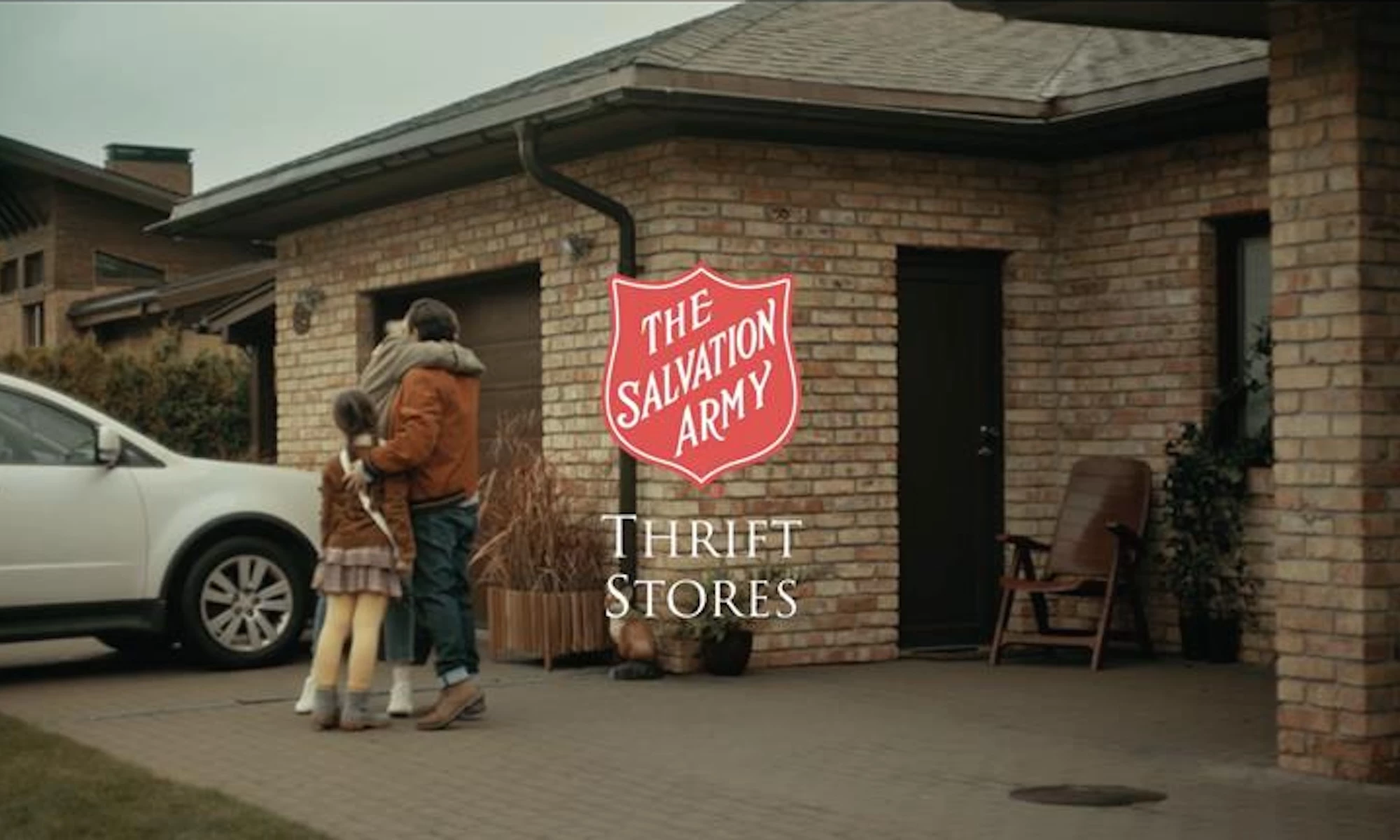
Partyš explains how he used humor as a gateway to highlighting a much darker theme within the campaign:
"This project was an opportunity to show how even ordinary, humorous neighborly rivalry can turn into something much deeper in a matter of seconds.
I enjoy working with the moment when the viewer is laughing and suddenly the smile stops because real life appears beneath the lightheartedness."
A second spot features a girl livestreaming her Salvation Army purchases, including boots, a porcelain tiger, and an antique teacup.
The campaign reveals three production decisions that separate emotionally resonant nonprofit marketing from generic awareness advertising:
- Place the audience inside the action. Use storytelling that mirrors the choices, behaviors, and roles you want people to adopt.
- Match production quality to emotional ambition. If a story asks for attention or feeling, the craft has to support it.
- Pressure-test tone before committing. Shifts in emotion work when performances and execution feel credible from the start.
Treat donors as impact collaborators, requiring the kind of video production budgets and creative risk needed to make a brand in the nonprofit industry stand out.
Our Take: Does Changing the Tone Work for Nonprofits?
I think The Salvation Army's latest campaign shows that tone shifts are effective when the story earns them.
Opening with neighborly competition disarms viewers before introducing a story that feels real and relatable.
The risk with this approach is that audiences can always reject the pivot if it feels forced or unearned.
I think Partyš handled it well by grounding everything in natural performances that didn't oversell the drama.
If other nonprofits want to copy this formula, I think their challenge will be having programs with outcomes that are compelling enough to justify a heartfelt campaign.
The Salvation Army can show a man returning home sober because its rehabilitation centers deliver results worth filming.
Nonprofits building emotional campaigns need creative partners who understand how to balance tone without losing authenticity.
Explore top nonprofit marketing agencies in our directory.