
Brand-First Employment Takeaways:
- Generic messaging repels strategic talent. Candidates want clarity on growth, value, and purpose.
- Trust builds through proof, not promises. Show your process: vetting steps, success stories, and candidate outcomes. Transparency earns credibility.
- Career-first storytelling attracts better candidates. Reframing hiring content around business impact and long-term growth led to a 40% increase in qualified applicants.
75% of job seekers consider an employer’s brand before even applying, according to LinkedIn.
And yet many job listings still lead with vague duties, empty culture promises, and zero insight into long-term growth.
Daytona Employment, Florida’s longest-operating staffing agency, took a different approach.
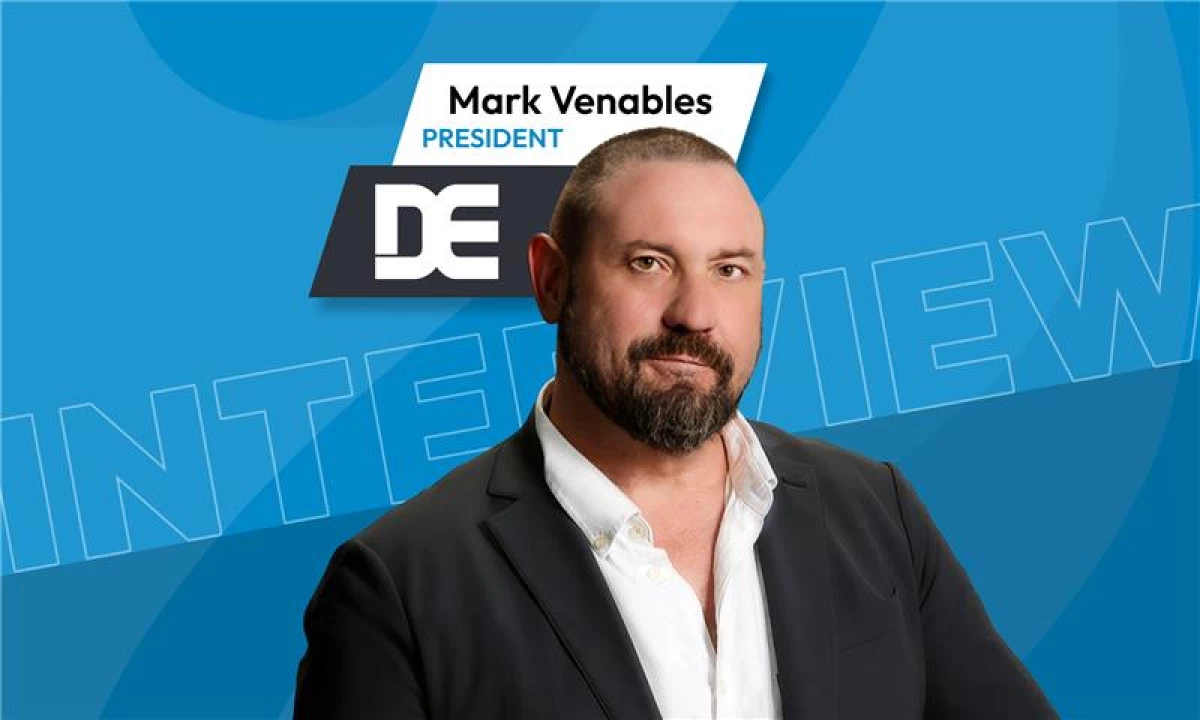
Under the leadership of serial entrepreneur Mark Venables, the agency now positions itself as a trusted career partner, not just a job placement service.
Their recruitment strategy focuses on career-first storytelling and reputation-led messaging: a shift that has attracted more qualified candidates and built trust through transparency.
I sat down with Mark to talk about the evolution of their recruitment brand and how other businesses can rethink hiring content in 2025.

Who Is Mark Venables?
Mark Venables is a serial entrepreneur who has founded over 20 companies across multiple industries since his early 20s. He is the President of Daytona Employment, Florida’s longest-operating staffing agency. Mark’s expertise has been featured in Tech Times, Crypto News, Built In, and USA Today. With over 25 years of business leadership across staffing, real estate, technology, and digital security, he brings a unique perspective on how trusted brands attract lasting talent.
Position Your Brand as a Long-Term Career Partner
For most staffing firms, employer branding revolves around volume:
- fast placements
- broad databases
- generic job listings
At Daytona Employment, the focus is different: credibility, quality, and local reputation.
“Our most effective brand element is our 'boutique with backbone' positioning,” Mark says.
“After 25+ years in staffing across the US and UK markets, I've learned that top talent wants to work with agencies that combine personal attention with serious industry credibility.”
That credibility is rooted in history. Daytona Employment isn’t just another agency, it’s Florida’s longest-operating staffing firm, founded in 1920.
But experience alone doesn’t attract the right candidates.
With so many options available, job seekers are prioritizing firms that treat them as individuals and career partners.
Before this repositioning, generic messaging limited Daytona’s ability to connect with high-quality professionals.
The brand needed to show candidates that their careers would be taken seriously.
“The key was shifting our messaging from ‘we place people’ to ‘we build careers with companies that value quality.’
This attracts candidates who see us as career partners, not just job finders.”
The result is a clearer value proposition: trusted career-building for candidates, and thoroughly vetted professionals for clients.
Storytelling Attracts Top Candidates
When Daytona Employment noticed that generic job posts were attracting the wrong applicants, they overhauled their content strategy.
Instead of blasting “we’re hiring” announcements, the team launched a storytelling series called Money-Saving Monday.
This was designed to show how top-tier administrative professionals contribute to the bottom line.
Framing the role in terms of business value, not just task lists, drew in candidates who saw themselves as strategic assets.
“We started sharing stories about how the right administrative professional can save a company thousands annually through efficiency improvements,” Mark explains.
The results were immediate. Applications increased, but more importantly, the quality did too.
The agency began hearing from candidates who explicitly referenced the content and wanted to work with a firm that “understands the real value of administrative professionals.”
This shift from transactional language to value-driven messaging boosted qualified applications by 40%.
Instead of fielding resumes from task-seekers, the agency began attracting candidates who wanted to solve business problems and grow their careers.
“Candidates now come to us already understanding they're not just filling positions — they're solving business problems,” Mark adds.
3 Hiring Mistakes EdTech Companies Keep Making
Having placed administrative and finance professionals with a range of EdTech companies, Daytona Employment has observed the same messaging mistakes repeatedly.
And they’re costly:
- Prioritizing perks over professional development
- Writing job descriptions that alienate non-technical candidates
- Treating remote work as a perk without clear structure
We list them below.
1. Overselling culture, underselling growth
Many EdTech companies emphasize perks and casual culture while failing to communicate advancement opportunities.
Administrative professionals aren’t just looking for flexible hours. They want clear career paths, skill development, and long-term growth.
Don’t:“Join our fun, fast-paced startup with weekly happy hours, team yoga, and unlimited PTO.”
Do:“Work directly with senior leadership and gain exposure to strategic planning, budgeting, and systems optimization with a clear path to operations manager within 18 months.”
Takeaway: Lead with growth, not gimmicks, if you want serious professionals to take your company seriously.
2. Using tech jargon in non-technical roles
Job descriptions often include language meant for developers, which confuses or alienates candidates for operations, finance, or support roles.
These professionals don’t need to understand your codebase, they need to understand your business model.
Don’t:“Coordinate cross-functional requests via Jira across Agile pods running CI/CD sprints.”
Do:“Support team workflows by managing task timelines, organizing internal requests, and keeping deliverables on track across departments.”
Takeaway: Speak your candidates’ language. Clarity builds confidence and connection.
3. Assuming remote work is automatically appealing
Offering remote roles isn’t enough if the structure behind them is vague.
Many professionals value mentorship, routine, and career development — things that need to be clearly communicated, especially in a virtual work environment.
Don’t:“100% remote — work when and how you want, no micromanagement.”
Do:“Remote-first with structured onboarding, weekly manager check-ins, and quarterly reviews to support your career goals and team connection.”
Takeaway: If you’re offering flexibility, pair it with structure. That’s what turns remote work into real opportunity.
Each of these mistakes stems from the same issue: talking at candidates instead of talking to them.
Messaging that lacks clarity and empathy repels the very people businesses are trying to attract.
“The key is remembering that even in EdTech, you're hiring humans who want career security and professional growth, not just a cool company story,” Mark says.
Turn Brand Messaging Into Recruitment Messaging
Too often, companies treat hiring content like a separate track from their core brand. But at Daytona Employment, recruiting is part of the brand promise.
“Our brand promise is 'customized staffing solutions with deep local market knowledge,’” Mark says.
“Every hiring message reinforces this by emphasizing our thorough vetting process and 100+ year local presence.”
That consistency comes through in how the agency promotes its own roles.
Instead of simply posting job descriptions, they share “day in the life” content that connects individual contributions to client outcomes.
Even internal administrative listings are framed in terms of how the role supports client satisfaction and upholds the agency’s reputation.
This approach ensures the hiring narrative isn’t just about filling seats, but about upholding a century-old legacy built on credibility and care.
“We ask ourselves: ‘Does this message show why working here advances both the candidate's career AND our reputation as the go-to local staffing experts?’”
When hiring content reinforces the larger brand mission, candidates come in already aligned with company values, and are more likely to stay long term.
Demonstrate Value With Real People and Outcomes
For candidates evaluating agencies, trust doesn’t come from promises. It comes from proof.
Replace vague claims with proof points:
- Use real candidate success stories
- Outline your vetting process
- Show how your placements contribute to long-term business results
Client success stories are a cornerstone. The team highlights candidates they’ve placed who’ve grown into leadership roles, showing what long-term success looks like beyond the initial hire.
“Client success stories featuring our placed candidates have been game-changing,” Mark says.
“We create content showing real people we've placed — like 'Sarah started as a temp receptionist through Daytona Employment and is now the office manager at a major local hospital.'”
This type of storytelling reinforces the agency’s role as a long-term partner in career growth.
It also signals to new candidates that Daytona isn’t just a placement service. They stay invested after the hire.
They also spotlight their own screening and prep process, offering a behind-the-scenes view into how they vet and support applicants.
“When people see the thoroughness of our vetting — FCRA compliance, detailed interviews, skill verification — they understand why companies prefer our candidates and why being associated with us enhances their professional reputation,” Mark adds.
This transparency builds credibility on both sides of the equation: candidates feel taken seriously, and clients trust that they’re getting talent who’s already been professionally validated.
Position Every Role Around Purpose and Growth
Most job listings list responsibilities and requirements. Daytona Employment uses theirs to communicate purpose, growth, and credibility, even for entry-level roles.
Every listing opens with a clear value proposition that sets expectations beyond the job description. It’s not just about duties. It’s about impact.
“Every job listing starts with our core value: ‘We don't just fill positions — we solve business problems.’ This immediately attracts candidates who think strategically about their work,” Mark says.
Even for hourly roles, listings include business context.
A receptionist isn’t just answering phones; they’re contributing to team efficiency and client experience.
Meanwhile, an executive assistant is framed as a key support to C-level decision-making.
The agency also highlights long-term career potential.
Every listing includes advancement pathways and professional development opportunities, reinforcing the message that candidates are building something, not just clocking in.
And while the tone is optimistic, it’s also honest. Mark emphasizes both the expectations and the rewards:
“Our brand values authenticity, so we clearly communicate both challenges and rewards. This attracts candidates who appreciate transparency and are serious about professional growth.”
This combination of clarity, purpose, and brand alignment ensures that applicants know exactly what they’re stepping into and why it matters.
What Marketing and HR Need to Get Right in 2025
The relationship between marketing and HR is more critical than ever.
According to Mark, companies that treat recruitment marketing like brand-building, not back-office support, are the ones winning top talent.
“Focus on storytelling over selling. In 2025, candidates have more choices than ever, so generic job postings won't cut it.”
He recommends that marketing teams treat candidates like customers: start with personas, understand motivations, and tailor content to speak to what people want in their careers.
That starts with alignment. Instead of creating standalone job ads, Daytona works with HR to build content around career growth, not just open roles.
Success stories, career progression, and local credibility all become part of the message.
“Develop candidate personas as thoroughly as you develop customer personas. What motivates your ideal administrative professional? Career advancement? Work-life balance? Professional recognition?”
Local reputation also plays a big role. For Daytona, being Florida’s longest-operating staffing agency is a differentiator that resonates with regional talent.
Marketing teams should identify and amplify whatever gives their brand credibility in the communities where they hire.
“Use your unique market position as a competitive advantage,” Mark says.
“You’re acquiring talent customers who will either enhance or damage your reputation based on their experience.”
The strongest hiring strategies in 2025 won’t come from job boards.
They’ll come from cross-functional teams who know how to tell the brand story through the lens of a career.
Balance AI Tools With Relationship-Driven Recruiting
As AI continues to reshape recruiting, Daytona Employment takes a measured, human-first approach. For them, technology is a tool, not a shortcut.
“We use AI primarily for initial candidate screening and market research — like analyzing competitor job postings to identify trends and opportunities,” Mark says.
These insights help the team track salary benchmarks, job market shifts, and potential client needs across Volusia County.
It streamlines the early stages of hiring, allowing human recruiters to focus on relationships and deeper evaluation.
But when it comes to interviews, reference checks, and assessing cultural fit, the process remains fully human.
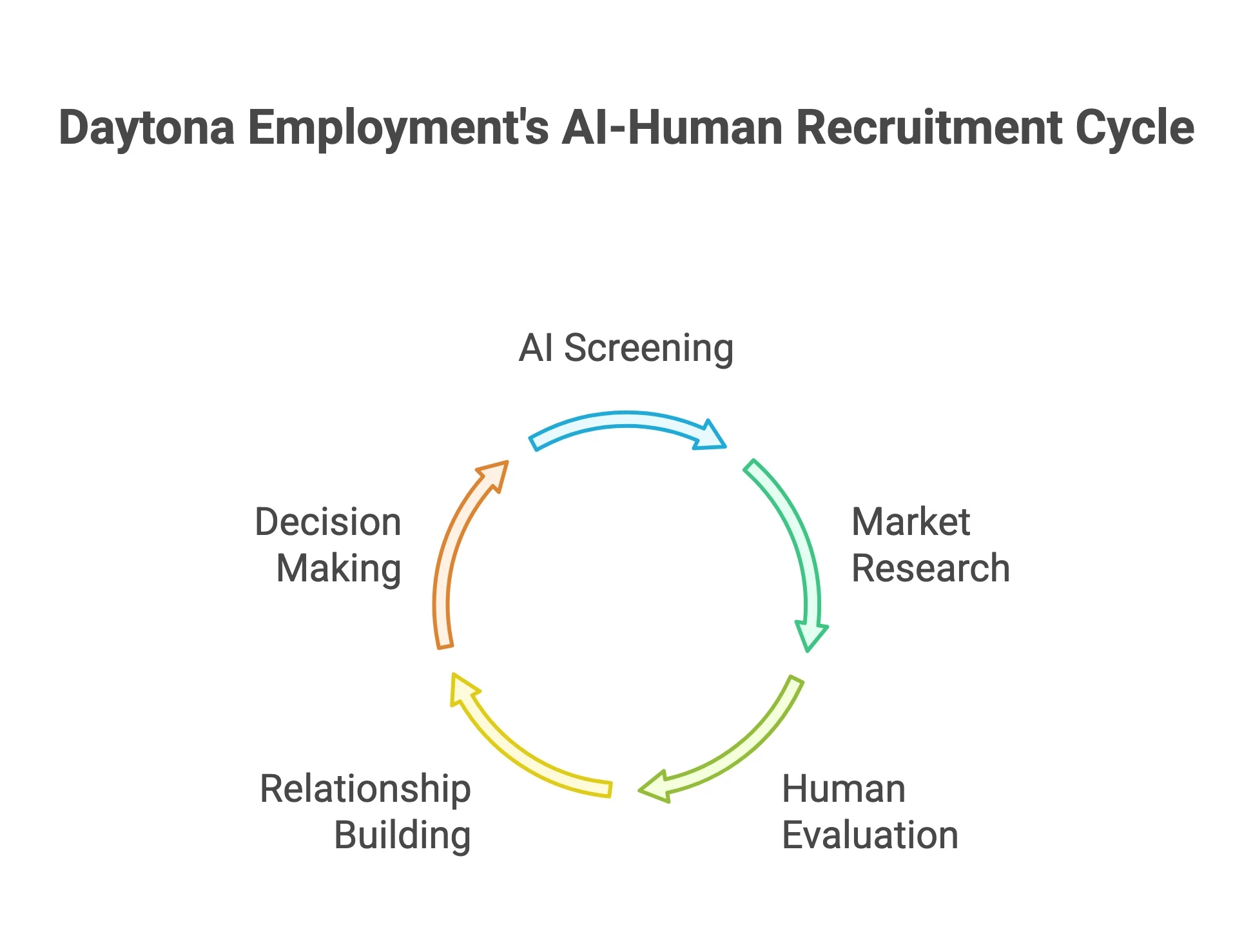
“Our approach is ‘AI for efficiency, humans for empathy.’ AI handles data processing and pattern recognition, while our experienced team handles the nuanced work of matching personalities, work styles, and career aspirations.”
After more than 25 years in the industry, Mark is clear: no algorithm can replace instinct and insight.
“AI can identify qualified candidates, but only experienced human judgment can determine if someone will thrive in a specific environment. We use technology to enhance our human expertise, never replace it.”
It’s a deliberate balance: use AI tools to accelerate the process, but rely on human insight to make it meaningful.
Daytona uses AI to improve efficiency, but keeps people at the center of its process, ensuring each hire is both fast and thoughtfully matched.