
Strategic Takeaways for Any High-Stakes Operation
- Crypto mining demands constant visibility because margins are thin, hardware is power-hungry, and even short periods of downtime or inefficiency can erase profits.
- Real-time, custom monitoring systems turn fragmented data into actionable insights, helping operators shift from reactive troubleshooting to proactive optimization.
- Scalable, secure monitoring becomes a strategic asset, improving efficiency, reducing risk, and building long-term resilience across high-stakes industries.
Crypto mining is a game of margins, which is why efficiency separates success from mere survival.
Total mining revenue is projected to reach $20.4 billion in 2025, according to CoinLaw. This represents a 9% increase from the previous year.
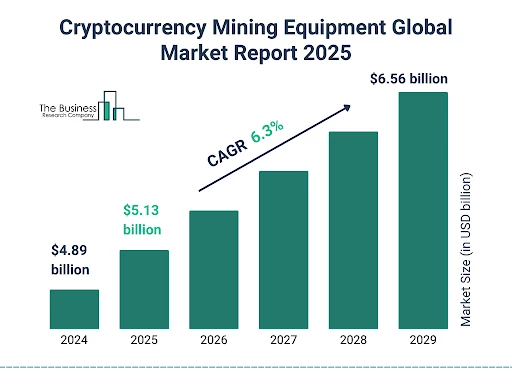
Yet higher revenue potential also means stiffer competition and less tolerance for waste.
Hardware for crypto mining is power-hungry. Temperatures are volatile. Both mean profitability depends on optimizing every second of uptime, every watt, and every hash.
As such, hardware failures, cooling issues, or energy inefficiencies can crater profits in just a few hours, highlighting why anyone in crypto mining needs real-time monitoring.
And yet, many operations still run blind, relying on delayed reports or one-size-fits-all dashboards that can’t flag a failing rig until it’s already burned cash.
This was the main issue Wezom had to tackle during their project with EZ Blockchain, a leading American cloud mining provider.
They needed to provide their customers with live control over a sprawling, power-hungry infrastructure, and the clarity to turn all that data into action.
Editor’s Note: This is a sponsored article created in partnership with Wezom.
The 3 Silent Killers of Crypto Mining Profitability
Crypto mining may seem simple at a glance. In practice, the complexity mirrors that of any large-scale industrial system.
Even well-resourced farms run into the same core issues. These three failures quietly undercut profitability every day.
1. Decentralized Hardware Leads to Missed Risks
Mining rigs aren’t tucked neatly into a single room. They’re scattered across racks, buildings, and sometimes entire regions.
Each machine is a moving part, and when even one overheats or sits idle, it chips away at profits without anyone noticing. Without real-time visibility, small issues turn into silent losses. By the time someone catches it, the damage is already done.
2. No Live View Turns Decisions Into Guesswork
Energy isn’t just a line item. It’s the heartbeat of every mining operation, and it’s expensive.
Still, plenty of teams fly blind without a live view of what’s working and what’s draining power. Without real-time data, decisions become stabs in the dark. You don’t know which machines are earning and which are just racking up the bill.
That kind of guesswork slows everything down, wastes resources, and costs more than anyone wants to admit.
3. Fragmented Systems Slow Everything to a Crawl
A mining farm might look like rows of hardware, but under the hood, it’s a tangle of software, protocols, and third-party tools. Most of them refuse to play nice together.
You’ve got hash rates in one system, temperatures in another, and energy costs buried in a spreadsheet. Operators are left bouncing between tabs, trying to piece together the full picture.
While they do, time slips away. Problems grow. Opportunities pass. In a business where speed equals revenue, fragmented tools become expensive bottlenecks.
In addition to being technical headaches, they’re recurring failures that chip away at profit and performance.
EZ Blockchain didn’t need another dashboard. They needed a system that could make sense of the chaos, bring control to complexity, and keep revenue from slipping through the cracks.
Building a Custom Mining Monitoring Dashboard
Solving these challenges required more than another generic dashboard.
EZ Blockchain needed a system that could bring scattered data streams into one fast, accurate, and secure command center.
Wezom approached the problem with an MVP of a custom monitoring dashboard designed around three priorities:
- Real-time visibility
- Operational control
- Actionable insights
The architecture relied on microservices for modular flexibility, secure APIs for seamless integration, and a PostgreSQL backbone to handle large volumes of live data.
-content-large-webp.webp)
Furthermore, Node.js powered the backend, while React Native ensured both web and mobile users benefited from the same clear, responsive experience.
Key features included:
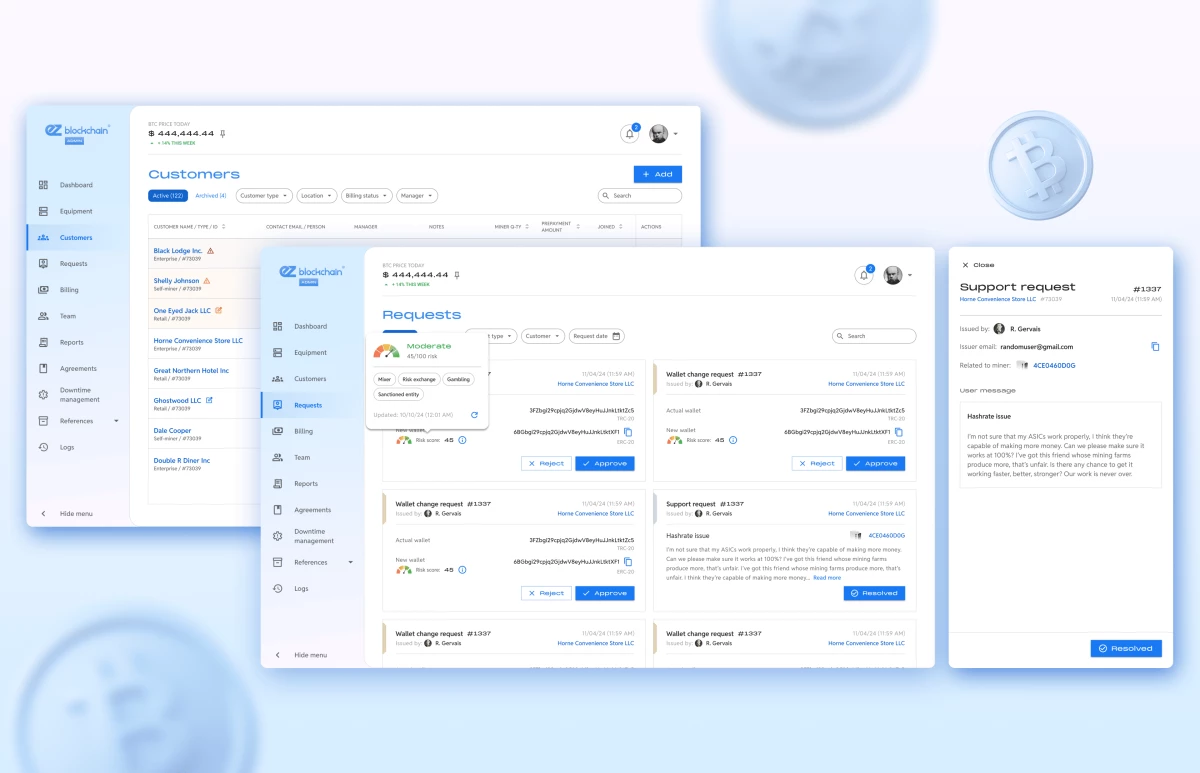
- Live Analytics and Dashboards: Real-time metrics on hash rates, temperatures, and energy use allowed operators to spot issues before they became costly.
- Remote Control and Device Management: Teams could adjust workloads, reboot machines, or isolate problem rigs without stepping into the server room.
- Billing and Cost Tracking: Automated reports gave operators immediate clarity on power consumption and profitability, removing the lag that once slowed decision-making.
But what really made this dashboard different was the ability to collapse complexity into a single, intuitive interface.
Operators no longer had to toggle between spreadsheets, vendor portals, and blockchain explorers. Instead, they could see their entire operation in one view, make quick calls, and move from reactive to strategic management.
And after testing, users of the new dashboard loved its capabilities.
Hardware utilization efficiency rose by 25%, meaning the same rigs generated more output without additional energy costs.
Real-time dashboards and automated reports eliminated delays in tracking power consumption, performance, and costs, giving managers an instant grasp of both operational and financial health.
Beyond operational efficiency, the platform delivered measurable business gains.
Results at a Glance:
- +60% boost in customer loyalty post-launch
- 8/10 average lead quality, indicating a stronger fit
- 80%+ user retention, showing daily operational reliance
Real-time dashboards and automated reports eliminated delays in tracking power consumption, performance, and costs, giving managers an instant grasp of both operational and financial health.
The platform quickly evolved from a reporting tool into a core operational asset, enabling faster decisions, reducing downtime, and increasing profitability.
With these insights, decision-making shifted from reactive troubleshooting to proactive optimization. The dashboard transformed day-to-day operations into a controlled, data-driven ecosystem.
Why This Matters
While Wezom’s EZ Blockchain project centered on crypto mining, the lessons extend far beyond it.
Businesses running complex, distributed operations face the same fundamental challenge: turning streams of raw data into decisions that drive performance.
This holds true for businesses in virtually any industry, from logistics and healthcare to manufacturing and energy.
Three universal principles can make this shift possible for any business:
1. Custom monitoring beats generic tools
Off-the-shelf dashboards may be plug-and-play, but these rarely align with the nuances of your operations. A tailored solution ensures that your team sees the data that truly matters and in a way they can act on.
2. Real-time insights reduce operational risk
Whether it’s mining rigs, hospital equipment, or factory lines, waiting for delayed reports can mean lost revenue, downtime, or missed opportunities. Live dashboards transform raw data into immediate action.
3. Scalable, secure design drives adoption
The best monitoring systems do more than just collect data. They make that data usable across teams without creating new vulnerabilities. When insights are accessible and protected, trust in the system and the decisions it supports grows.
Turn Monitoring into a Strategic Advantage
In high-stakes operations, the difference between reacting late and acting early can define margins, loyalty, and long-term viability.
This means having a real-time dashboard that unifies data and simplifies decisions is now a must-have for any business looking to grow and scale.
That said, companies that treat monitoring as strategic infrastructure, not background noise, will find themselves ahead of problems, ahead of costs, and — most importantly — ahead of the competition.