
Brand Experiences: Key Findings
- In-person experiences build loyalty in ways digital-only channels can’t replicate.
- Great experiential campaigns require budget discipline, strong training, and iterative learning based on recap reports.
- Scaling in-person activations is possible with the right operational infrastructure and technology partners.
From supporting campaign planning to content generation and even chatting with customers, AI is now fully baked into the marketing process.
It’s a powerful boost for efficiency, but the more we automate, the easier it is to lose the moments that make a brand feel real.
Despite this downside, most marketing leaders are doubling down on GenAI and digital productivity platforms, according to Gartner’s 2025 CMO Spend Survey.
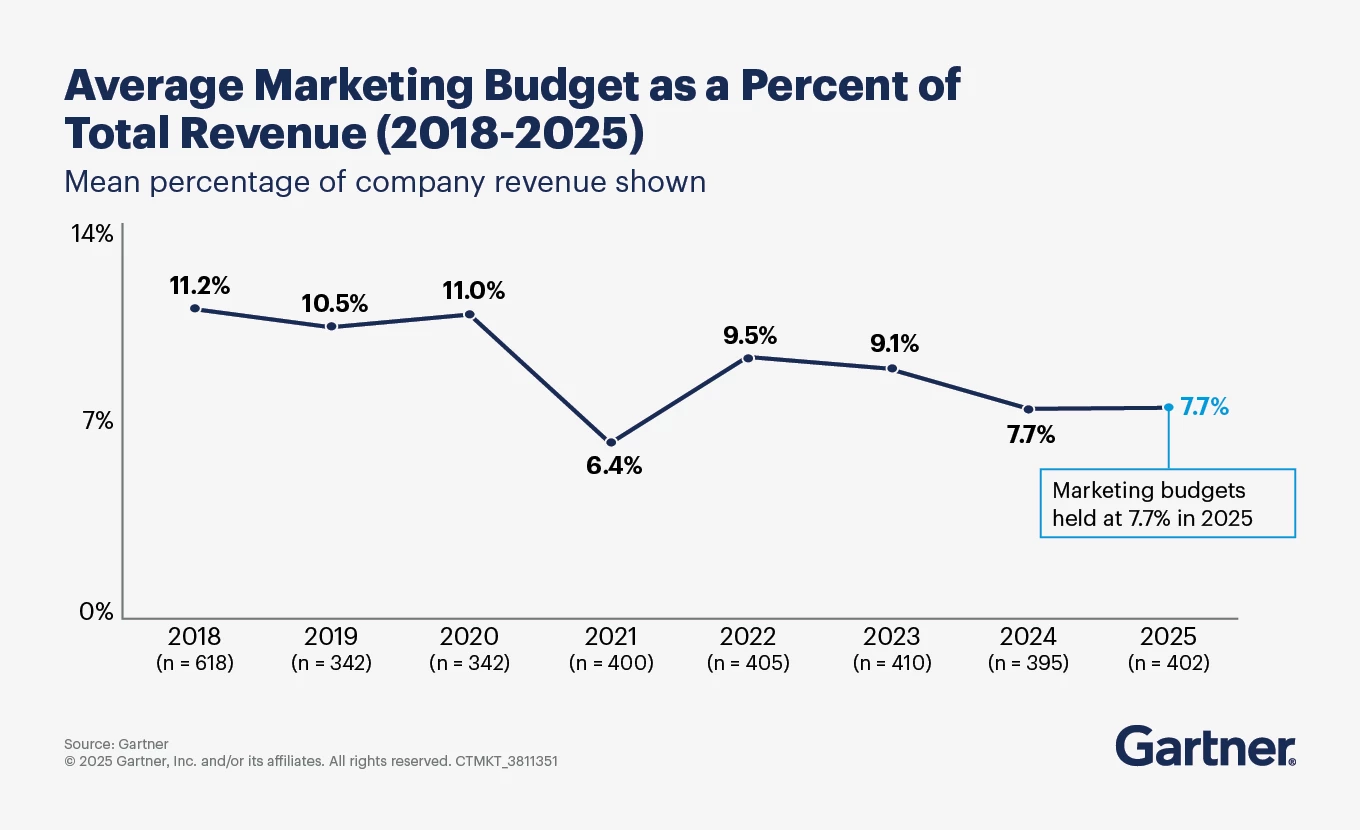
Meanwhile, fewer are putting meaningful resources into face-to-face brand experiences.
That tradeoff raises a big question: When everything becomes digital, what happens to the moments that make a brand feel real?
In my conversation with Al Schuster, President of Polaris Brand Promotions, he talks about why in-person engagement still matters, how to scale it without sacrificing quality, and how experiential campaigns can drive both connection and measurable results.

Who is Al Schuster?
Al Schuster is the President and Owner of Polaris Brand Promotions, a nationwide experiential marketing and staffing agency based outside of Philadelphia, PA. Polaris helps brands across industries connect with customers through real-world experiences, from retail activations to large-scale events.
Why Hands-On Experiences Help Consumers Make Better Decisions
As digital content gets faster and easier to produce, brands risk flattening the customer journey into a series of automated recommendations and algorithm-fed impressions.
While this might work for familiar, low-stakes purchases, it leaves little room for exploration, trust-building, or discovery.
That’s where in-person experiences fill the gap. Physical interactions give consumers the space to evaluate a product beyond just price or social proof.
“In-person engagements allow consumers the opportunity to ‘try before they buy’ and learn more about the brand from friendly and educated brand ambassadors,” Al says.
These kinds of interactions increase awareness and help people make more informed decisions.
And for newer or premium brands, that context can be the difference between interest and action.
How to Build Experiential Campaigns That Actually Drive Results
Not every in-person campaign delivers on its promise, and often, the difference comes down to planning.
Strategy matters more than scale, and the most effective activations are the ones built with intention from the start.
Based on his experience overseeing thousands of events across industries, Al points to three fundamentals every brand should get right:
1. Start with the budget and focus on value
Overspending doesn’t guarantee better results. The key is using your budget wisely to create moments that are both memorable and meaningful.
“More isn’t always better,” Al says. “It’s critical to invest in promotional collateral… that actually provide value to the consumer while at the same time helping you stay within your budget.”
2. Train your team to represent the brand with confidence
A well-designed booth or experience can fall flat if the staff isn’t equipped to engage with consumers.
The right training ensures brand ambassadors can answer questions, represent your messaging clearly, and adapt to real-time conversations.
“Make sure that the brand ambassadors are provided with the necessary training materials and education,” Al says.
3. Treat recap data as a feedback loop
Experiential marketing doesn’t end when the event does. Reviewing data from the field helps you iterate and refine future campaigns.
“Review the recap reports to find out what’s working great and what’s not working so well,” Al says. “You can fine-tune your program and aim for greater success over time.”
Scale In-Person Experiences Without Losing Quality
One of the biggest misconceptions about experiential marketing is that it doesn’t scale. In reality, the challenge isn’t scale itself, it’s consistency.
Coordinating hundreds of events across regions requires more than a great concept.
It takes reliable systems for hiring, training, scheduling, and data collection so that every customer interaction reflects the same brand standards.
Al emphasizes the importance of strong operations and the right tech partners.
“We have amazing venue partners such as PopBookings and PINATA that we utilize to maintain our talent database, share brand information and collect recap data.”
What enables scale is infrastructure. With the right backend in place, brands can deliver consistent experiences, even at national scale.
And while in-person activations might seem hard to measure, the data is there as long as you know where to look.
“These two are separate but go hand-in-hand,” Al says. “We create unforgettable experiences for consumers, while our brand ambassadors provide the critical recap reporting… so we can share them with our clients.”
When recap data and field insights are treated as strategic inputs, brands can use experiential marketing for long-term, measurable growth.
Rebalancing Your Marketing Mix for Long-Term Loyalty
As AI reshapes the way brands scale content and automate touchpoints, it’s easy to overlook the slower, more human side of marketing.
But it’s good to remember that meaningful connections come from presence.
Experiential marketing may not be as flashy as generative tools or as quantifiable as ad clicks, but it fills a gap digital strategy can’t: real interaction, real feedback, and real trust.
With the right planning, infrastructure, and data strategy, in-person experiences are essential to building brands that feel real in a world that’s increasingly virtual.
Sonic Branding & Experiential Marketing FAQs
Why should a brand invest in experiential marketing when digital is cheaper?
Brands gain emotional connection and trial opportunities through face-to-face activations, which digital campaigns alone cannot deliver. Even a modestly budgeted event can create stronger loyalty and memorable experiences.
How do you decide what to spend on collateral vs training?
A clear budget prioritizes high-impact collateral alongside thorough training. It’s about spending smartly on materials and preparation that drive consumer engagement.
What makes a strong brand ambassador training program?
The best programs provide clear messaging, product knowledge, and role-play scenarios so ambassadors can confidently and consistently represent the brand. This ensures every consumer interaction supports the brand’s values and goals.
How can recap reports actually improve outcomes over time?
Recruited ambassadors submit structured data about consumer questions and behaviors. Brands then review that recap feedback to refine messaging, staffing, or collateral, creating continual optimization.
Is experiential marketing scalable across states and venues?
Yes, when you pair dedicated operations staff with technology platforms like PopBookings and PINATA. These tools help manage talent, share materials, and maintain consistent quality at national scale.