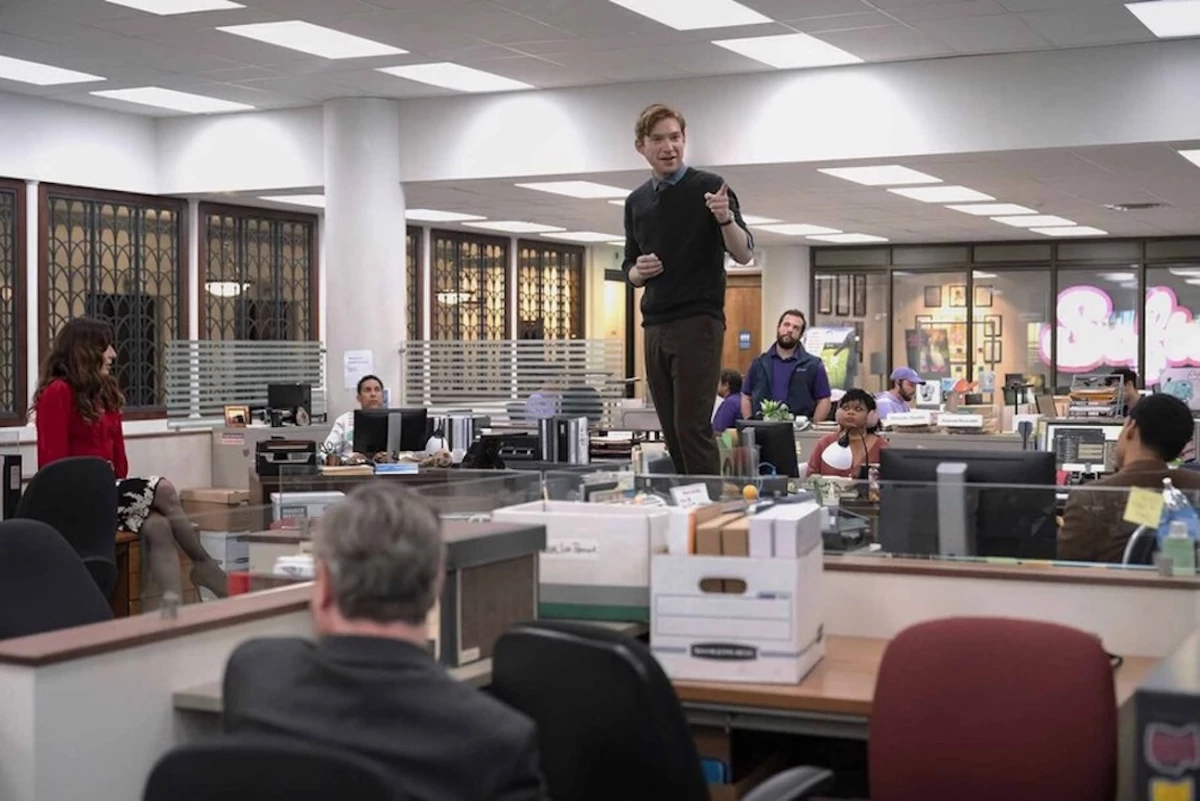

Key Takeaways:
- "The Paper" premieres on Peacock in September 2025, reconnecting fans with "The Office" universe through a new workplace mockumentary.
- The cast bridges nostalgia and novelty to refresh the legacy narrative, with Oscar Nuñez reprising his role, joined by Domhnall Gleeson and Sabrina Impacciatore.
- The spinoff shows that established formats still hold value in building platform identity and viewer loyalty.
"The Office" may have closed, but the cameras are rolling again. This time, in a newsroom on life support.
NBCUniversal-owned streaming platform Peacock is expanding its scripted comedy portfolio with "The Paper," a new mockumentary series debuting later in September.
Created by Greg Daniels and Michael Koman, the show revisits the format made famous by "The Office."
However, it relocates the story to a declining Midwestern newsroom, introducing new characters, while offering a familiar observational tone.
The series builds on a familiar format while capturing how contemporary shows are tackling real-world issues through humor and character-driven storytelling.
The new 'The Office' spinoff series has been officially titled, 'The Paper.'
— Rotten Tomatoes (@RottenTomatoes) May 12, 2025
It will premiere this September on Peacock. pic.twitter.com/ffzYRjpzxV
The show centers on a fading Toledo newspaper, the Truth-Teller, where a documentary crew reconnects with "The Office" character Oscar Martinez.
Played by Oscar Nuñez, Martinez is now working as an accountant, while Domhnall Gleeson strives to restore the newspaper as Sabrina Impacciatore leads the newsroom.
Daniels described the core tension in the story in a previous interview with The Hollywood Reporter as one between journalism’s value and the dominance of tech platforms:
“The villain here is the internet and the ability to look at everybody’s news for free, and all the ad revenue going to Google.”
The first-look image and teaser were revealed during Monday's NBCUniversal Upfront presentation to advertisers with Nuñez, Gleeson, and Impacciatore.
Oscar is baaack!!
— Domhnall Gleeson Archive (@gleesonarchive) May 13, 2025
NEW • Domhnall Gleeson, Sabrina Impacciatore, and Oscar Nuñez at the 2025 NBCUniversal Upfront to present the new series, ‘THE PAPER’! 📰 pic.twitter.com/9TFxR5rCiK
The show brings together creators known for tone consistency and long-form comedy.
It maintains continuity with "The Office" while placing its narrative in a newsroom affected by digital disruption.
Combining a known structure with new subject matter, "The Paper" is a great way for platforms to rework legacy properties to speak to current realities.
It anchors brand messaging in cultural or economic commentary, rather than traditional marketing storytelling.
Why This Format Still Works
Reboots like "The Paper" aren’t only about fan service, they’re a response to the current economics of digital content.
Streaming platforms are relying more on previously successful structures to anchor new shows.
For brands, the implication is that content strategies built around recognizable storytelling models can reduce audience friction and increase emotional resonance.
This trend highlights the value of serialized formats, documentary realism, and character-driven narratives in branded content.
This approach points to a few lessons worth noting for brands and agencies developing narrative-driven campaigns:
- Mockumentaries create instant recognition while giving space for layered storytelling. For agencies, adapting familiar narrative forms could help introduce more complex client messages without losing viewer interest.
- Trusted creative leadership still influences format credibility. This is especially relevant for brands producing long-form or serialized content.
- Stories centered on disruption are also proving to be compelling entertainment. Creative agencies may find similar audience interest in topics like automation, environmental shifts, or economic adaptation when framed with clarity and relevance.
In "The Paper," the mockumentary lens becomes a way to explore the consequences of disappearing local news, economic pressure on media outlets, and changing workplace values.
These themes overlap with concerns many B2B agencies share (from information transparency to operational resilience), making this format an effective model for brand campaigns.
In other industry news, Uber and Instacart recently expanded their B2B ad solutions for CPG brands.