
Google's Marketing Live announcements this month introduced Asset Studio with Gemini Omni, which generates and tests creative variations natively.
Ask Advisor unifies planning and optimization across Ads, Analytics, and Merchant Center.
AI Max will become the default Search experience in September.
Meridian moves into Analytics 360 with new predictive signals like Qualified Future Conversions.
Google described the through-line as advertiser control moving upstream, with Gemini handling more of the execution underneath.
That changes where marketers should spend their time. Account structure, match types, and bid strategies haven't gone away.
But the platforms have become good at managing them, which means the difference between a technically sharp account and a technically average one keeps narrowing.
Marketers now create stronger results through customer understanding, the creative and audience inputs fed into the AI, and the measurement loop the algorithm learns from.
Why Customer Inputs Now Matter More Than Campaign Setup
Performance Max and AI Max are good at picking between the options you give them because they're not deciding what options to surface in the first place.
That decision still belongs to the marketer, and the quality of the inputs is what separates accounts that compound from accounts that plateau.
A brand that understands its buyers, i.e., the problems they're solving, the objections they hesitate on, the language they use, the stages they move through, gives the AI richer material to work with than a brand handing it generic headlines and stock product copy.
The platform mixes and matches while the marketer decides what's in the mix.
Brands that have invested in customer research treat their ad copy library as an extension of that work.
Brands that haven't end up with creative that reflects how the brand thinks about itself, and not how customers describe their problems, and thus the AI optimizes from a thin base.
This is the part of paid search that has always mattered and now matters more. The platforms have always rewarded relevance.
Now, they're just better than they used to be at finding it, which means the upper bound on performance is set earlier by what you bring into the auction, not by how you manage it once it's there.
First-party Data Is Doing the Targeting Now
When Google or Meta loosens a targeting control, the platform leans more heavily on the data signals you send it.
That puts a premium on first-party data being clean, complete, and properly piped back to the platform.
The Data Manager API and improved conversions exist because the AI needs richer signal to make sharper decisions, and the brands feeding it the best signal are getting noticeably better optimization in return.
The teams getting the most out of this have ensured their conversion tracking is reliable end-to-end.
They're passing back high-value events, not just initial form fills. They're segmenting customers by value tier so the platform can differentiate between someone who fills out a lead form once and someone who becomes a high-LTV buyer.
Ask Advisor and the rest of the Gemini-powered tooling can only synthesize what you've given it.
The work isn't in using the tool; it's in making sure what the tool sees is worth synthesizing.
The work has moved to measurement, and it's the one area most teams underinvest in.
Click-based attribution and platform-reported ROAS used to be acceptable inputs for a paid search decision.
Now they aren't anymore because they don't separate the channels driving incremental revenue from the channels taking credit for conversions that would have closed regardless.
Recent research suggests that automated platforms are only as effective as the data they're fed.
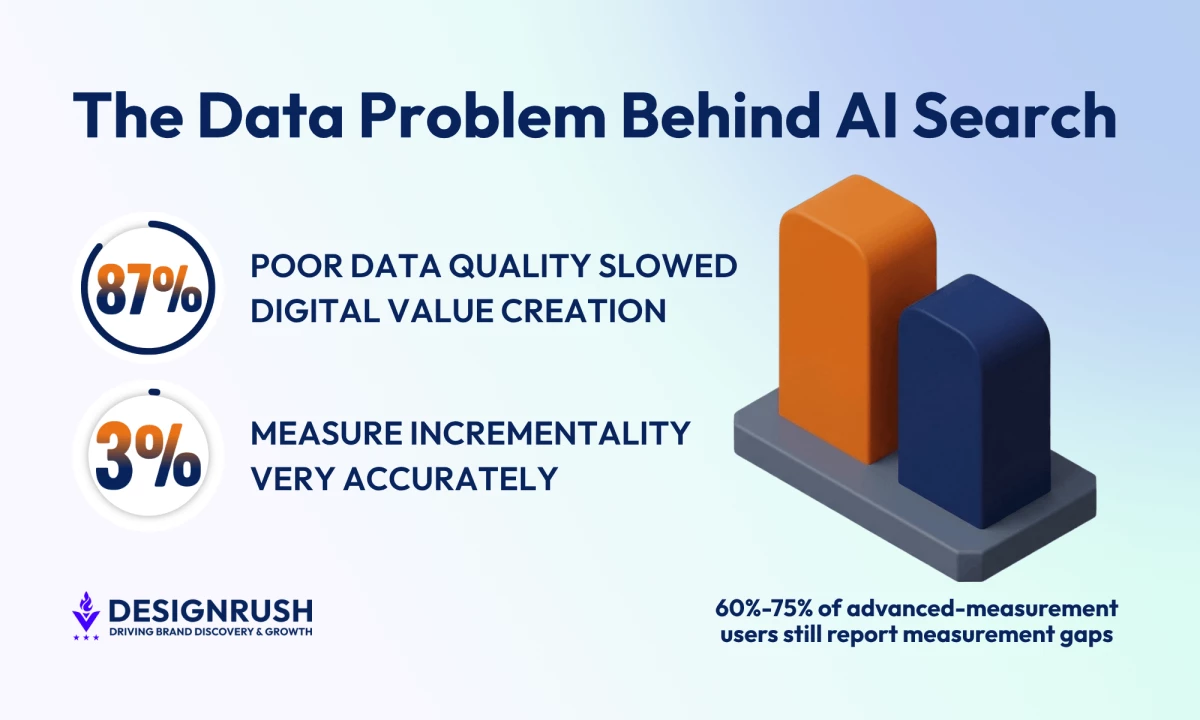
The IAB found that60% to 75% of advanced-measurement users still see gaps in rigor, timeliness, trust, and efficiency.
McKinsey reports that only 3% of marketers believe commerce media networks measure incrementality very accurately.
Meanwhile, 87% of respondents in PwC's latest survey say poor data quality has already slowed digital value creation.
Paid media platforms are no exception.
Feeding flawed measurement back into the platform doesn't make the AI smarter. It optimizes the bias right into the budget.
Modeled contribution is becoming the standard, not backward-looking last-click.
Brands that pair this with their own incrementality testing build a feedback loop the platform can learn from.
Those that don't do this keep optimizing against the same misleading credit assignments that have been distorting paid search budgets for years.
What CMOs Should Should Prioritize in AI Search Campaigns
Most paid search teams spend the bulk of their hours inside the Ads UI by adjusting bids, rewriting headlines, restructuring campaigns.
Most of that work used to drive performance, but not anymore.
The teams worth investing in now are doing real customer research and translating it into creative the AI can use.
They're cleaning up their first-party data so the platform has something to optimize against, and they're building incrementality testing into their measurement stack so the algorithm is being fed reality rather than platform reporting.
The Google announcements from May aren't really about new features; they're about where the responsibility for performance now lies.
The AI is taking on more of the execution, and the marketer is being asked to take on more of the thinking.
Brands that put their best people on understanding customers, building data infrastructure, and getting measurement right will get more out of paid search going forward.
Brands that don't will be optimizing the wrong end of the system.