
JLR's Logo Redesign: Key Findings
- Range Rover’s First Standalone Emblem: Two mirrored “R” letters were introduced for the first time in 55 years.
- Design Backlash from Fans and Press: Critics compared the abstract symbol to a fashion logo or belt buckle, with Motor1 calling it “goofy as hell.”
- Jaguar’s Rebrand Triggers Sales Freefall: The brand registered only 49 new cars across Europe in April 2025 after retiring its full lineup before EV replacements were ready.
Quick listen: JLR’s new Range Rover logo sparks backlash and brand lessons, in under 2 minutes.
Jaguar Land Rover (JLR) just designed a new symbol for Range Rover.
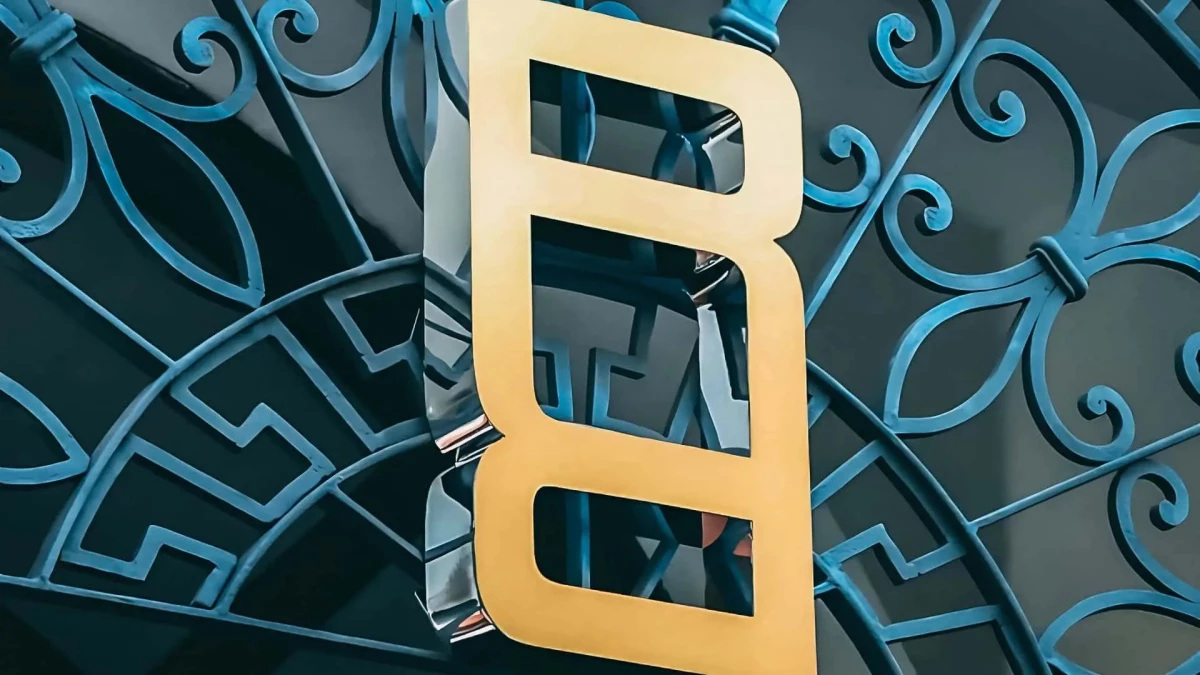
Two mirrored “R” shapes arranged vertically have now become the first standalone badge the SUV line has used since it debuted in 1970, according to Autocar.
The new design was reportedly shown to investors as part of JLR’s brand segmentation strategy, just months ahead of the debut of its first fully electric Range Rover.
However, JLR quickly clarified to Autocar that the newly introduced symbol isn’t meant to take the place of the full “Range Rover” logo.
This lettering has appeared on the front and back of every model since the vehicle first went on sale, and it will remain there.
The new "RR" logo is only intended for smaller surfaces, such as merchandise, interior finishes, and signage.
"The Range Rover Motif has been developed as a smaller symbol for where our familiar Range Rover device mark does not fit, such as on a label or as part of a repeating pattern, and within event spaces where an emblem is more appropriate," JLR said in a statement to Autocar.
This is the latest development in JLR’s “House of Brands” strategy, which separates the Range Rover, Defender, Discovery, and Jaguar into distinct product identities.
While the Land Rover name will still appear as a “trust mark,” it will no longer lead the branding for these vehicles.
This approach aims to modernize the portfolio, but the early response has raised doubts about whether it's enough to revive the Jaguar brand after its failed reboot last year.
What Happened to Jaguar
In late 2024, Jaguar launched its “Copy Nothing” campaign, meant to reintroduce the brand as a luxury EV company.
The visual identity was very minimal and abstract, with no cars in the launch ad and no sign of the famous leaping cat logo.
Elon Musk even mocked it on X, asking, “Do you sell cars?”
Do you sell cars?
— Elon Musk (@elonmusk) November 19, 2024
This full rebranding was poorly timed, to say the least.
Jaguar had just ended production of nearly all its combustion models (XE, XF, and F-Type, as well as the E-Pace and F-Pace crossovers).
Because the next-generation electric models weren’t scheduled until mid-2025, retailers were left with no updated vehicles to sell.
The result was unprecedented.
Only 49 Jaguars were registered in Europe during April 2025, based on figures published by the European Automobile Manufacturers' Association.
This number was down from 1,961 the same month in 2024, a 97.5% drop.
In the U.K., Jaguar suspended all new orders and closed much of its retail activity.
The U.S. was nearly as bad. Only 2,339 units were sold in Q1 2025, a 72% decline Year-over-Year (YoY), Reuters reported.
This collapse wasn’t driven by external market conditions alone. Jaguar had decent momentum in the late 2010s.
In 2017, the company sold over 178,000 cars globally, including 39,594 units in the U.S., its best-ever year there.
But when the brand tried to reinvent itself all at once — without products on the ground — its market presence all but vanished.
Why This Matters for Range Rover
Unlike Jaguar, the Range Rover still sells well.
In fact, Autocar says that its fully electric version already has 60,000 pre-orders, and this is a good sign.
But brand identity matters. Range Rover means something to buyers:
- British engineering and design
- Prestige without flash
- A long history going back to 1970
The new “RR” logo just doesn’t tell that story. It looks abstract and detached.
Wtf is this new range rover logo? 😭
— Aayush Chawla (@aayush_chawla) July 11, 2025
Didn’t they learn anything from Jaguar?
Looks like a Chinese EV company now. pic.twitter.com/2nHOZlSCPK
This may seem like a small thing, but brand affinity and trust erode when names or visuals suddenly change without explanation.
The same thing is happening with Land Rover.
Many fans thought it had been killed off. JLR insists it hasn’t been.
Its retail sales in North America climbed nearly 54% between FY2023 and FY2025, showing the strongest recovery across regions.
Meanwhile, global volumes are still below pre-pandemic levels, and U.K. sales have remained relatively flat since FY2022.
In Q1 FY26 (April to June 2025), JLR stated it wholesaled 87,286 vehicles (excluding its China JV), down 10.7% year-on-year.
Retail sales totaled 94,420 units, a 15.1% decline compared to the same period last year.
The drop was expected, due to the planned phase-out of older Jaguar models and a temporary pause in U.S. shipments tied to new tariffs.
Range Rover, Range Rover Sport, and Defender made up 77.2% of wholesale volume, up from 67.8% a year earlier.
This makes it clear where the energy is. Jaguar’s rebrand hasn’t stuck, and interest has faded without strong products to back it up.
Meanwhile, Land Rover’s core models continue to sell and shape the brand’s identity.
But this latest logo release is already raising questions about whether a visual update alone can carry the weight of the brand’s future.
A New Logo Doesn’t Fix a Broken Story
A redesigned logo can signal change, but it can’t carry the brand on its own.
The difference between a successful update and a misstep often comes down to timing, consistency, and a clear connection to what people already trust.
Some automakers have managed that balance without losing what their customers recognize or expect:
- Bentley modernized its logo slightly. The classic winged “B” stayed intact. Fans hardly noticed, and that’s the point.
- BMW and Mercedes adjusted their logos for modern screens, but their overall look and feel remained consistent.
- Kia took a bigger swing with a sharp new script, and many consumers misread it as “KN.” Still, its sales held steady.
the new kia logo is so unreadable that at least 30k people a month search for the "KN car" ever since its debut pic.twitter.com/jRj25JoAPp
— Ashwinn (@Shwinnabego) November 17, 2022
Jaguar’s case is the most extreme. The problem was removing the product, then rolling out a full rebranding that didn’t connect to anything real.
Launching a new logo just opens itself up to a whole new wave of skepticism, especially when there’s still no clear sense of what the brand wants to stand for.
Here’s what brands can take from this:
- Don’t remove products before the new ones are ready.
- Don’t drop recognizable symbols without a clear replacement.
- Don’t assume people will fill in the blanks.
- Show the actual product early, especially if it’s a big change.
- Ask real customers how they feel before rolling anything out.
Identity isn’t just a logo. It’s memory. People associate certain shapes, fonts, and names with how the brand made them feel.
When these disappear, so can brand loyalty. Sales then follow.
I’m not against change. Electric cars are the future, and minimalist design can work. But these last two JLR rebrands feel rushed.
Jaguar almost disappeared. Range Rover may not follow, but it’s heading into the same risky territory.
Remember that heritage matters. Customers need a reason to trust that the brand is still what they think it is.
Design should evolve, not erase. These agencies create logos that update identity without losing recognition: