
Netflix’s Jake Paul–Anthony Joshua Match: Key Findings
- The streaming giant's live infrastructure showed strain under peak global demand during its second major boxing stream.
- The wide skill gap between Joshua and Paul fueled criticism that the matchup prioritized attention over sporting credibility.
- Live events can drive short-term retention, but without credible competition and reliable delivery, it risks eroding the trust needed to make that attention stick.
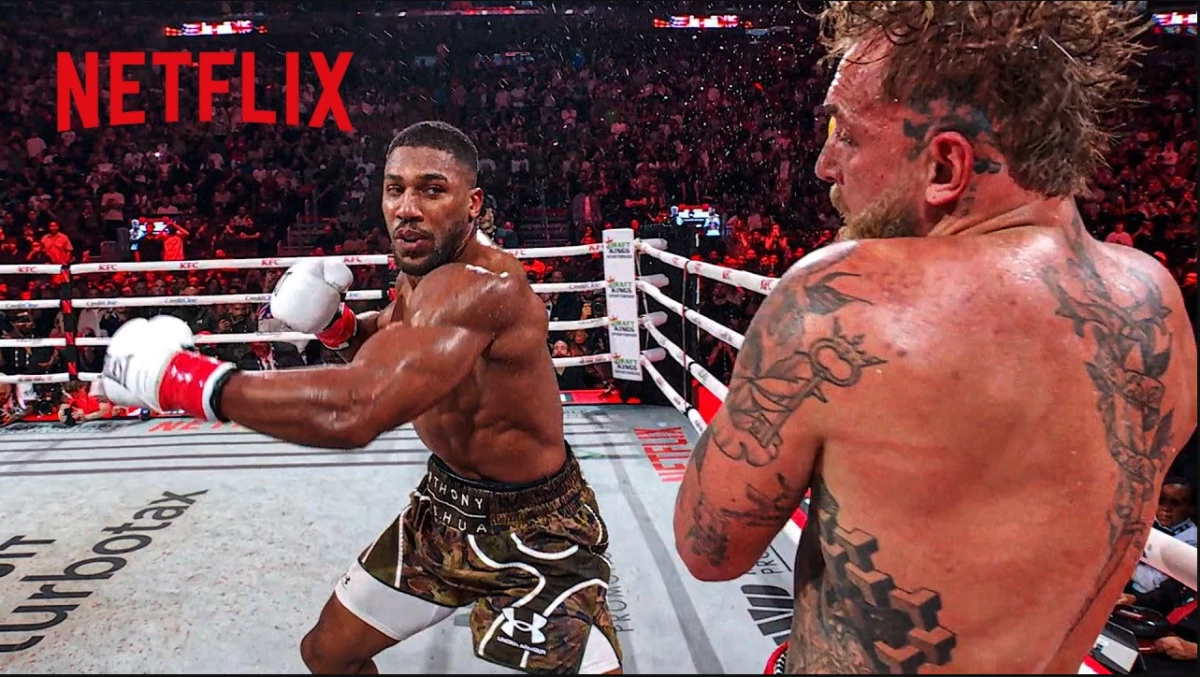
Anthony Joshua defeated Jake Paul in a bout that quickly became a cultural flashpoint.
Streamed globally on Netflix, the fight drew a massive audience.
But it also sparked immediate backlash over the competitive imbalance between an active heavyweight contender and a creator-turned-boxer.
Online reaction centered on the mismatch, with fans questioning the logic of pairing a former unified champion against an opponent without comparable professional experience.
The criticism spread as quickly as the clips and highlights.
Even so, the fight reinforced Netflix’s push to make live sports a core part of its entertainment offering, despite the tension such experiments create with traditional fans.
It also showed how live events now operate on two tracks at once, delivering immediate scale while testing how much credibility audiences are willing to trade for access.
Competition Took a Back Seat
Joshua’s dominance highlighted the technical gap between elite professional boxing and influencer-led matchups.
Unlike Paul’s earlier fights against retired or aging opponents, this contest offered little suspense once it got underway.
The result was decisive, but many viewers felt the bout lacked the drama expected from a marquee boxing event.
Anthony Joshua was literally smiling at Jake Paul's scared face 😭😭😭😭😭 pic.twitter.com/7P6RKlNoct
— fan (@NoodleHairCR7) December 20, 2025
Payout estimates circulating suggest that the fighters would have earned $92 million each.
This further reinforced the perception that commercial incentives outweighed competitive balance in the match.
After the fight, Paul also shared that he had undergone surgery, shifting attention further toward personal narrative rather than competition.
The night also doubled as a marketing platform, amplifying Paul’s wider business interests, including Prime Hydration.
This exposure comes as several influencer-driven brands show signs of slowing momentum.
What happened here highlights a growing risk for crossover events.
When competition fades, the commercial layer becomes more visible, and audiences become quicker to question the trade-off.
Netflix’s Live Sports Stress Test
The broadcast exposed ongoing challenges in Netflix’s live-streaming infrastructure.
During the fight, users reported buffering, degraded resolution, and repeated app reloads, echoing issues seen earlier in the year during the Tyson–Paul event.
Netflix previously said the Tyson–Paul fight peaked at 65 million concurrent streams across 60 million households.
Biggest since cable. Mic drop on you haters. Oh and we had 50M households watching Amanda & Katie. Grateful #PaulTyson#TaylorSerranopic.twitter.com/PcSA6VA3B2
— Jake Paul (@jakepaul) November 16, 2024
Forbes contributor Alfred Konuwa estimates the Joshua–Paul bout may have reached roughly 75 million global viewers, though Netflix has not released official figures.
Live sports rights are becoming a central battleground for streaming platforms seeking retention through appointment viewing.
For Netflix, scaling infrastructure reliably will be essential if it intends to compete for top-tier properties in the years ahead.
Several lessons emerge here for brands and partners investing in live events:
- Technical reliability shapes perception. Viewers judge live events in real time, and failures are remembered as clearly as the content itself.
- Scale raises expectations. Larger audiences amplify frustration when performance falters.
- Infrastructure readiness affects deal credibility. Rights holders and advertisers factor delivery confidence into long-term partnerships.
This stress test shows that audience demand for live sports is there, but sustaining it depends on consistency as much as headline viewership.
Our Take: Can Spectacle Replace Substance?
I don’t think it can, at least not on its own.
Netflix captured attention for a night, but the response shows how quickly reach can turn into credibility strain when competition feels secondary.
The platform is clearly testing how far spectacle can carry live sports.
If this becomes a long-term brand strategy, technical consistency and believable matchups will matter more than viral moments.
Attention is easy to spike, but trust takes longer to build.
Netflix is also broadening its strategy beyond scripted streaming by investing deeper in sports and interactive entertainment.
This expansion includes licensing the official FIFA football game ahead of the 2026 World Cup.
Looking to strengthen your brand’s digital strategy after the Netflix–Paul–Joshua match? Explore vetted Top Digital Agencies on DesignRush.