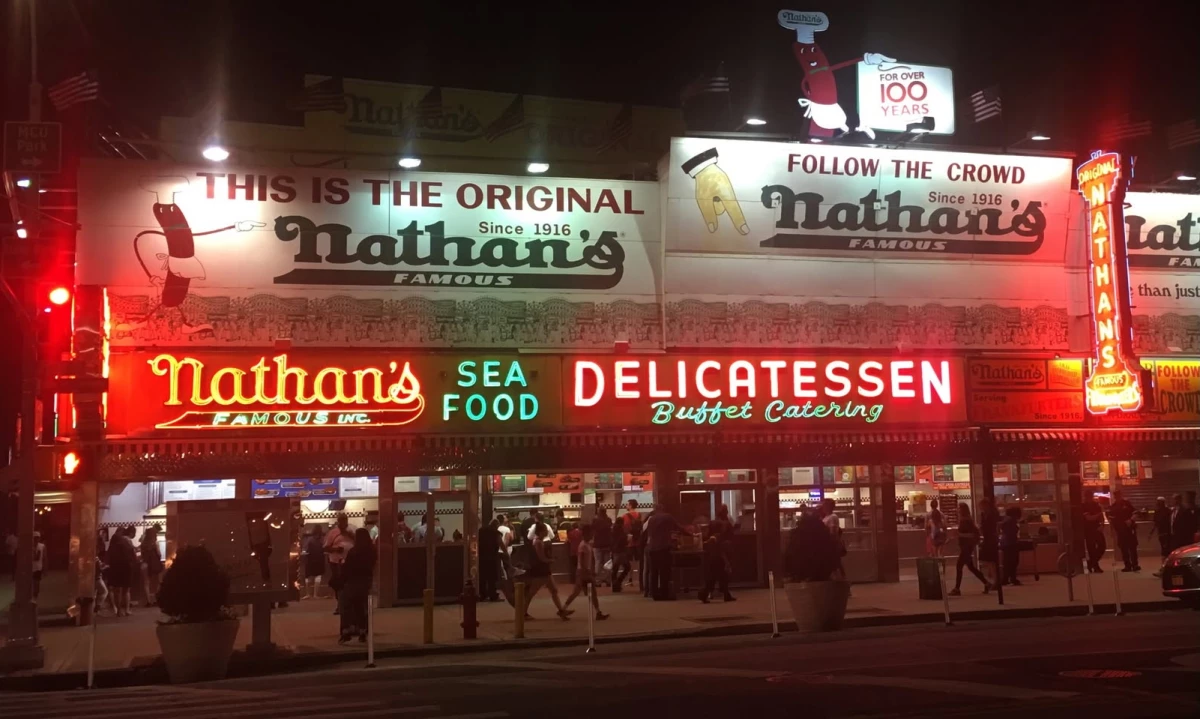

Nathan's Famous Buyout: Key Findings
- Smithfield’s acquisition gives it full ownership of Nathan’s and its franchises, preserving heritage and scale.
- Nathan’s product costs rose 27% and hot dog prices 20%, showing inflation pressures and operational challenges.
- The Coney Island July 4 contest has run for over 50 years, keeping the brand culturally relevant and consumers loyal.
Nathan’s Famous, the iconic Coney Island hot dog brand, is officially entering a new chapter under Smithfield Foods after a $450 million acquisition.
Announced last Wednesday, the deal gives Smithfield Foods full ownership of Nathan’s outstanding shares at $102 each.
This figure represents a nearly 10% premium over the company’s recent stock price.
US pork processor Smithfield Foods will buy century-old Nathan's Famous in a $450 million deal that adds the most iconic hot dog name to its portfolio of brands https://t.co/g1Xen2v9KNpic.twitter.com/5FvOwD2FTt
— Reuters (@Reuters) January 21, 2026
Smithfield, which has produced and sold Nathan’s products in the U.S. and Canada and at Sam’s Clubs in Mexico since 2014, says it will continue growing the century-old brand.
“The Nathan’s Famous acquisition is a meaningful step in the progression of Smithfield Foods, allowing us to own all of the top brands in our Packaged Meats portfolio,” said Smithfield CEO Shane Smith.
Nathan’s Famous CEO Eric Gatoff reinforced these sentiments:
“As a long-time partner, Smithfield has demonstrated an outstanding commitment to investing in and growing our brand while maintaining the utmost quality and customer service standards."
Inflation has hit Nathan’s Famous hard in recent months.
Branded product costs are up 27% year-over-year, and the average cost per pound of hot dogs rose 20%, as reported by the Associated Press.
Despite these pressures, Nathan’s has maintained relevance through its legendary Coney Island July 4 hot dog-eating contest.
It has become a tradition that dates back to the 1970s, anchoring the brand in American pop culture and delivering recurring visibility that helps offset rising costs.
What's Next for Nathan's Famous?
Smithfield says it expects to realize annual savings of about $9 million within two years.
The Coney Island contest, televised on ESPN and attracting roughly 30,000 attendees, will continue as usual.
Reigning champion Joey Chestnut holds the men’s title after consuming 70.5 hot dogs last year.
The acquisition also serves as a reflection of Nathan’s long-term strategy of balancing its rich heritage with its foreseen growth.
Founded in 1916 by immigrant Nathan Handwerker, the brand expanded from a single 5-cent hot dog stand to a nationwide franchise.
After selling to investors in 1987, it continued growing under successive leadership, proving the enduring power of its brand name and reputation.
Smithfield, which also owns the Gwaltney bacon and Armour frozen meat brands, generated over $14 billion in sales and $1 billion in operating profit in 2024.
Meanwhile, Nathan’s posted a $36.5 million income from operations in 2025, up from $32.5 million the previous year, according to its SEC filing.
The acquisition is expected to close in the first half of 2026.
Lessons From the Nathan’s Famous Sale
The brand serves as a strong example of how heritage brands can evolve while maintaining brand loyalty.
- Strategic acquisitions can preserve brand equity while giving a business operational and financial leverage.
- Legacy events like the Coney Island hot dog contest help brands maintain long-lasting relevance that could span generations.
- Combining historical identity with modern business strategy ensures a brand stays timelessly competitive.
Last year, Nathan’s Famous reported revenue of nearly $150 million, highlighting steady brand growth despite inflation-related challenges.
While its sale will mark a new chapter, it's hard to ignore its rich history and participation in annual cultural events that made it the industry juggernaut it is today.
Our Take: What Can Heritage Brands Teach Us?
I see Nathan’s deal as a reminder that even century-old brands must adapt, or else they'll risk fading.
There's a balance between culture and commerce.
How a hot dog stand can become an enduring American icon while navigating inflation and corporate ownership.
For other heritage brands, it's a lesson to maintain product traditions and brand identity while embracing operational scale.
History is built, so like Nathan's, steward it wisely.
In other news, Netflix shares slid amid its ongoing Warner Bros. Discovery acquisition.
It's another testament to the worth of heritage companies and the lengths companies are willing to go to expand their cultural footprint.
These top partners help brands manage media investment and messaging when industry dynamics become part of the story.