
McDonald’s Horizontal Breakfast: Key Findings
- Millions of Americans skip work the Monday after the Super Bowl, so McDonald’s is positioning its breakfast as the ultimate recovery food.
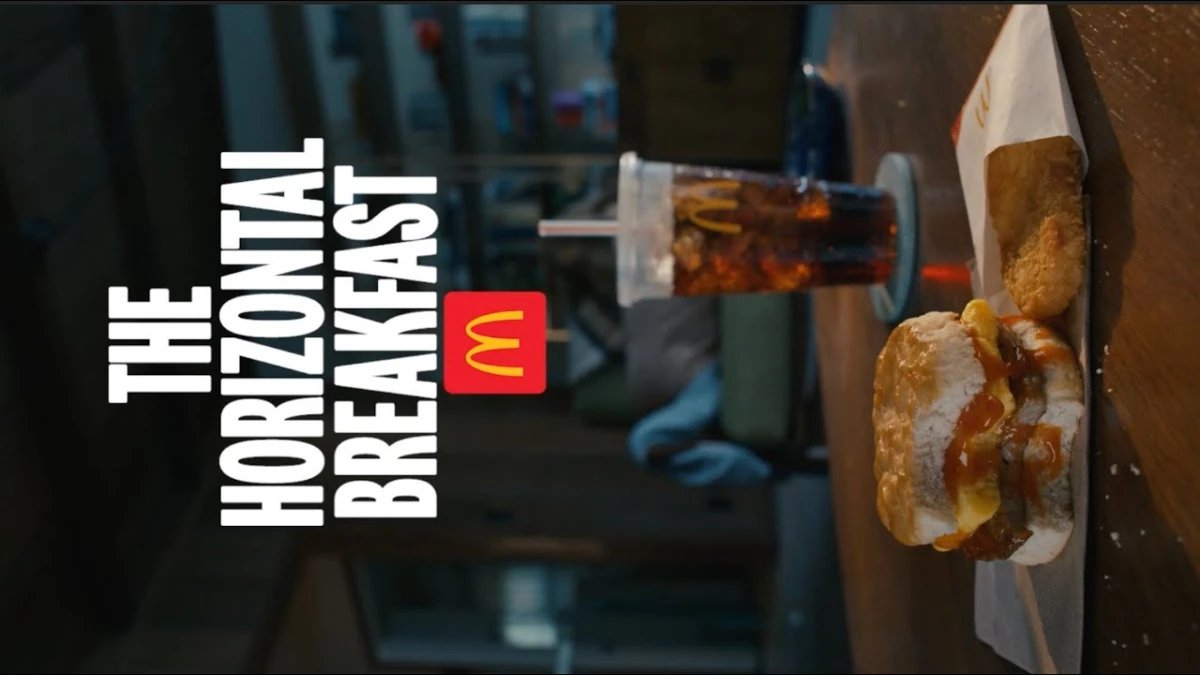
- A 15-second TV spot is oriented horizontally, reflecting the reclined posture of fans on their couches.
- The sideways creative also runs across social and OOH, helping the campaign stay humorous, shareable, and relevant.
McDonald’s is redefining the Super Bowl aftermath with a campaign built for those still lying down the morning after the big game.
Enter the “Horizontal Breakfast” initiative, created with Wieden+Kennedy New York, which takes aim at fans recovering, snoozing, or reluctantly preparing for the workweek.
The idea sprang from the universal truth that nothing helps bounce back from a late-night celebration like a McDonald’s breakfast.
Millions of Americans reportedly plan to skip work or arrive late on the Monday following the Big Game.
JJ Healan, VP of U.S. marketing, brand, content, and culture at McDonald’s, said W+K pitched the idea just over a week ago. Impressed, the team “moved quickly to turn it around.”
“We knew this idea would resonate with our fans, and after a great show, help everyone get back to being vertical again,” she explained.
This shows how McDonald's is embracing the humor and comfort of the post-game slump, creating meme-worthy images in the process.
Going Sideways With McDonald's
The campaign is marked by a 15-second TV spot showing a clearly worse-for-wear fan failing to lift himself off the couch.
In an attempt to mediate his hangover, he decides to order McDonald’s breakfast via the app.
Leaning into the gimmick (literally), the spot is framed horizontally, reflecting the reclined posture of viewers still recovering from the Big Game.
Out-of-home billboards echo the same message with lines such as, "The breakfast to get you vertical," and "If you're horizontal, a little breakfast won't hurt."
Social posts follow suit, keeping the sideways orientation consistent across all platforms.
Overall, the campaign demonstrates how a strong and decisive brand marketing strategy can build relevance in both online and offline chatter.
McDonald’s Horizontal Breakfast is a Lesson in Moment Marketing
The Super Bowl just ended, and McDonald's was quick to act. For marketers, the fast-food chain's latest move is a case study in basing creative on real-world behavior.
- Campaigns that match content orientationor format with user behavior can increase engagement and brand recall.
- Using visuals tied to widely recognized habits strengthens audience connection and shareability.
- Coordinating TV, social, and out-of-home initiatives ensures momentum extends outside a single broadcast window.
In 2025, McDonald’s generated $26.26 billion in revenue, making it the biggest fast-food operator in the U.S., followed by Starbucks and Chick-fll-A.
Our Take: Does the Sideways Gimmick Work?
McDonald's is poking fun at Super Bowl rituals in a way that even those with the worst hangovers could get a laugh out of it.
The fast-food giant fully commits to the moment fans are in, physically and culturally.
Tilting its creative sideways allowed them to turn relatable human behavior into a brand moment that feels effortless.
It’s bold, funny, and instantly shareable, proving that even a post-game hangover can become a marketing opportunity.
In other news, McDonald's UK recently launched a similar campaign, this time addressing the New Year hangover.
Food and beverage brands win when strategy reflects how people actually eat, drink, and choose. Take a look at the top marketing agencies in our directory.