
Malört's Brutal Honesty: Key Points
- Malört is leaning into its reputationfor tasting terrible by putting outrageous fan descriptions directly on ads and bottles.
- Domino’s, Oatly, and Liquid Death have all shown how brands can grow by admitting flaws and using humor instead of polish.
- Radical honesty can win credibility, but it only works if the product experience matches the message.
Sometimes the worst taste makes for the best marketing.
Chicago’s infamous wormwood liqueur, Malört, has built a cult following around one undeniable fact: it tastes terrible.
MALÖRT TASTES LIKE ___ ?
— Jeppson’s Malört (@JeppsonsMalort) July 19, 2025
What do you think Malört tastes like? We want to know. Submit your description at the link in bio and it could be put on a future label.
Must be 21+ to enter. Visit https://t.co/ZMGB9Doh7p for more info. pic.twitter.com/atk0NKRYQV
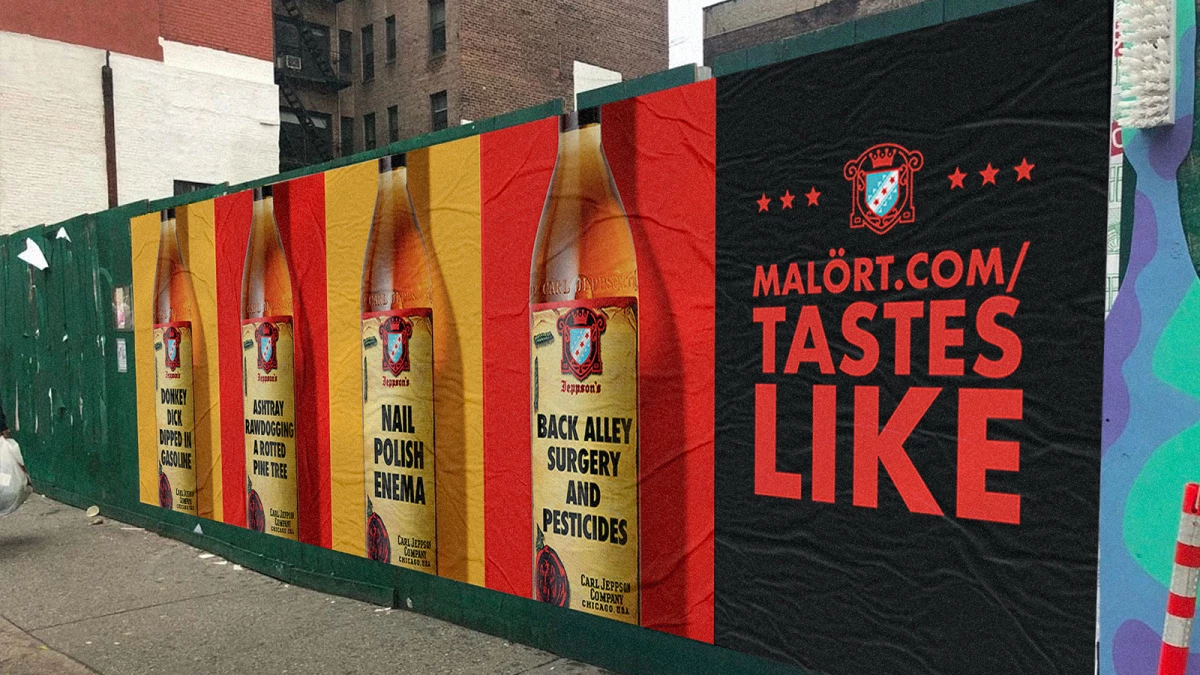
Its latest campaign, “Malört Tastes Like,” leans into the reputation by using fan insults as ad copy.
Descriptions include “Fermented Back Sweat,” “A Nail Polish Enema,” and “Ashtray Raw Dogging a Rotted Pine Tree.”
Fifteen of the most outrageous lines were put to a public vote, with the top three directly printed on bottles.
Gordy Sang, CCO of Quality Meats, the agency behind the campaign, said the idea came straight from internet chatter:
“People always try to describe the foul taste of it.
So tapping into the truth of how bad it tastes, and almost daring people to take a shot.”
The campaign positions Malört as a rite of passage. The joke is the product, and the product is the joke.
Radical Honesty as a Brand Strategy
Malört isn’t alone in turning flaws into a story.
Domino’s faced years of jokes about cardboard crust and “trash pizza” before deciding to own the criticism.
In 2010, it aired focus groups repeating the insults, admitting the food wasn’t good enough, and promising to fix it, and the changes worked.
Between 2011 and 2018, Domino’s stock climbed more than 1,300%, outpacing rivals like McDonald’s, Burger King, and Pizza Hut, according to Vox.
Other brands have found their own versions of the same play.
Oatly packed its cartons with witty, almost boring copy that mocked the very idea of marketing.
Milk Wars are in full swing. Ads in newspapers in recent days. 👇 pic.twitter.com/8ndU5m018N
— The Food Professor (@FoodProfessor) May 9, 2023
Billboards questioned whether anyone would even stop to read them.
Liquid Death took a louder path, naming its canned water like a metal band and mocking critics until the hate itself became content.
The product wasn’t revolutionary, but the voice around it built a lifestyle people wanted to be part of.
Together, these cases show that making fun of yourself, your product, or the act of advertising can be more powerful than chasing perfection.
Our Take: Can Brutal Honesty Build Lasting Brands?
When I saw Malört compare itself to “back-alley surgery and pesticides,” I thought of Domino’s inviting people to trash its pizza on national TV.
Both moments felt like confessions rather than campaigns, and oddly enough, this honesty made me curious to try the product.
Had a shot of malort today and that shit tastes like burnt tire and depression.
— Aero| katt monroe💕 (@aero_moon_AD) August 9, 2025
For CMOs and brand leaders, here are the lessons:
- Own your critics: Acknowledging flaws can create stronger loyalty than ignoring them.
- Tie honesty to the product: Self-awareness works when it reflects the actual experience.
- Stay cultural: Consumers reward brands that join conversations instead of hiding from them.
Bluntness cuts through because it feels human.
In a market full of polished promises, admitting weakness can be the strongest move a brand makes.
The open question is whether Malört can build lasting demand on top of the joke, or if it will remain Chicago’s most infamous dare shot.
For another example of brands using raw honesty to connect with audiences, see how Skylight highlighted parenting chaos in its latest OOH campaign.