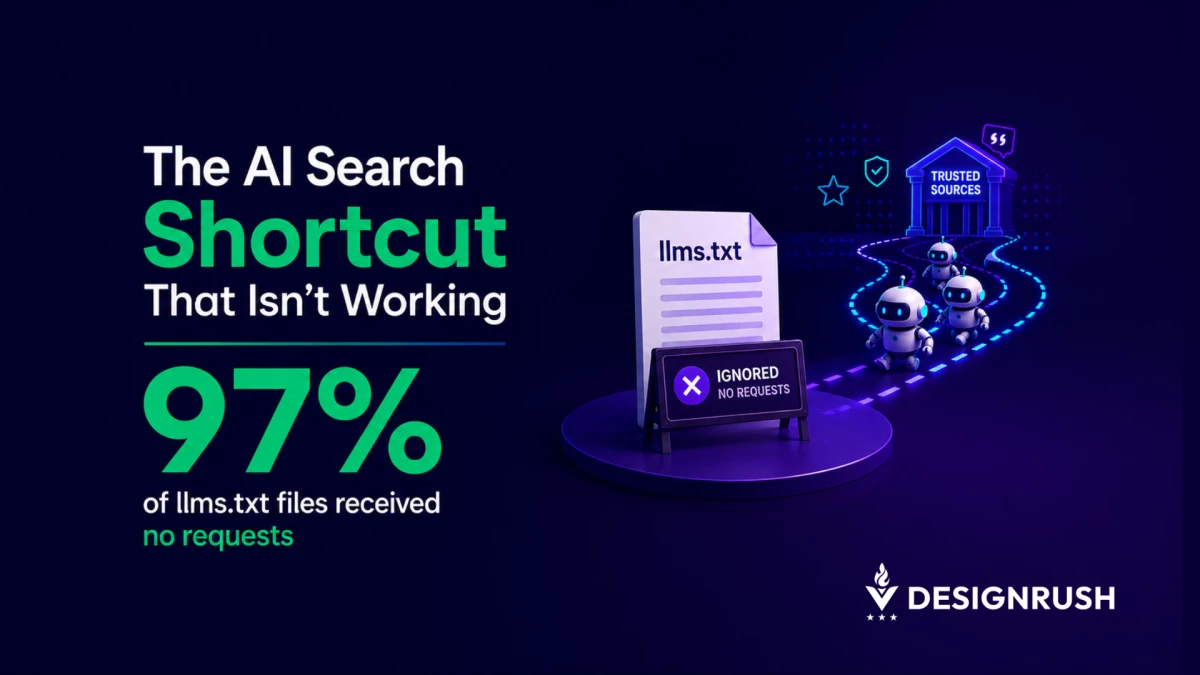

Almost every llms.txt file published today is going unread.
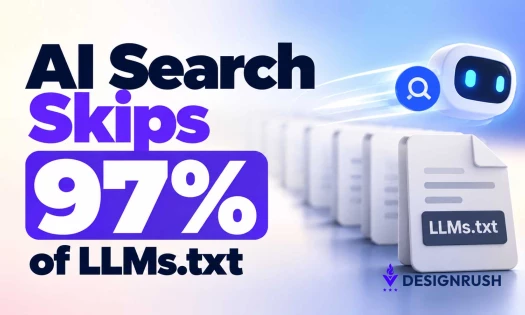
An analysis of 137,000 websites by Ahrefs found that 97% of valid llms.txt files received no requests during May 2026, despite growing interest in the file as a way to improve AI search visibility.
Even among the small shares that were accessed, AI retrieval bots from platforms including ChatGPT and Perplexity accounted for just 1.1% of total requests.
For ForeFront Web, the findings challenge one of the fastest-growing trends in Generative Engine Optimization (GEO), where marketers have rushed to publish llms.txt files in hopes of improving AI visibility.
The agency’s Senior SEO Specialist, Gabrielle Schneier, explains that businesses shouldn't mistake an easy implementation for an effective optimization strategy.
"It's understandable why llms.txt attracted so much attention, particularly as everyone wants a straightforward way to improve AI visibility," she says.
"But the data shows there's a difference between what's easy to implement and what's actually influencing AI-generated results. Businesses should spend their time strengthening the signals AI platforms already rely on."
Ahrefs tells us how robots.txt, GPTBot, and llms.txt influence AI search, and why technical optimization alone won't guarantee visibility:
Why llms.txt Has Little Impact on AI Search Visibility
Unfortunately, adoption has moved much faster than evidence.
The same Ahrefs study found that 28% of the domains in its dataset now publish an llms.txt file. Yet, only about 1,100 websites received any requests during the study period.
And 96% of those requests came from bots, most of them belonging to SEO tools, validators, crawlers, and technology profiling services rather than AI platforms.
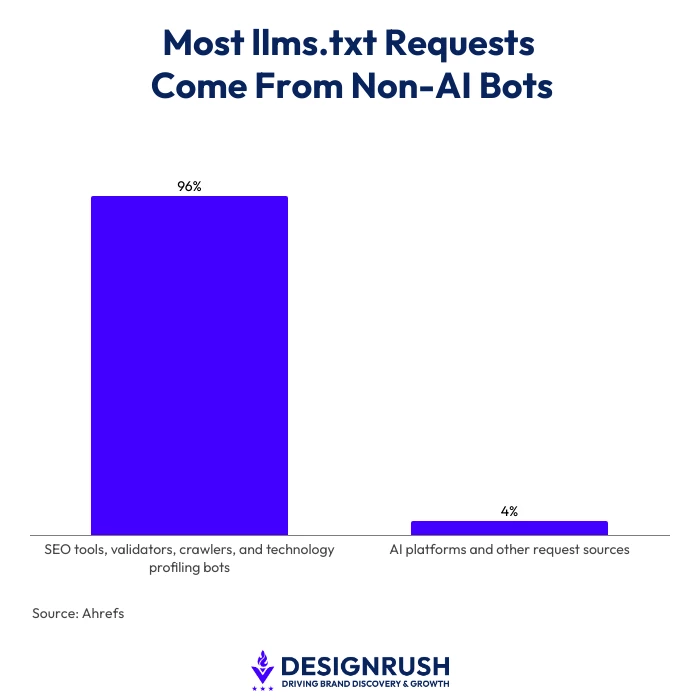
The research also found that 12% of all requests came from tools auditing or studying llms.txt itself, which shows that much of the activity around the file is coming from trends within the SEO industry rather than AI systems.
"SEO has always had new tactics that spread quickly before anyone could prove whether they worked," Schneier adds.
"There's nothing wrong with testing them, but the mistake is treating them as more important than the signals AI systems are already using."
YouTuber, Edward Sturm, explains why AI crawlers rarely rely on llms.txt and what that means for AI search visibility:
What AI Search Systems Use to Assess Authority
Google has repeatedly said that llms.txt isn't required for its AI search features.
The Ahrefs data points in the same direction, and suggests that AI systems continue to rely primarily on information they can already find across the web.
For Schneier, that puts the focus back on the work businesses should already be doing.
Original reporting, expert content, authoritative citations, consistent business information, and well-developed digital entities all help AI systems understand who a company is and whether it's a credible source.
"AI doesn't decide if a brand is trustworthy because a website says it is," Schneier says.
"That confidence comes from seeing the same signals repeated across reputable sources. Every expert mention, citation, review, and well-structured piece of content helps build that confidence."
Ahrefs breaks down how AI search engines really work and how to rank higher:
Four GEO Strategies That Support AI Visibility
Schneier says businesses will see greater value by improving the four signals that AI systems already recognize:
1. Publish original expertise
AI-generated answers consistently favor information that contributes to something new instead of repeating what's already available elsewhere.
2. Earn authoritative citations
Coverage from respected publications and trusted industry websites gives AI systems independent evidence that a business deserves to be referenced.
3. Build stronger digital entities
Consistent information about products, services, executives, and the business itself helps AI systems connect information across multiple sources.
4. Maintain strong technical SEO
Fast pages, structured data, logical site architecture, and accessible content still make it easier for both search engines and AI retrieval systems to discover and interpret information.
"There's no reason to remove llms.txt if you've already published it because it's inexpensive to maintain," Schneier adds.
"But it shouldn't become the centerpiece of an AI visibility strategy when there are far stronger opportunities to improve discoverability."
Surfer Academy explores how AI search systems choose sources and why authority, brand mentions, and high-quality content matter more than technical shortcuts:
Why Brand Authority Matters for AI Visibility
The latest data suggests businesses won't improve AI visibility through a single technical file.
The brands most likely to be cited are giving AI systems consistent evidence of expertise, authority, and trust wherever those systems look.
So, if 97% of llms.txt files aren't even being requested, is the next competitive advantage really another technical shortcut, or is it becoming the source AI trusts enough to cite?