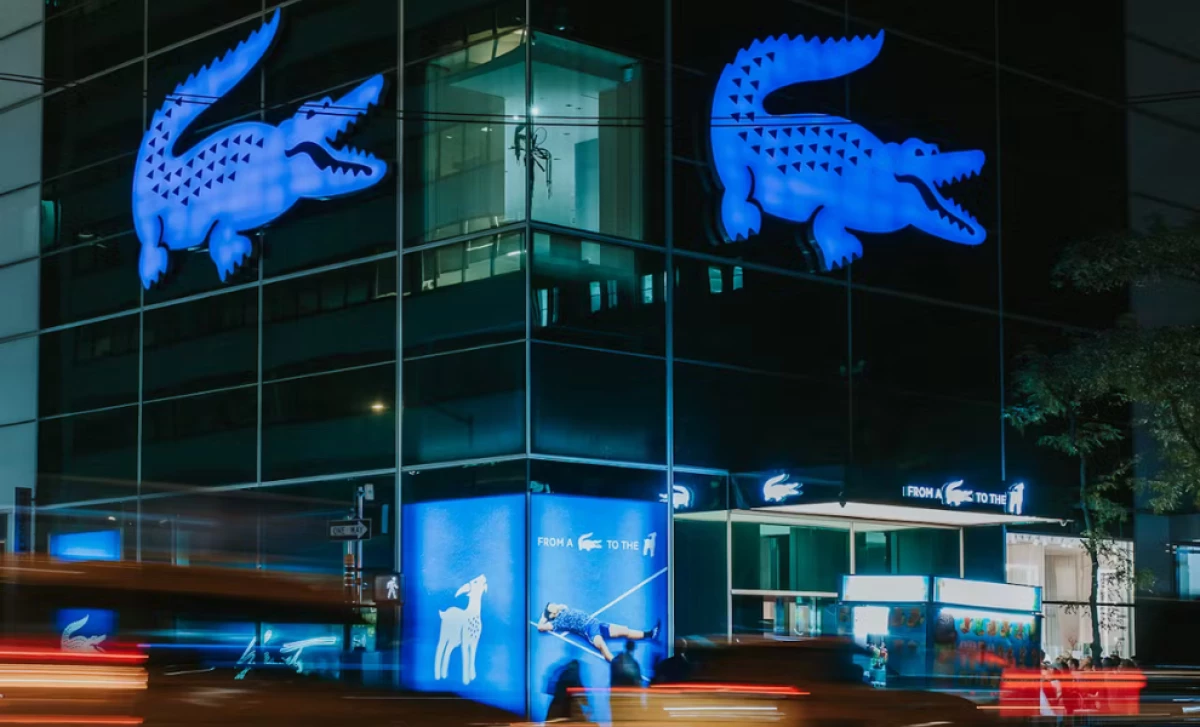

Lacoste GOAT Logo Switch: Key Findings
- The new emblem appears on a five-piece capsule revealed at Lacoste’s Fifth Avenue flagship in New York.
- Djokovic himself introduced the collection just days before competing at the 2025 US Open.
- The campaign, created with BETC, centered on fans, heritage, and narrative-driven visuals.
Quick listen: Lacoste swaps its crocodile for a GOAT to honor Novak Djokovic — and shows how heritage brands can reinvent with meaning, in under 2 minutes.
Lacoste has changed its well-known crocodile again, this time to honor a champion on the court.
The crocodile has stepped aside, at least for now, replaced with a GOAT to salute Novak Djokovic and his unmatched record in men’s tennis.
The reveal took place in New York, just days before Djokovic began his US Open campaign in 2025.
Djokovic walked out onto Fifth Avenue and pulled the cover off the display himself, showing off the “From the Crocodile to the GOAT” collection.
The lineup is small but sharp: a polo, a T-shirt, a jacket, a cap, and a pair of trousers, all stitched with the little goat where the crocodile usually sits.
For Lacoste, that swap wasn’t just cosmetic.
It carried the weight of a brand willing to pause tradition to salute one of its own.
In a company press release, Lacoste’s CEO Thierry Guibert explained that the change was both a tribute to Djokovic’s remarkable career and a way to acknowledge the brand’s origins.
“Novak Djokovic has been part of the Lacoste family for over eight years.
Together, we have shared an exceptional period, during which he won 12 Grand Slam titles – half of his career total.
Beyond the extraordinary player, his tenacity, mindset and values have contributed to elevating and amplifying the brand.
Transforming our Crocodile into a GOAT today to pay tribute to him, and unveiling the collection here, where René built his legend, was an obvious choice.
This initiative reflects our ability to reinvent our codes while staying true to René Lacoste’s heritage.”
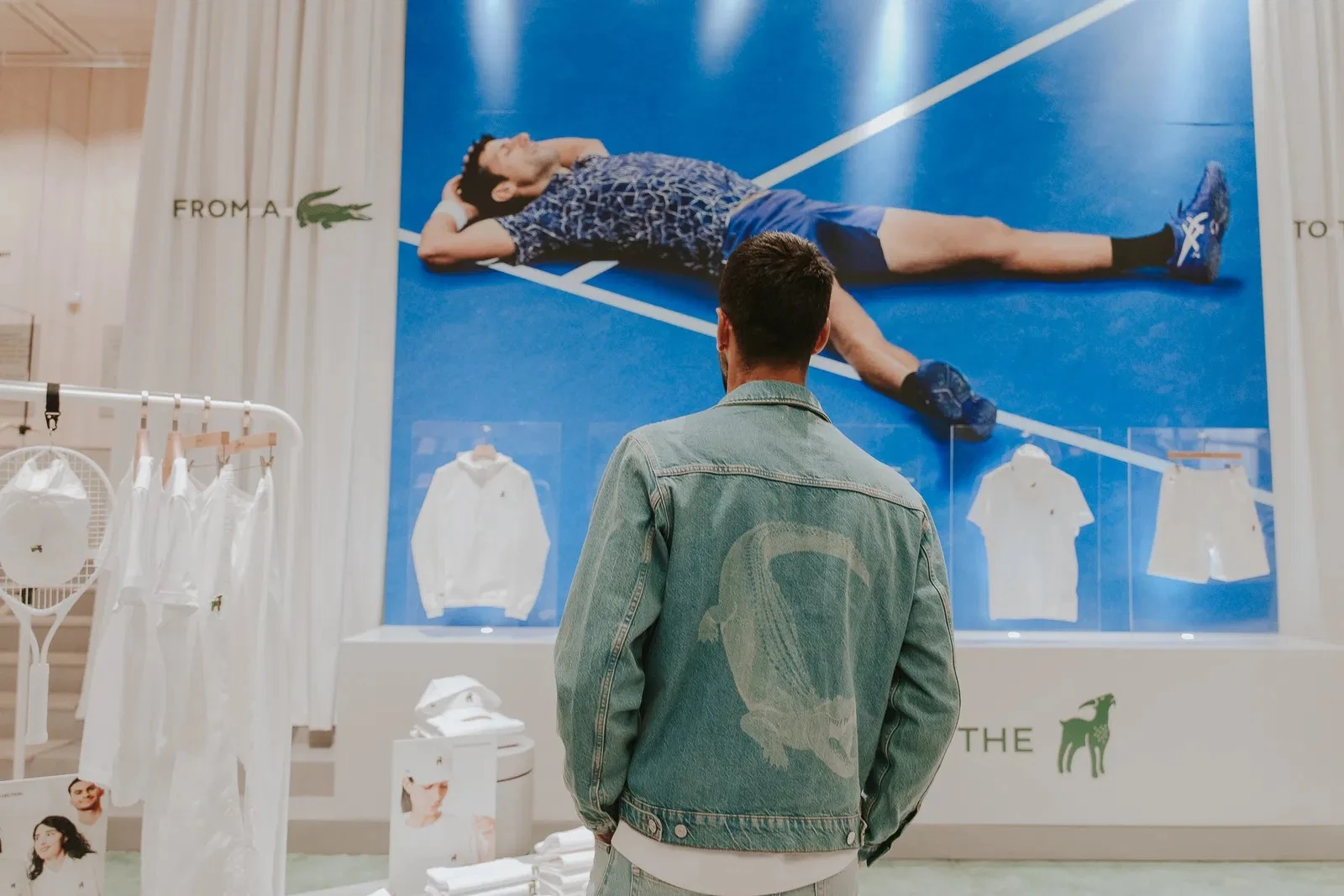
The decision to launch the collection in New York was no accident.
It was in this city, back in the 1920s, at the US Championships, that René Lacoste earned the nickname “The Crocodile.”
Placing Djokovic’s GOAT logo on display in the same place feels like a full-circle moment that links the brand’s early history to the athlete carrying its story forward today.
A Rare Change in Tradition
This isn’t even the first time Lacoste has experimented with its logo design.
In 2018, it briefly swapped the crocodile for a series of endangered animals, from the Sumatran tiger to the Kakapo parrot.
This was done as part of a campaign with the International Union for Conservation of Nature.
That initiative was about shining a light on conservation.
The Djokovic capsule is different because it’s about honoring a single player and the legacy he is still building.
Behind the Campaign
Creative agency BETC guided the project, focusing on themes of resilience and determination instead of simply spotlighting trophies.
Olivier Aumard, executive creative director at BETC, said the GOAT emblem represents the values that pushed Djokovic to the very top of tennis.
“We were looking for a strong symbol to celebrate the great career of Novak.
‘From the Crocodile to the Goat’ symbolizes the work ethic, the resilience, the determination that is needed in order to reach the status of legend,”
The striking portrait blends athletic grit with luxury fashion cues.
Lacoste didn’t just put Djokovic at the center.
The campaign spotlighted fans who had supported him since the beginning of his career.
Some appeared in the launch video, while others received pieces from the collection in surprise gestures after posting tributes online.
This choice gave the rollout a personal feel.
It made the collection about more than a champion, but a story about the people who helped shape his journey.
What the Move Signals
For brand leaders and agencies, this move from Lacoste shows how heritage and relevance can coexist:
- Meaningful symbols matter. Changing a logo works when it ties directly to achievement, not novelty.
- Ambassadors need time. Eight years of partnership gave Lacoste the credibility to make this tribute authentic.
- Fans bring authenticity. Featuring real supporters gave the campaign warmth and made it feel more personal.
- Timing made the difference. Launching on the eve of the US Open turned the collection into part of a bigger cultural moment.
On the 8th, @LACOSTE replied to a tweet I wrote back in 2013 about Djokovic being the GOAT 🐐 A few DMs later, they told me I was chosen as a loyal @DjokerNole fan. Today this amazing package arrived… beyond everything 😍 Thank you @LACOSTE & the GOAT! pic.twitter.com/berYQjRNUy
— v (@mdmeveronique) August 25, 2025
Lacoste didn’t just swap logos but wrote a story that connected a nearly century-old brand with the career of one of tennis’s greatest athletes.
The GOAT emblem may be temporary, but the message will last well beyond this season.
Our Take: Can A Logo Change Make People Feel Something?
As a tennis fan who has cheered for Djokovic and as someone who has worn Lacoste polos for years, I didn’t think a logo swap would hit me this way.
Seeing the crocodile replaced with a goat felt odd at first, almost disorienting, but then it hit me just how rare and personal this moment was.
As both a fan of tennis and someone who has followed Lacoste’s story as a reporter, I was reminded that brands don’t always need to roll out new products or massive campaigns to make an impact.
Sometimes a simple change, like swapping one emblem for another, can carry more emotion than a hundred taglines ever could.
What I take from this is that heritage brands don’t lose credibility when they take risks like this.
They gain it if the story behind the risk is honest and easy for fans like me to believe.
For another US Open brand story, see how Aryna Sabalenka surprised fans with free tequila in a clever activation.
From capsule drops to fan-first rollouts, these firms turn sports partnerships into lasting emotional moments.