
La-Z-Boy’s National Lazy Day Push: Key Findings
- La-Z-Boy celebrated National Lazy Day with its “Taking Back Sundays” campaign, promoting rest and weekend relaxation.
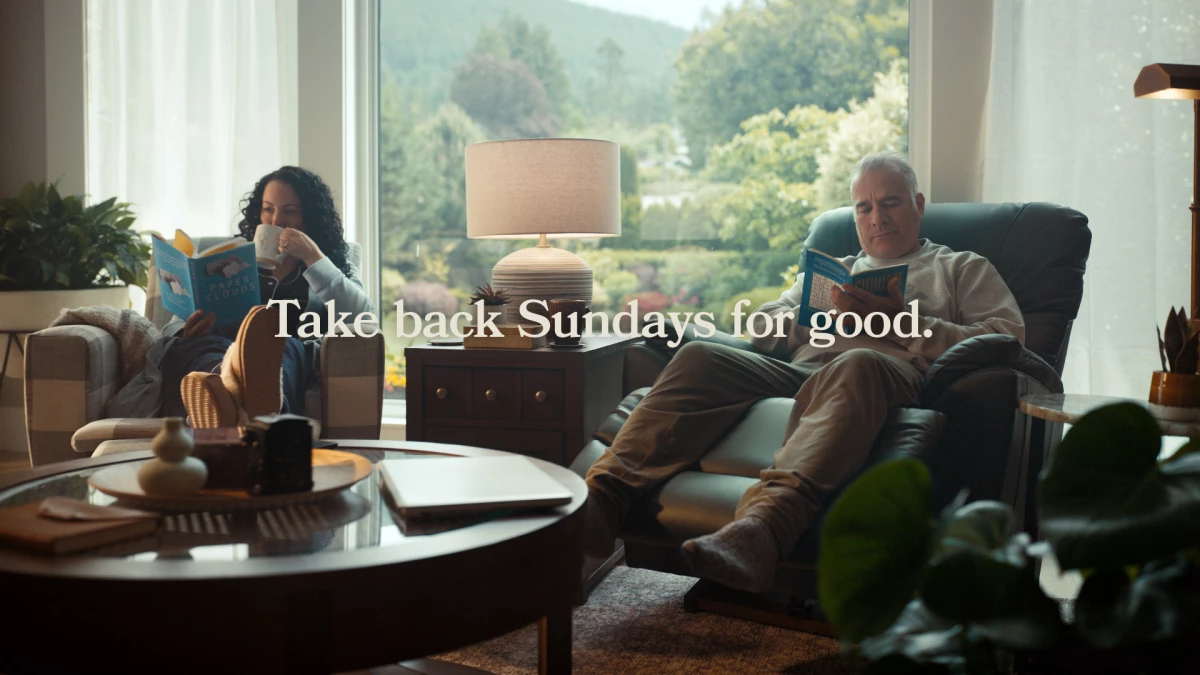
- Created by RPA and Radical Media, the campaign featured two spots, highlighting slow mornings, naps, and leisure in a La-Z-Boy® Recliner.
- In five days, the campaign generated 46M+ impressions, 400K+ clicks, and 1.84x site engagement.
Quick listen: How La-Z-Boy’s Lazy Day campaign drove clicks and culture — in under 2 minutes.
Who says Sundays can’t be lazy again?
August 10’s National Lazy Day gave La-Z-Boy a timely hook for its “Taking Back Sundays” campaign.
The initiative invites people to slow down, unwind, and enjoy time in a La-Z-Boy® Recliner, moving away from the usual Sunday checklist of chores and errands.
Developed by RPA alongside production partner Radical Media, the push features two key spots.
In the 15-second spot “Remember When Sundays Were Sundays?” the narrator invites viewers to remember a time when Sundays were free of to-do lists.
The message centers on slowing down, sinking into a La-Z-Boy Recliner, and reclaiming the weekend as a space for rest.
The spot ends by encouraging audiences to embrace the campaign’s message: “Take back your Sundays with La-Z-Boy. Long Live the Lazy.”
The 30-second “Zero to Lazy” spot builds on this, following people as they shift from hectic routines to complete comfort at home.
From chaos to calm. From hustle to hush. La-Z-Boy made the pivot feel natural.
Ariel Shukert, VP and Creative Director at RPA, shared that the campaign was designed to reframe laziness as something worth protecting.
When we launched the “Long Live the Lazy” platform with La-Z-Boy, our goal was to push against all the societal pressures demanding we work more and fill more hours of the day with everything but rest, relaxation, and time reclined.
And as the brand synonymous with comfort, La-Z-Boy was the only brand that could meaningfully do it.
We wanted to continue that effort once again.
“Taking Back Sundays” came out of a cultural shift we couldn’t ignore any longer. Sunday was no longer a day of rest.
It had become a day for meal prepping, to-do lists, and the kind of anxiety that gave rise to the Sunday scaries.
Shukert concluded that National Lazy Day provided the perfect opportunity to reset Sundays, encouraging everyone to relax and keep their feet up in a La-Z-Boy Recliner.
Lazy Day, Big Impact
La-Z-Boy’s “Taking Back Sundays” campaign quickly proved its reach and engagement.
According to La-Z-Boy via RPA, the ads generated over 46 million impressions across digital, social, audio, and streaming platforms in the first five days alone.
The campaign drove more than 400,000 clicks to La-Z-Boy’s site and nearly doubled engagement compared to previous efforts (1.84x).
View this post on Instagram
A multichannel approach helped expand reach, with spots airing on ESPN and pause ads placed across Netflix, Prime Video, and Paramount.
The brand also partnered with Uber and Uber Eats to hand out leisure-themed vouchers, nudging people to pause and recharge.
This approach was vital in strengthening the impact of the campaign, especially since today's digital environment can often be fragmented, said Vincent Mazza, managing partner at eDesign Interactive.
“The value of multichannel is not reach alone but reinforcement. Each platform carries its own context and consumer mindset, and when those messages align, the campaign gains exponential lift. The audience begins to see the brand as part of their lifestyle rather than a one-off advertisement.”
By tapping into familiar habits like streaming, gaming, and ordering in, the campaign turned downtime into brand visibility.
Our Take: Can Celebrating Chill Culture Drive Results?
When I saw the first spot roll during an ESPN game, it was clear La-Z-Boy wasn’t just selling furniture; they were selling a feeling.
Linking the message to National Lazy Day gave it cultural weight and made it instantly shareable.
I also appreciated how the campaign moved seamlessly across channels without losing focus or cohesion.
La-Z-Boy tapped into familiar routines and made them feel intentional, turning everyday behavior into brand interaction.
I see this as a reminder that when culture drives the idea, connection matters more than coverage.
Much like National Lazy Day, Coors Light’s DuraChill campaign leaned into lifestyle messaging, showing how staying cool can make a bold brand statement.