
Brand Alignment Essentials: Key Findings
- Up to 76% of customers feel frustrated by inconsistent brand messaging across channels, risking loyalty and revenue.
- Digital Silk’s 5-step audit realigns messaging to core brand pillars, driving up to a 2.3× revenue lift.
- Overdesigned visuals often hide unclear messaging; simplifying design and regular cross-team reviews prevent costly brand drift.
Think back to when a brand you trust suddenly spoke in a tone you didn’t recognize. How quickly did you shrug and move on?
This failure to deliver consistent messaging across channels has resulted in up to 76% of frustrated customers, according to McKinsey’s State of the Consumer report.
The gap often signals a fractured identity, one that your branding agency may be creating and costing you customer loyalty before you even realize it.
Messaging fractures muddles narratives and erodes brand equity.
Award-winning full-service web design agency Digital Silk’s five-step audit brings every touchpoint back in line with core messaging pillars and the customer journey.
Let’s start by pinpointing where those cracks appear and how to seal them before they widen:
Editor's Note: This is a sponsored article created in partnership with Digital Silk.
5-Step Brand Messaging Audit
Gabriel Shaoolian, CEO of Digital Silk, outlines the five-step process for pinpointing and correcting messaging misalignments:
- Inventory Review: The collection and analysis of all external-facing assets, including website, social media, sales materials, email sequences, ads, and customer support scripts.
- Messaging Consistency Scan: Map each asset back to the brand’s core messaging pillars and assess tone, voice, and key value props for alignment.
- Journey Cohesion Check: Explore the customer journey to identify where inconsistencies in message or tone may confuse or dilute brand perception.
- Internal Interviews: Liaise with marketing, sales, and product teams to uncover where disconnects may originate internally.
- Touchpoint Reprioritisation: Identify high-impact messaging areas based on gaps to fix first and create updated guidelines for future use.
With your messaging aligned end-to-end, the payoff becomes clear.
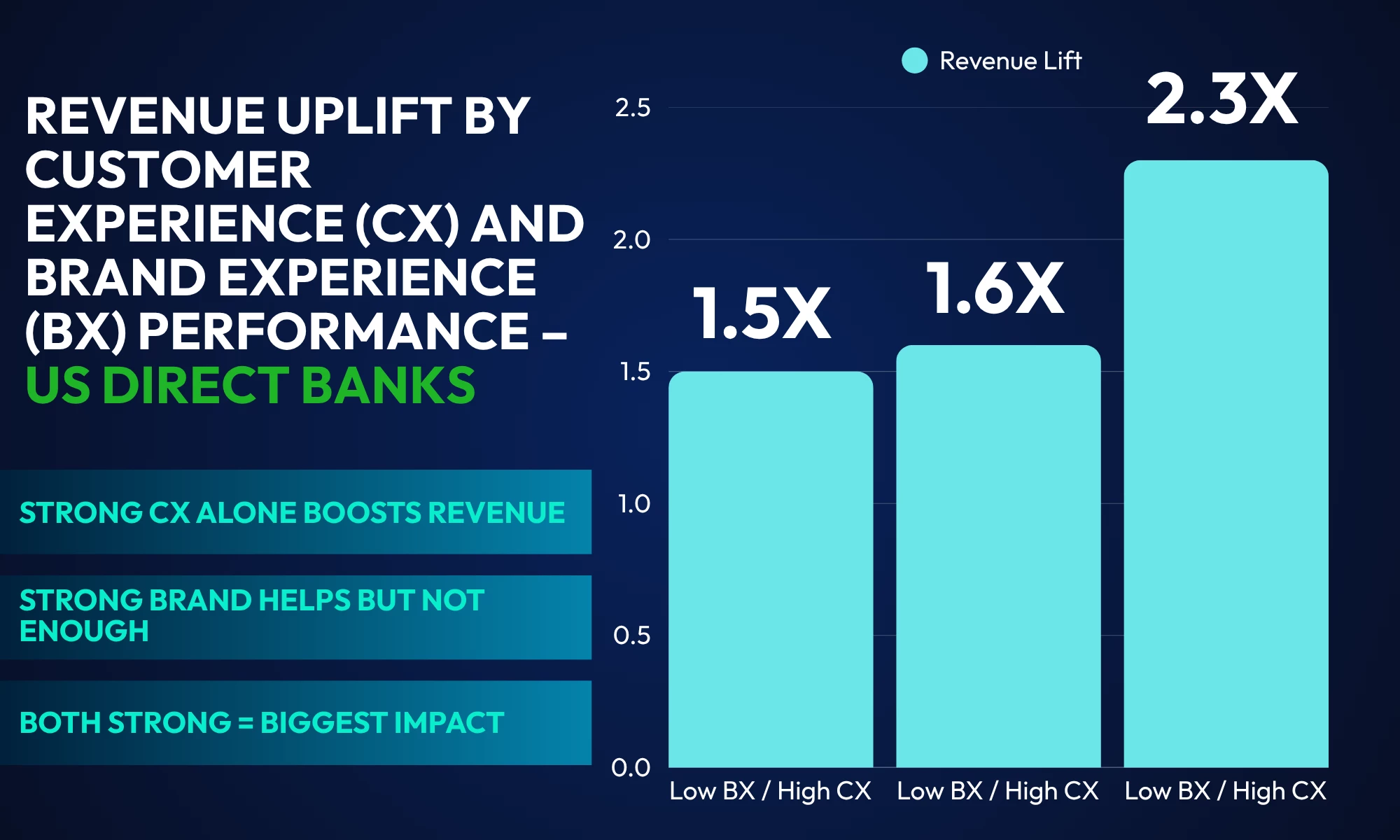
A 2.3× revenue lift awaits organizations that improve both brand experience and customer experience, as data from Forrester’s 2024 Customer Experience Benchmark Survey suggests.
Having realigned messaging and seen the revenue upside, it’s crucial to ensure visuals reinforce rather than undermine your brand goals.
Diagnosing Overdesigned Visuals
Shaoolian saw that when design becomes too ornate or unfocused, performance suffers. To address these issues, he recommended three tactical fixes:
- Hierarchy Simplified: Removed non-essential elements to make primary calls to action and core messages stand out immediately.
- Funnel Alignment Applied: Refocused top-of-funnel assets on awareness, mid-funnel on education, and bottom-of-funnel on driving conversions.
- Visual KPIs Established: Tracked click-through rates, average time on page, and heat-map data to confirm every design change moved the needle.
Overdesigned visuals are often a symptom of unclear messaging. When layout choices distract more than direct, or when visual flair buries key calls to action, business goals take a back seat.
To bring design back in service of strategy, Shaoolian recommends building a central messaging hub to anchor visual decisions.
From there, teams can apply a scoring checklist across assets and hold monthly cross-functional reviews to catch drift before campaigns underperform.
“Declining brand recall, slow asset rollout, and rising user confusion suggest a non-scalable system. Track with surveys, internal feedback, and support data,” he said.
A recent project reel for INW Precast showed how Digital Silk simplified visual hierarchy and aligned each design asset to the user journey, which is exactly the kind of tactical clarity brands need.
That kind of clarity becomes even more critical when leadership wants proof before greenlighting a redesign.
Shaoolian advises brands to simulate pivots: testing how well their identity holds up when applied to:
- new markets
- product lines
- customer segments
If your brand can't flex without breaking, that’s your red flag. A scalable identity should adapt across channels and touchpoints without losing meaning or impact.
The right agency equips you with a system that earns trust, performs under pressure, and proves its ROI long before the next rebrand conversation begins.