
Clear Brand Messaging: Key Findings
- Internal misalignment is the primary reason messaging falls flat in complex organizations.
- Successful brand clarity starts with leadership consensus on vision, audience, and differentiation before any rebranding.
- Customer-centric messaging drives measurable outcomes like higher close rates, improved sales narratives, and reduced internal friction.
In complex industries like energy and tech, messaging failures are caused by leadership misalignment, not weak copy.
Without a shared understanding of the company’s vision, audience, and differentiation, most branding efforts default to surface-level outputs like new taglines or updated visuals.
The real issue is upstream: internal teams often lack agreement on what the business is trying to say, or to whom.
This disconnect creates costly communication gaps across sales, marketing, and leadership.
According to a 2024 Content Marketing Institute report, 41% of business leaders lack easy access to enterprise analytics, and 39% say strong alignment between sales and marketing systems isn’t possible.
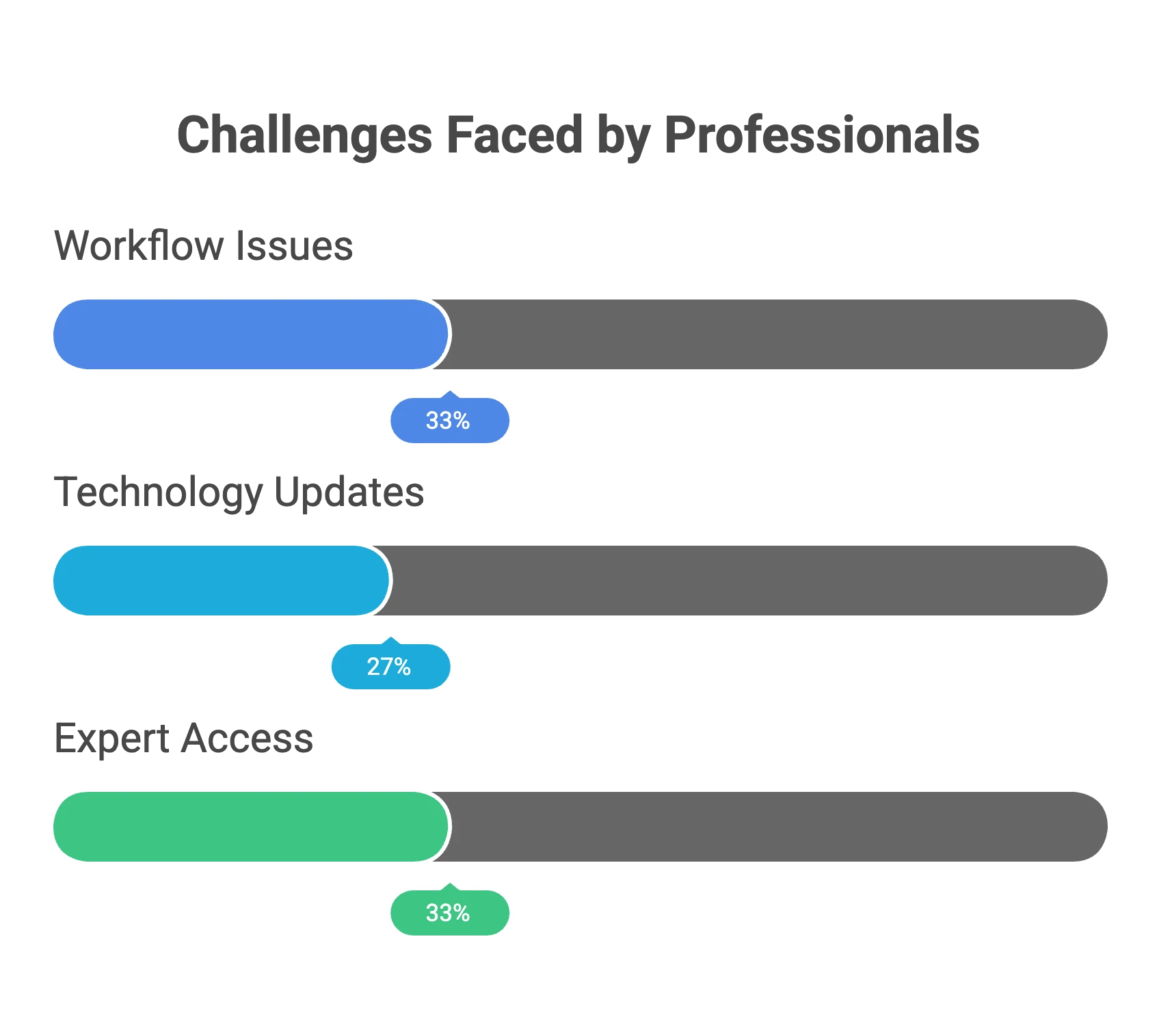
Without shared visibility and direction, messaging efforts often reflect internal confusion more than external clarity.
Misaligned messaging shows up as industry jargon, vague positioning, or fragmented sales narratives.
More dangerously, it confuses customers and forces the business to compete on price.
Quick listen: Why brand messaging fails — and how clarity drives conversions, in under 2 minutes.
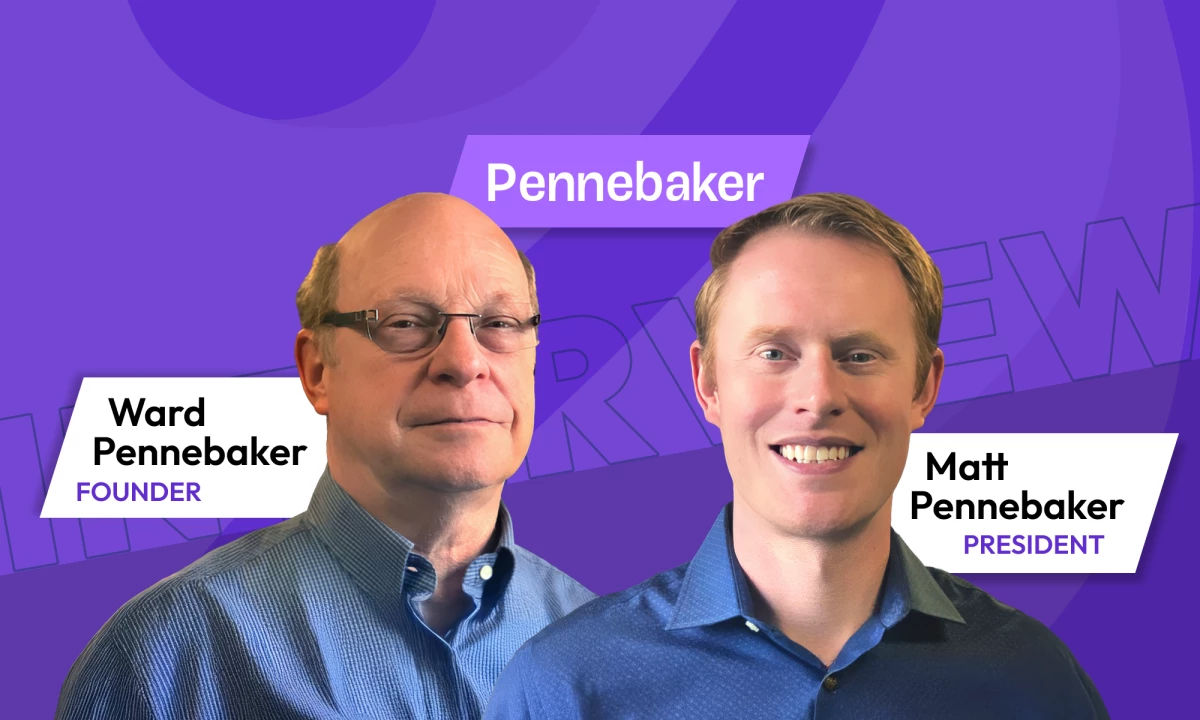
To understand how complex companies can overcome this challenge, DesignRush spoke with Matt Pennebaker, president of Pennebaker, and Ward Pennebaker, founder and CEO.
They’ve worked with complex organizations, including SLB and ConocoPhillips, to clarify internal direction and support stronger external communication.

Who are Matt & Ward Pennebaker?
Matt Pennebaker is president of Pennebaker and oversees the firm’s corporate strategy and operations. With previous executive roles in tech and energy, including leading global development for Geoforce Technologies, he brings cross-sector insight to the firm’s approach.
Ward Pennebaker, founder & CEO, developed the proprietary Strategic Guardrails framework and has advised global companies on branding and transformation since founding the agency in 1984.
Align Leadership Before You Tackle Messaging
When leadership teams aren’t on the same page about the company’s vision, audience, or direction, the messaging effort becomes cosmetic.
It might result in a new tagline or refreshed website copy, but it won’t fix the root issue: strategic disagreement.
This is especially common during times of transformation, when companies are evolving their offerings, entering new markets, or trying to reposition.
Without unified leadership support, messaging reflects compromise, not clarity.
Ward shared that many clients come to them unable to describe what makes them different or who they’re really serving.
“Their sales are stagnant or declining, they are unable to describe their differentiation, and the leadership team has never achieved alignment and embraced the leader’s vision,” he says.
To address this, Pennebaker developed Strategic Guardrails, a process designed to align leadership around future business goals, target customers, and value proposition before any messaging work begins.
Leadership alignment lays the foundation for messaging that reflects not only what a company does, but where it’s going.
Define Differentiation Before You Redesign Messaging
Messaging often fails because it’s built on an unclear foundation.
Companies in complex industries frequently jump straight into copy or brand updates without identifying what truly sets them apart.
Matt points to this as a critical misstep.
“The most common mistake is to change a brand and messaging without doing a deep dive to uncover the true differentiation that the clearly defined target audience will respond to,” he says.
Without that deep dive, messaging tends to default to industry jargon: language that’s familiar internally but vague to outsiders.
“When all companies communicate the same, price is the only decision criterion,” Matt explains.
That’s the real risk: without clear differentiation, messaging becomes generic, and the business is forced to compete on price rather than value.
Clarity on who you’re for and why you’re different needs to come first, before the rebrand, not after.
Shift from Internal Logic to Customer Relevance
Messaging that resonates starts with what the customer needs to hear.
Yet many teams approach brand messaging as a communications exercise, rather than a strategic business issue.
The result is often language that reflects internal priorities instead of external needs.
Ward sees this misalignment frequently in complex industries.
“Many marketers see their messaging as a marketing problem, not a fundamental business problem,” he says.
Stronger messaging often starts when companies shift from an internal lens to a customer-facing one.
This means moving from “here’s what we do” to “here’s how we solve your problem.”
Matt adds that this mindset shift is often the turning point.
“Changing that perspective invariably delivers an ‘ahah’ moment.”
When messaging reflects the customer’s worldview, it becomes specific, relevant, and clear.
Track Close Rate to Gauge Brand Clarity
While brand alignment is notoriously hard to quantify, it directly influences how effectively a company converts leads into customers.
For leadership teams wondering whether their messaging efforts are working, the most telling signal is its close rate.
Ward explains that although ROI in brand is difficult to measure precisely, there’s one number he always watches.
“We track the close rate of new business as the most important ROI,” he says.
Increased win rates point to sharper positioning, clearer sales narratives, and stronger internal alignment.
And while other benefits are harder to measure, they often show up in better performance and customer experience across the board.
“Internal alignment results in less internal friction… leading to happier employees providing better service,” he says.
Messaging That Works Starts From the Inside
The most effective messaging doesn’t start with copy, it starts with clarity.
Before a company can articulate a compelling value proposition externally, it needs internal consensus about what it does, who it serves, and how it creates value.
With alignment, messaging becomes part of the broader business strategy, not just a marketing deliverable.
Matt cautions that brands stuck in outdated thinking often struggle to adapt.
“Challenging conventions is imperative for companies to thrive today,” he says.
Clarity isn’t a nice-to-have. It’s the difference between leading with purpose and getting lost in the noise.
Inside-Out Branding & Messaging FAQs
Why does messaging often fail in complex organizations?
Messaging fails when leadership lacks alignment on vision, audience, and goals. Without internal clarity, external communications default to vague or generic language that confuses customers.
Why is differentiation so critical before rebranding?
Without clearly defined differentiation, brands risk using industry jargon and becoming interchangeable with competitors. Strong differentiation helps create messaging that resonates and avoids competing solely on price.
How can a brand know if its messaging is working?
Close rate is a key indicator of messaging success. A higher close rate suggests sharper positioning, improved sales conversations, and stronger brand alignment internally and externally.
How does internal alignment improve customer experience?
When teams share a clear, unified direction, communication is more consistent and effective. This reduces internal friction and allows employees to deliver better, more cohesive service to customers.