
Hyundai x FIFA World Cup 26: Key Findings
- Hyundai replaces 19 years of text slogans with visual storytelling, launching its first children's art contest with winning designs placed on National Team buses.
- Family prizes drive multi-generational engagement, giving each winning child and guardian tickets, airfare, and accommodation.
- Global reach meets local pride, inviting kids ages 5–12 from all participating nations to submit artwork that travels with players and fuels shareable content.
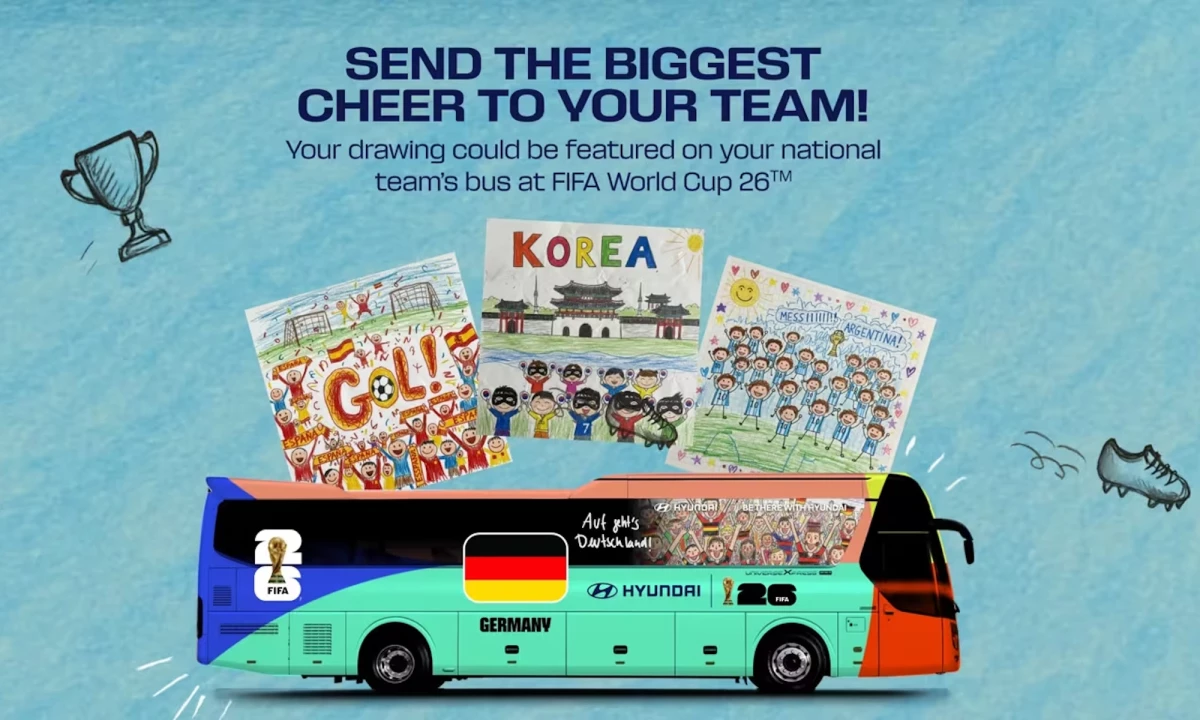
Hyundai is transforming National Team buses into mobile art galleries for the FIFA World Cup 26, and the artists are all under 13 years old.
The automaker's "Be There With Hyundai" campaign returns next year with "The Greatest Cheer."
It's a children's art contest running from December 2, 2025 through January 30, 2026.
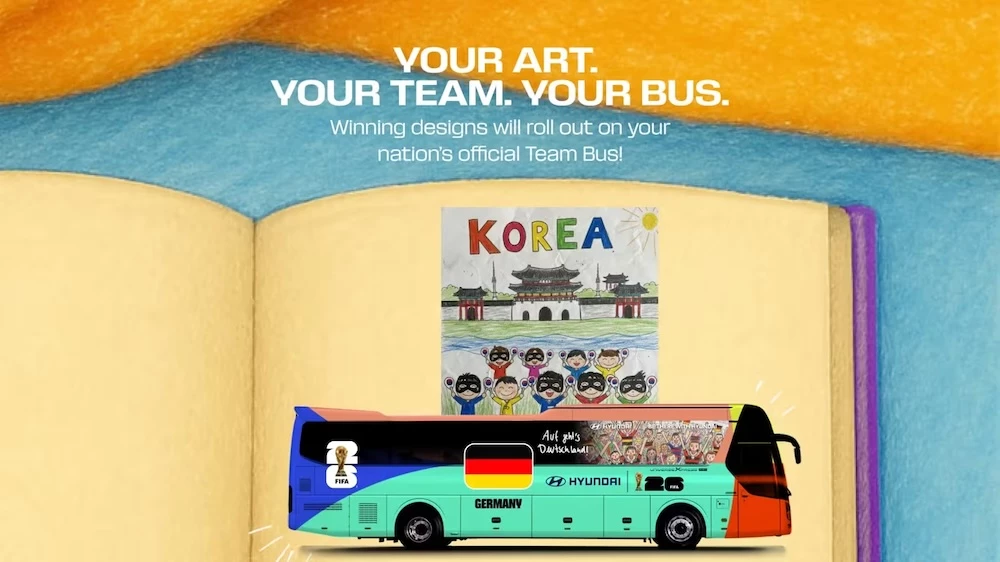
Winning designs from kids aged 5-12 will appear on official team buses transporting players to matches during the football tournament across the U.S., Canada, and Mexico.
One winner, including one guardian, per participating national team is eligible to receive:
- Tournament tickets
- Round-trip airfare
- Accommodation
The campaign marks a strategic shift for Hyundai's youth marketing, moving from slogan submissions to visual content designed for social media buzz.
Brand Visibility Through Visual Storytelling
Since 2006, the "Be There With Hyundai" program has focused on fan-submitted team slogans.
The 2026 version introduces the brand's first drawing contest, recognizing that visual content performs better across digital platforms than text submissions.
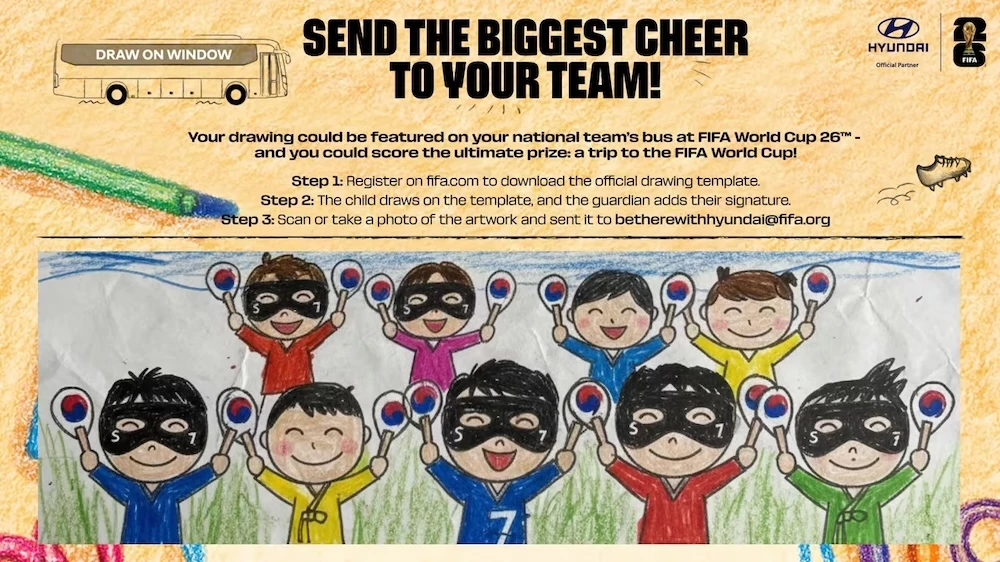
Children can download templates from FIFA.com, create artwork that captures their excitement about the tournament, and submit it to FIFA's official site.
Sungwon Jee, Hyundai's SVP and global CMO, explains how the contest connects young fans with players:
"This initiative reflects the passion and hope of the younger generation in the National Team bus design, connecting children's dreams with the players and creating shared strength."
The campaign aligns with Hyundai's sports sponsorship marketing strategy, prioritizing youth engagement and family connections over traditional brand awareness.
A Multi-Generational Fan Engagement Strategy
What's unique about this campaign is that Hyundai is targeting parents through their children to create a long-term emotional investment.
The family-friendly prize structure ensures guardians can participate alongside young winners.
This offers potential to convert contest engagement into long-term brand consideration when families purchase vehicles.
The strategy also positions Hyundai's FIFA World Cup fan engagement program as inclusive rather than exclusive, with submissions open to children across all participating nations.
Featuring designs on team buses enables Hyundai to also achieve greater brand visibility as broadcast cameras capture players arriving at venues.
Hyundai's FIFA World Cup 2026 campaign offers valuable lessons for agencies and brands:
- Shift sponsorship from passive consumption to active creation, as user-generated content drives deeper engagement than traditional sweepstakes.
- Design viral moments into physical assets, since team buses in broadcast coverage create organic amplification beyond paid media.
- Target decision-makers through their children, building brand affinity with parents who control purchases while engaging young audiences.
The campaign shows how global sports sponsorships can drive measurable engagement when brands build youth-focused experiential activations into their strategies.
Our Take: Will Shifting to Art Actually Work?
I think Hyundai's pivot makes sense, since kids are much more likely to share drawings on social media than slogans.
In this case, the buses also become content channels where every team arrival shot is basically like free advertising.
I think the challenge here will be with converting contest participation into brand lift years or months later when parents buy vehicles.
Can youth-focused campaigns deliver ROI, or are they just goodwill investments?
Meanwhile, DoorDash secured Official Tournament Supporter status for FIFA World Cup 2026 and 2027, using Ronaldinho and restaurant reservations to prove delivery apps can compete in global sports marketing.
Looking for agencies that can execute global sports sponsorship activations?
Explore top experiential marketing agencies specializing in youth engagement and branded content for multinational campaigns.